Showing posts with label Carmen Maria Machado. Show all posts

Tuesday, December 8, 2020

Major and Minor: On Speculative Fiction as Canonical Literature

Hi all, unfortunately my PhD work has kept me from reviewing, but I will be back with reviews in 2021! I have a few essays to show for my time away, and the following essay is inspired by conversations around why speculative literature is not respected as a genre in the US literary world, particularly when teaching English literature. I hope you enjoy!


Major and Minor: On Speculative Fiction as Canonical Literature

Speculative literature is often cited and criticized for escapism, a critique used to dismiss much popular or “low” literature from westerns to romances. Indeed, the speculative literature that rises into a more literary market usually undercuts the idea of adventure for a slow or more meditative text, such as some of Samuel R. Delany’s work. That being said, all fiction is, at some level, escapist (even if not escapist to every reader’s taste), and plenty of canonical literary fiction features escape into adventure or romance, such as Ernest Hemingway’s work. This leaves the unreality—the otherworldly nature—of speculative literature as the main cause for it being labeled “low,” yet that becomes complicated by magical realism or Indigenous realism, suggesting that speculative literature might be less “low” literature and more a representation of a wider reality, as Ursula K. Le Guin said in her National Book Award Foundation Medal acceptance speech. 
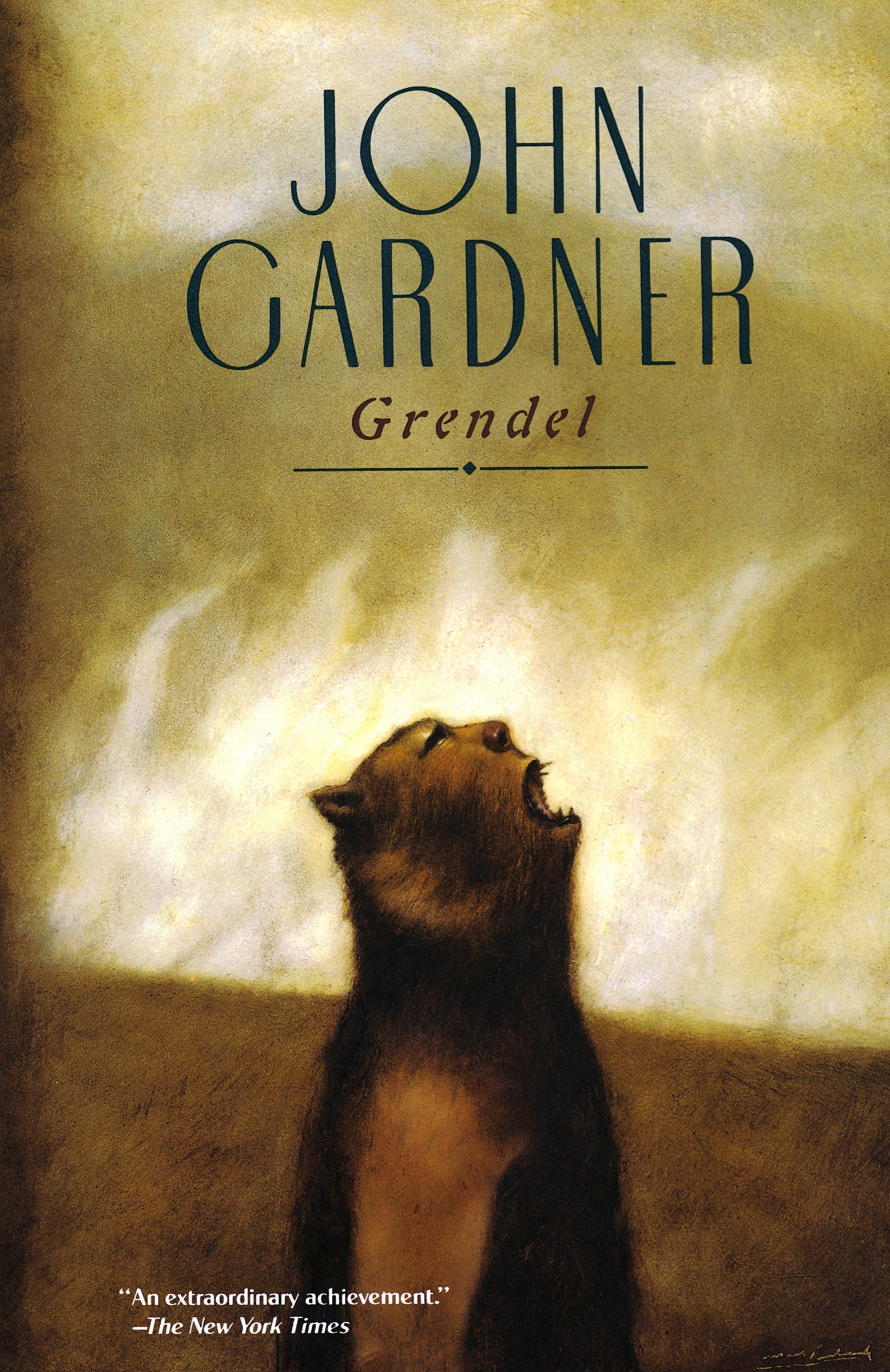
Image of cover of Grendel by John Gardner
Ultimately, I argue that this otherworldly nature is why speculative fiction writers are rarely recognized as canonical literary writers whereas authors of other genres from mystery writers to historical fiction writers are recognized as canonical: their work takes place in some form of the real world, something recognizable if not familiar. This unreality of speculative literature does not support the nationalizing goal of American Literature, particularly when shaping the canon. As Delany argues, this familiarity reaches to the sentence level, so the literary reader already knows how to engage with the text, even if not in an accustomed genre. Yet, these readers are in the minority as the popularity of speculative literature continues to grow with each generation. Indeed, many canonical writers of American literature have written speculative fiction, from W. E. B. Du Bois to Mark Twain to Toni Morrison. Contemporary authors continue to blur the lines between speculative and literary genres. For instance, where does one shelve Marlon James’s Black Leopard, Red Wolf (2019)? Or Kelly Link and Carmen Maria Machado? John Gardner’s Grendel (1971) is often shelved in the speculative section, but the rest of his novels are in the literary section. As suggested by such authors, the separation by genre makes little sense, particularly among such important writers. Indeed, I believe that speculative literature should be included in the American literary canon as it has as much cultural relevance as a literary text even if not set in the real world. 

“Low” literature and popular culture has always been associated with the masses. Particularly with speculative fiction, the genre has grown from dime novels, followed by the pulp era of the mid-1900s. While different speculative writers have tried to separate themselves from this history (particularly during the Golden Age of Science Fiction when authors were trying to raise the genre’s status), it’s worth noting that Conan the Barbarian remains in the popular consciousness while the average person could not name a character from James Joyce. Yet, the canon values James Joyce over Conan. Fredric Jameson suggests that this gap cannot be overcome because speculative fiction has a “dialectical relationship” with high literature: 

It would in my opinion be a mistake to make the ‘apologia’ for SF in terms of specifically ‘high’ literary values—to try, in other words, to recuperate this or that major text as exceptional, in much the same way as some literary critics have tried to recuperate Hammett or Chandler for the lineage of Dostoyevsky, say, or Faulkner. SF is a sub-genre with a complex and interesting formal history of its own, and with its own dynamic, which is not that of high culture, but which stands in a complementary and dialectical relationship to high culture or modernism as such. (283) 

I would argue that, as part of the dialectical relationship, that speculative fiction undercuts the conditions of modernity and high culture. Certainly, literary writers have undermined and are undermining white supremacy and the heteropatriarchy, but less of those texts have been canonized in American literature. Whereas, the speculative canon—even a more conservative list—contains many novels and writers undermining the status quo, such as Robert A. Heinlein, Philip K. Dick, Joanna Russ, James Tiptree Jr./Alice Bradley Sheldon, Samuel R. Delany, William Gibson, Octavia E. Butler, Ursula K. Le Guin, among others. Due to these elements—working against canonical ideas, writing unfamiliar worlds, and a separate writing tradition—even the immense popularity of speculative literature would not afford it entrance to the canon, particularly when the nationalizing goal of creating and teaching the canon of American literature is taken into account. 

As Jameson argues, there are specific differences between speculative fiction and literary fiction.  Initially, there are the types of stories that can be told—though this is not a hard rule. Delany’s Dhalgren (1975) could have been marketed as literary fiction in a different day, and, indeed, is treated as one of the most literary examples of speculative fiction. Following Delany, though, it should be noted that speculative fiction requires a different way of reading than literary fiction. In his essay “About 5,750 Words” (1978), Delany takes a semiotics approach to speculative fiction. He argues: “Any serious discussion of speculative fiction must first get away from the distracting concept of SF content and examine precisely what sort of word-beast sits before us” (15). To that end, he breaks down a sentence that could appear in a science fiction story to demonstrate his theory about the act of reading, which he describes as correcting a picture. He writes: “A sixty-thousand word novel is one picture corrected fifty-nine thousand, nine hundred and ninety-nine times” (5). He breaks down the following sentence word by word to demonstrate when the image corrected could no longer be realism: “The red sun is high, the blue low. Look! We are worlds and worlds away” (7). In Delany’s theory, the picture was not fully corrected until the word “low” transported the reader to a different planet, one with two suns. This example leads to one of his more well-cited critical thoughts: “‘The door dilated,’ is meaningless as naturalistic fiction, [….] As SF—as an event that hasn’t happened, yet still must be interpreted in terms of the physically explainable—it is quite as wonderous as [Harlan Ellison] feels it” (13). Therefore, a certain affect can be achieved in speculative fiction that cannot be achieved in literary fiction. 

Ultimately, Delany writes: “I can think of no series of words that could appear in a piece of naturalistic fiction that could not also appear in the same order in a piece of speculative fiction. I can, however, think of many series of words that, while fine for speculative fiction, would be meaningless as naturalism. Which then is the major and which the subcategory” (12)? From a stylistics approach, I agree with Delany that speculative fiction offers more sentence-level possibility than literary fiction. Indeed, other genres also meet this criteria for literary fiction—any sentence appearing in a western, mystery, romance, could also appear in a literary novel. But, if creativity was the main value of “major” literature, then certainly the lines would be redrawn. This issue speaks to larger question of why speculative fiction is not considered literary while other genres have been elevated, such as historical fiction. Because speculative literature has the potential—and often is—totally separate from reality, its unfamiliarity regulates it to a separate shelf. 
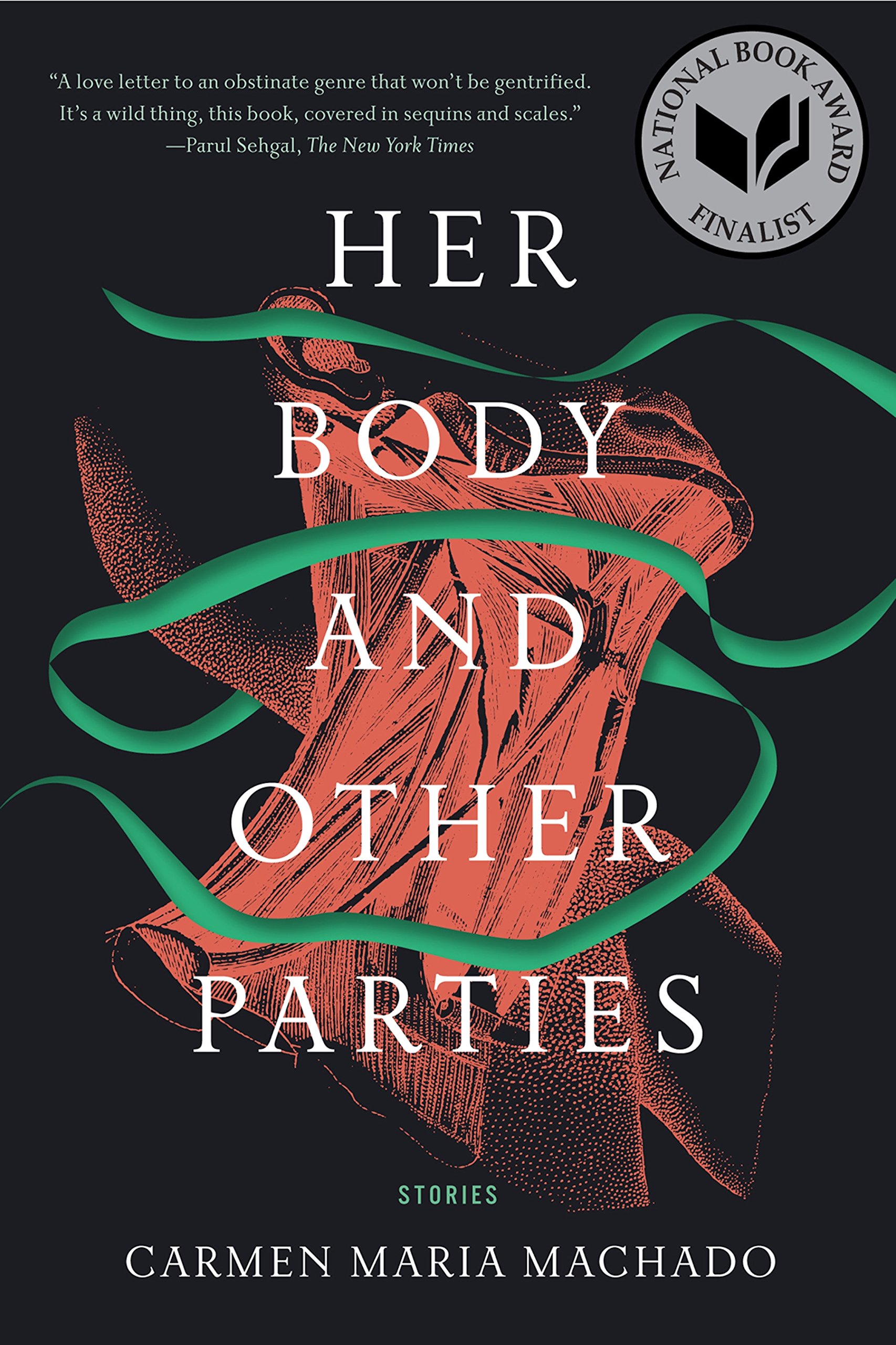
Cover image of Her Body and Other Parties
Indeed, literary writers that straddle the line between speculative and literary careers often play with this issue of language. For example, take Machado’s collection Her Body and Other Parties (2017), which combines literary fiction and speculative fiction throughout, usually within a story. Yet, this collection
would be recognized as a literary offering (even if one of the previously published stories appeared in the genre magazine, Strange Horizons). That being said, her stories dip into outright speculative fiction, not even soft fabulism that authors like Karen Russell or Kevin Brockmeier achieve. In her short story “Inventory,” Machado switches mid-story from traditional literary fiction to science fiction, particularly dystopian fiction. Indeed, the format—a list of sexual encounters—would play better to a literary audience than to a speculative audience. Similarly, the slow pacing and lack of fantastical elements also suggests a literary purview. As the narrator reaches adulthood, the speculative element comes to light: “We watched as the newscaster vanished and was replaced with a list of symptoms of the virus blossoming a state away, in northern California” (Machado 36). Even this comment would not necessarily remove the story from the realm of literary fiction as an epidemic is certainly not a fantastical idea. Yet, this dip into low literature allows Machado to expand the range of her story, quickly settling it within a survival dystopia narrative familiar to speculative readers. Indeed, it’s the dystopian setting that turns the story from cheeky to moving. 

At first, the story’s structure intimates it will be a list of sexual encounters, each paragraph introducing who the narrator engages with, such as “Two boys, one girl. One of them my boyfriend” (Machado 33). After the virus begins spreading across the US, the narrator’s or characters’ movements are included. Early during the epidemic, she flees from people rather than the virus: “When [sex] was over and she was showering, I packed a suitcase and got in my car and drove” (Machado 37). Once she settles in Maine, others start coming to her: “One man. National Guard. When he first showed up at my doorstep, I assumed he was there to evacuate me, but it turned out he’d abandoned his post” (Machado 40). Many of these lines remain staunchly in realism, though comments about the narrator “check[ing] their eyes” or asking “how far behind the virus was” err toward the speculative (Machado 40, 41). Yet, readers familiar with the genre and tropes—such as the religious leader and her flock or the fact the narrator allows anyone near her hideout—can sense what will happen, which makes the final paragraph of the story even more moving as all three styles of narrative lists come together. First, a new character appears: “One woman. Much older than me. While she waited for the three days to pass [to demonstrate she was negative for the virus], she meditated on a sand dune” (Machado 43). The list structure means the narrator will have a sexual encounter with this person. Yet, as represented by this section being the longest, this woman is different.

Quickly they form a connection: “I couldn’t remember the last time I’d smiled so much. She stayed. More refugees filtered through the cottage, through us, the last stop before the border, and we fed them and played games with the little ones. We got careless” (Machado 42). As to be expected in such a dystopian narrative, what the narrator cares about does not survive. Indeed, her lover dies from the virus, and the narrator gets “into a dinghy and [rows] to the island, to this island, where I have been stashing food since I got to the cottage. I drank water and set up my tent and began to make lists” (Machado 43). Thus, the story’s form and the genre are united as the dystopia epidemic genre becomes the occasion for the making of the lists. Returning to Delany, many of the sentences in this short story could appear in a realist text, yet the story’s impact would be undermined without the dystopian setting. In other words, the story is first speculative, then literary, as this story would not exist without the speculative element.
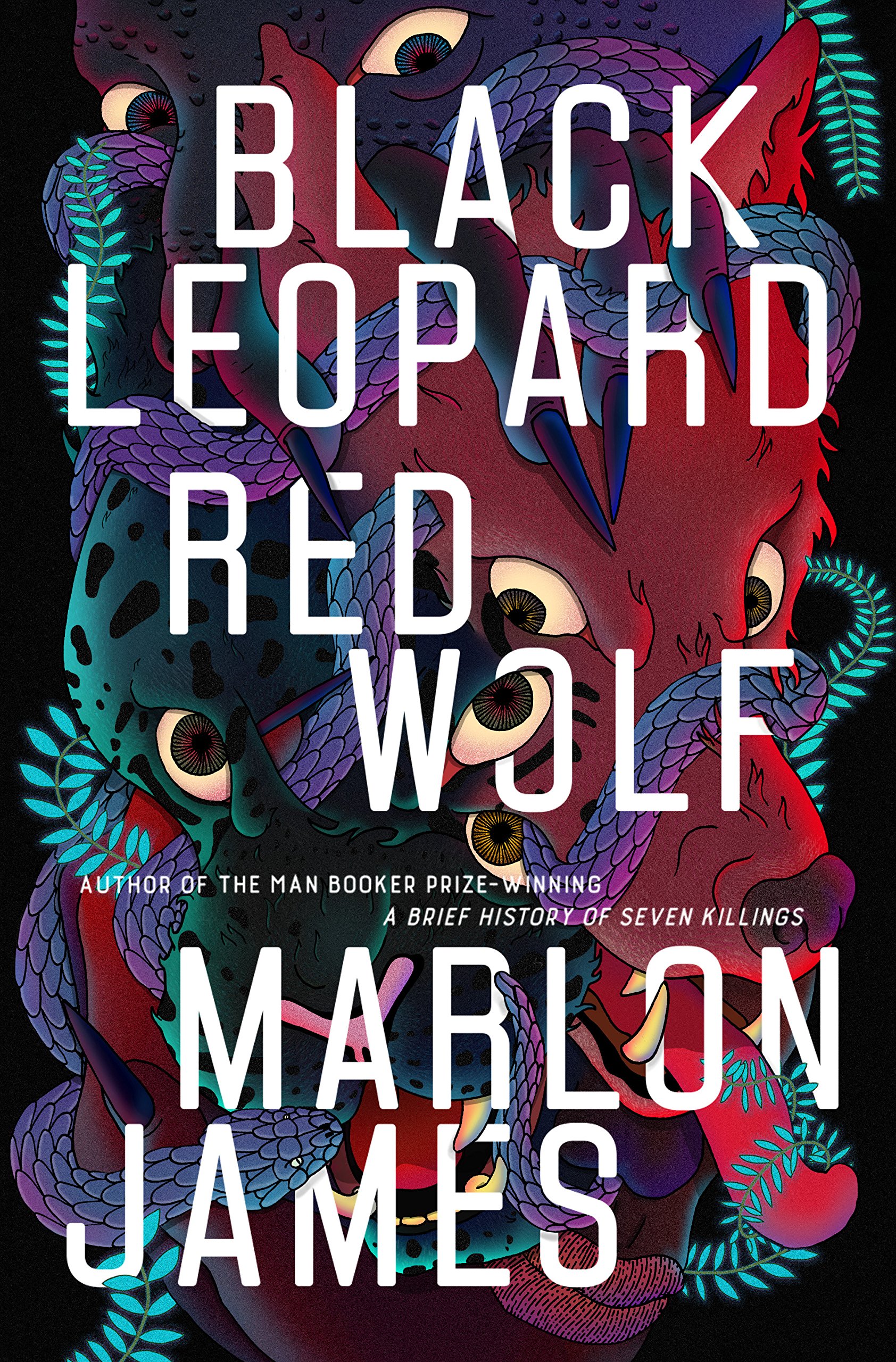
Cover of Black Leopard, Red Wolf
For a literary reader unfamiliar with speculative literature, many of Machado’s short fiction would still be palatable, even if perhaps misunderstood. This is why Marlon James beautifully muddies the water with Black Leopard, Red Wolf. Not only must literary readers learn a new way to read (which is why I believe critics struggled to see parts of the fantasy as anything more than metaphor), but they must also consult a different literary history. A critic’s ability to recognize allusions to Shakespeare or classical mythology or Faulkner would not be (much) help in this novel. Rather, knowledge of Tolkien, Delany, Saunders, and Howard is necessary to untangle the multi-layered narrative. For instance, a literary reader could interpret when the main character, Tracker, travels through a forest called the Darklands as a metaphoric quest. Rather, a speculative reader recognizes a familiar trope in a quest narrative: when the party must travel through an area they know better than to enter. Indeed, the scene where Tracker and the others discuss whether to enter the Darklands is reminiscent of Tolkien’s Fellowship discussing whether or not to enter the Mines of Moria: 

“Through the Darklands in one day. Around the lands is three days. Any man with sense would make the choice,” Fumeli said.

“Well, man and boy, choose whatever you want. We go round,” [Tracker] said. (James 228)

 Because James so directly engages with a fantasy trope, a speculative reader can expect the Darklands to be full of danger. Indeed, Tracker and his companions barely escape, but they are rewarded with a magical door that leads them straight to their destination—even if they are chased into it by a monstrous monkey. Yet, nothing really “happens” in this section other than the adventure. Little new information is revealed about the characters. Tracker’s prowess as a warrior is established again, but that has not been in question for the reader. Indeed, like many epic fantasies or sword-and-sorcery narratives, this section is action for the sake of action.

Unlike in literary novels, reading metaphor or symbols into magical moments is doing a disservice to the writer. In speculative literature, James’s shape-shifting leopard and Tracker’s lover is truly a shape-shifting leopard, not a metaphor about queer love. In one of the more sentimental sections, Tracker and the Leopard save children from being murdered for their magical abilities. One of the children, a girl who turns into smoke, has nightmares during her sleep, shifting from her human body to intangible smoke, but Tracker learns how to comfort her, thus earning her lifelong friendship (James 56-7). While it may be tempting to write about these shifting bodies such as the girl and the Leopard as metaphoric, these characters should be read as actually possessing such abilities. While the shifting body maybe a theme evident in James’s worldbuilding, in a speculative novel, the critic must approach what’s on the page as part of that world’s reality as created by the author. By accepting what’s on the page as that novel’s reality, a literary reader must engage with the text in a very different way than they might engage with a literary text. Indeed, I argue this otherworldliness is one of the major reasons that speculative literature maintains a “low” literature.  

As for the inclusion of speculative fiction in the canon, I wholeheartedly argue that it should be included as ideas present in speculative fiction have had tremendous impact on the popular imagination and are thus part of the fabric of US culture and national identity.  While Jameson would argue that places speculative fiction too close to high literature while ignoring the genre’s own interesting history, I wish the canon was not divided by shelves in the bookstore but rather kept together, “major” and “minor” literatures all on the same shelf. While reading deeply within a genre or mode provides certain insights, I argue that the canon of a country should not be limited to one genre: literary fiction. First, the archive should be recovered and those canonical authors who have written speculative literature should have such texts taught, such Herland (1915) by Charlotte Perkins Gilman or “The Comet” by W. E. B. Du Bois (1920). Once these texts have been recovered, hopefully it would be easier to read and understand other foundational texts of speculative literature. For example, I, Robot has had a large impact on the popular understanding of robotics through Isaac Asimov’s Three Laws. Does not this text comment on modernity and Enlightenment ideals in a way that might be useful to compare to Mary Shelley’s Frankenstein (1823)? Similarly, does not Delany’s Dhalgren demonstrate racial tension in urban cities during the 1960s and 70s in a unique way? What insights and revelations could be gleaned by teaching Dhalgren and Ralph Ellison’s Invisible Man (1952) back to back? Even though speculative literature might not represent the reader’s reality on the page, it does offer different critical lenses for viewing cultural issues. 


Works Cited

Delany, Samuel R. The Jewel-Hinged Jaw: Notes on the Language of Science Fiction. Revised edition, Wesleyan UP, 2009.

James, Marlon. Black Leopard, Red Wolf. Riverhead Books, 2019.

Jameson, Frederic. Archaeologies of the Future: The Desire Called Utopia and Other Science Fictions. Verso, 2005.

Machado, Carmen Maria. “Inventory.” Her Body and Other Parties. Graywolf Press, 33-43, 2017.


Phoebe Wagner is a PhD candidate at University of Nevada, Reno. When not writing or reading, she can be found kayaking at the nearest lake. Follow her at phoebe-wagner.com or on Twitter @pheebs_w


Tuesday, May 28, 2019

Questing in Shorts: May 2019

Another month ends, another set of short stories is here! Like last month, I seem to have been on a mini themed collection kick, with two unsettling volumes from the nexus of speculative and literary fiction. Of course, there's some magazine reading to go around too, and I've already got plenty more lined up for next month's reading.

Let's dive in:

Her Body and Other Parties by Carmen Maria Machado


Machado is new to me as an author, and I therefore didn't know what to expect from this collection, but visually we were off to a good start: It's not my usual habit to review books based on how physically nice they are, but I think it has to be noted that Serpent's Tail have produced a volume that's positively pettable, and could also be useful when sending visual "GO" signals over long distances with its neon green cover. The niceness of the volume sets off an intense and brilliant set of stories full of sex, death and the mundane made dangerous, which play with the concept of voice and empowerment in various, usually heartbreaking ways. Machado's women record their own worlds and experiences because nobody else will, and they are not believed in a world which is literally not set up for their existence. It's relateable and queer and stunning in both the literal and metaphorical senses.

The standout among standouts is "The Husband Stitch" (Read online), a painfully good opener which really sets the scene for Machado's talent. It balances the mundane world of a woman who marries her childhood sweetheart young and then raises their child, with an overwhelmingly claustrophobic sense of threat from the outside world; a threat compounded by the lack of belief anyone else places in her, and the lengths she has to go to claw out any respect for her space and autonomy. This is physically represented in the story through a speculative device: the protagonist has a ribbon tied around her neck, for which she has, and needs, no explanation, telling her husband he also can't touch or ask about it. The narrative's regular return to the ribbon and to what it means to each character culminates in a shattering, exhausted betrayal, that feels inevitable even as we're desperate to stop it happening.

The rest of the volume takes us through many of the same themes in new and inventive ways, and while nothing quite reaches the outstanding heights of "The Husband Stitch", it doesn't need to do be gripping, high quality work. My honourable mention here has to be "Especially Heinous", a novella told in the form of capsule synopses for 12 seasons of fictional Law and Order: SVU episodes. I have not seen any Law and Order: SVU, but luckily the story is accessible with no prior knowledge of anything but the most general tropes about police procedurals. Again, sex, death and misogyny are out in force, along with an increasingly bizarre interlocking narrative about betrayals, doppelgangers, ghosts with bells for eyes and an endless parade of rape victims whose murders go unsolved but not uncatalogued. Brilliant stuff.

Rating: 9/10

Friday Black by Nana Kwame Adjei-Brenyah


Here's the second of this month's debut collections which straddles the line between literary and speculative fiction. Adjei-Brenyah's volume of 12 speculative stories sits, as the inside cover quote from Roxane Gay suggests, in a spot quite close to the vicious satire of Childish Gambino's "This is America", or of the film "Sorry to Bother You", taking elements of racism and capitalism and holding a magnifying glass to their most absurd and dangerous elements. It's a collection with lots of big speculative ideas and not a lot in the way of catharsis, from the opening story, "The Finkelstein 5", about the backlash to a man being acquitted for murdering five black children with a chainsaw; to the trio of stories at the Prominent Mall's clothing department, where a nameless star of sales survives Black Fridays where customers and salespeople fight for their lives over bargains in the winterwear department, only to be passed over when a talented white woman starts working in the same section; to outright science fictional stories like "Through the Flash", in which a community finds itself infinitely reliving the day before a nuclear attack, working through their newfound impunity for both their best and worst impulses.

Because of its heavy satirical elements, it feels even more impossible than usual to write an objective review of Friday Black, because any reader's reaction is going to depend on whether they are willing to suspend their disbelief over the elements which are called out and exaggerated. All I can say is that for me, Friday Black very much hit the mark, where similar stories (for example, Robert Jackson Bennett's Vigilance: the perfect example of a "YMMV" satire among our team) didn't work for me. "Zimmer Land" was probably the point where this was most noticeable, a short story in which Zay, a young black man, works at a theme park where guests (who, unsurprisingly, all appear to be racist white conservatives) get to live out experiences like foiling terrorist plots and taking down suspicious people in their neighbourhood in a supposedly safe environment. The combination of meaningless, politically motivated violence and the platitudes about self-actualisation which the park's management justify it with is on-the-nose to the point of absurdity, but Zay's characterisation and spin on the events around him, even as park management takes the "experience" in a direction he's deeply uncomfortable with, makes the experience engaging, real, and exquisitely difficult.

Rating 8/10.

Beneath Ceaseless Skies, Issue 276 and 277 (Read Online: 276 277)


I am cherry-picking my coverage of Beneath Ceaseless Skies, because after the last batch that I reviewed in March there were a couple of issues which weren't too memorable for me. I'm fairly certain that this is my fault and not the stories themselves - having looked back over the list of stories published, I definitely remember having very good feelings about stories like "Undercurrents" by Charles Payseur (in Issue 274) and "The Red Honey Witch" by Jessica Paddock (Issue 275) - I suspect I just read them at the wrong time. However, the pair of stories from Troy L. Wiggins and Dayna K. Smith in Issue 276 really made me sit up and pay attention. Wiggins' story, "Fury at the Crossroads", brings a strong sense of place and character to a post-disaster world in which humans have gone to war with the Gods, dealing with an agent named Fury who, along with her haint mentor/companion Junebug, is trying to find the source of a taint of the land she's in - a mystery which will bring her directly into conflict with those now trying to claim this land away from the deity Fury serves.

In "Hangdog", Dayna K. Smith delivers me the historical werewolf story I didn't realise I wanted so badly. It centres around Grinn and Buddy, a pair of shapeshifters on the road who find a hanged soldier who has apparently been killed for being a werewolf. Of course, werewolves don't die of hanging, so poor Jonas is still alive and he soon manages to rub some of his bad luck off on the pair as they are accosted by another man, who turns out to be the only non-werewolf in a lineage of shapeshifters and wants Grinn or Jonah to give him the legacy his family have denied him. As a standalone story, the elements that go into this are little bit on the conveniently coincidental side, but that's more than made up for by the great worldbuilding, particularly the visceral descriptions of the shapeshifters and what their wolfiness does to their sense of self and their interactions with other beings. From the biography, there's a novel version of this universe in the works and I'm already fully signed up for more adventures with Grinn, Jonah and Buddy as and when they come our way.

Issue 277 delivers two bone-themed stories of which the highlight is R.K. Duncan's fable of an accomplished diver trying to do the impossible for his family business, "The Thirty-Eight-Hundred Bone Coat". It's heavy on the elements that make Beneath Ceaseless Skies' "Literary Adventure Fantasy" so much fun: an engaging self-contained story among ordinary people in a world which feels like it goes far beyond the tiny corner we get to see. The city of Ranzak's history, geography and magic all comes into play as Navid's family are tasked with creating a powerful coat made from the enchanted bones of rebels which now lie in the silt of the city's river, on an ambitious deadline. Navid is the best diver in the city, and loves his job, but it takes more than skill for him to find the materials he needs, and things might not turn out the way he hopes. It's a classic-feeling story in an inventive world and I'm always on board for aquatic adventures.

Ratings: 7/10.

FIYAH Literary Magazine Issue 10: HAIR (Link/Soundtrack)


FIYAH's hair themed issue is here, bringing with it a trio of slipstream-type short stories jumping from modern day settings, which all contain black women dealing in some way with hair that isn't hair: flowers, snakes and feathers respectively. The first, "In That Place She Grows a Garden" by Del Sandeen, deals with a setting that should be familiar to anyone who pays attention online: a girl in her junior year at high school who falls foul of the dress code for her dreadlocked hair. When she bows to the pressure to cut it off, she finds herself instead sprouting flowers - and protected by the creatures that pollinate them. It's a story framed as a small but jubilant victory in a world that's otherwise against the protagonist, and it's evocative stuff. The second story, "My Snakes" by Frieda Vaughn contains a mixed race protagonist whose mother has no idea what to do with her hair, and her relationship to painful relaxers and their impact on her self-perception and the way others see her. Stranded through the story, which is told in snatches of scenes over decades, is the myth of Medusa, and the light speculative elements as the protagonist finds dead snakes on her pillow and laments their lifeless obedience during her years of relaxers, finally restoring them in an act of triumphant ownership over her own body. Shari Paul's "No Late-for-School" changes tone again and uses the form of a blog entry to tell an event in the life of Delilah, whose now-ex boyfriend gets her into some magical trouble with an ex-girlfriend and transformative magic. This might be the first time I've specifically seen blog language and format used to this effect in fiction, and the mode of narration fits the story perfectly, letting Delilah tell her story with humour and agency and to put what is objectively a pretty horrifying incident into her own slightly understated, social media-fied context.

Having put together these three similarly-premised (though distinct) contemporary stories, the issue's novelette takes the plunge into high fantasy for "While Dragons Claim the Sky" by Jen Brown, the story of two women in a world where magic is channelled through hair, and hairdressers therefore hold the ultimate potential for power. Omani is eager to go to the best magical academy in the land, but finds that getting the scholarship money she needs to attend from the empress herself is going to be harder and more problematic than she thinks - until Myra walks through the door of her mother's salon with an invitation to join a major tournament that could win them both the attention of the Empress, if Omani's magic can help her win. On reaching the capital and learning more about the political world she's about to enter Omani ends up bound up in acts of rebellion that go well beyond her expectations and comfort zone. It's a refreshing change of pace from the contemporary stories before it which offers a great alternative take on the issue's theme, rounding off another good set of stories from this Hugo Semiprozine finalist.

Rating: 7/10

POSTED BY: Adri is a semi-aquatic migratory mammal most often found in the UK. She has many opinions about SFF books, and is also partial to gaming, baking, interacting with dogs, and Asian-style karaoke.