- Reviews
- _Book reviews
- _Film and TV Reviews
- _Game Reviews
- _Thursday Morning Superhero
- _Short Fiction Reviews
- Lists
- _New Books Spotlight
- _6 Books Posts
- _We Rank 'Ems
- Features
- _Interviews and Blogtables
- _Talking About Books
- _The Hugo Awards
- _Mini-Projects
- Projects
- _Nerds on Tour (2020)
- _The Hugo Initiative (2019)
- _Feminist Futures (2018)
- _Dystopian Visions (2017)
- Meet the Flock
- Review Policy
- Home
Showing posts with label Aiip. Show all posts
Friday, August 14, 2015
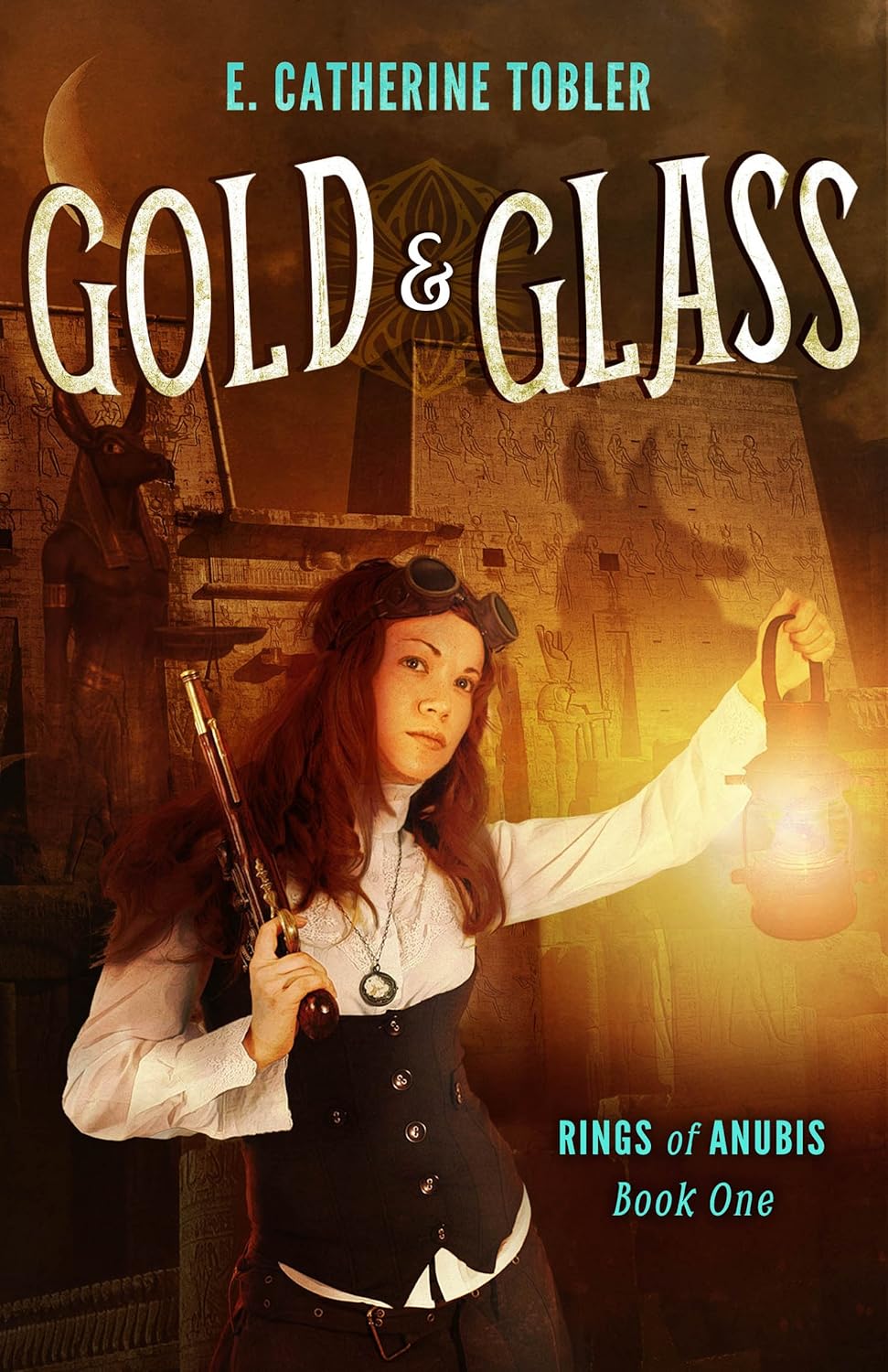
AiIP Microreview: The Glass Falcon, by E. Catherine Tobler
The Meat: I love adventures. Mary Shelley, Robert Lewis Stevenson, Mark Twain, so many others- I love stories that simply carry you away. So it is probably little surprise that I am quite fond of this story, but there are far more reasons than the fact that it is simply an adventure story, through and through.
Tobler has what I would term a gift for words. The Glass Falcon is a novella- fairly short, a mere 89 pages. But her vocabulary, and use of ornate, precise and detailed language makes it seem much longer, or rather, deeper. In a world of epic fantasies that drag on forever (lookin' at you, George R.R.), I really appreciate a story - author - who knows what details to include, which ones to omit, and how to express them in a rich way.
I also enjoy the way very diverse elements blend together - on one hand, it is a steampunk adventure, a sort of love letter to Paris that doesn't precisely exist - But also deals with shapeshifters, Egyptian gods and ancient history, and the mystery which lies at the heart of this story. It's a lot to pack into 89 pages, and it is done without moving too swiftly or getting bogged down in clunky exposition.
Potential spoiler alert here, but I have to comment on it, because it was masterfully handled, and central to the story and its ending: the perspective of the gods. Every bloody YA/NA (which this is not), paranormal, etc book out there right now has gods and immortals by the bucketload, and they are all perfectly relatable to humans. This is catastrophically stupid. These infinite beings fall in love with normal humans, schoolgirls, etc, with no problem at all. Instead, Tobler gives us a treat with how it really would be- these beings of extreme power and wisdom don't actually relate to our world very well at all. Not in how they talk, not in how they act, or even how they think.
My only complaint has to do with the characters. While this story stands alone, reading its predecessor (Rings of Anubis) is helpful. I like Folley quite a lot- she is a well-developed, strong character, but I didn't feel she progressed much though the story. She enters the story, reeling one might say, from the events and revelations of Rings, rightly so, but for a character of her strength and depth, by the end of Falcon, I really think she would/could/should be much more in control of things - in fact, there is one scene where she is quite in control (not like that, you perverts). More of that, please. Likewise, Mallory acts more as a sounding board than he did in the Rings, where we saw him much more strong-willed and determined.
The Math:
Baseline Assessment: 8/10
Bonuses:
+1 for being a well-balanced, complex story that is not over-long
+1 for the spoiler alert thing above
Penalties:
-1 for having the human characters remain stagnant
Conclusion: 9: very high quality/standout in its category
Grab it here, and pick up Rings of Anubis while you're at it.
Monday, July 13, 2015
Dean's (Mostly) Indie Reading (and Review!) List
You guys. I love parentheses. Not as much as commas, and perhaps a little more than ellipses, but as punctuation goes, I mean, look at that title. Love 'em. A little bit of whimsy, a little extra information- it's a thing of beauty.
Know what I hate? Writing reviews. "You probably write for the wrong site, Dean," you point out smugly. Yes, I know. And lord knows I am not short on opinions, but for whatever reason, putting them down in review format (unless it's something like my recent review of Sing Me Your Scars, where I can just drool all over it and call that a review) is somehow hard for me.
"We just want your reading list, Dean," you continue with an annoyed tone. Well, FINE. But you also get a REVIEW list, because I am going to review each of these books in upcoming Adventures in Indie Publishing posts.
As one brief aside before I give you my list (do try to contain yourselves), when I was approached about writing AiIP for this site, we discussed making it a place to showcase the better indie books out there. Results were... disheartening. Books I found, books authors sent in were lacking in quality in nearly every area that counts- structure, writing, editing, art- all of it. Which is one of the reasons the AiIP archive is me ranting a lot. However, recently standards seem to be on the rise. Two of these books were sent in and they look good. I obviously haven't read them yet, but books that look appealing is a pleasant shift.
On to the list, in no particular order:
The Glass Falcon, E. Catherine Tobler:
A bungled museum theft.
An ancient Egyptian riddle.
The rumor of strange creatures moving beneath the streets of Paris.
Eleanor Folley knew she was in for a challenge when she accepted the task of cataloging Mistral's archive of purloined artifacts, but she never expected to discover an Egyptian mystery buried in the heart of Paris.
When Anubis and Horus task her with a quest, she cannot refuse the ancient gods, even if it means venturing into the cathedrals of bones that clutter the catacombs of Paris.
The Deep Link, Veronica Sicoe
When an unstoppable warlord meets an unyielding rebel, their link becomes a new force of nature.
Taryn's dream of forging an alliance with a powerful alien race has become a nightmare. She is linked to a ruthless warlord, an alien killing machine who could destroy humanity on a whim.
Taryn will go down fighting before she surrenders to the monster invading her mind.
But in her struggle to regain control, she finds her tormentor has irreversibly changed her, and she has in turn changed him. The link is turning her into a weapon, drawing strength from the world-slayer who had no regard for another's life—until now.
As death and destruction erupt around them, they carve their way out of their old lives with a single common purpose: unite their forces and change the future.
Emergence, Nick M Lloyd
The Gadium have been ruling the galaxy for millennia, manipulating probability to ensure their continued domination.
On Earth, Jack Bullage survives a horrendous car accident.
Reporter Louise Harding has a score to settle with Jack. She investigates all the options, even the most unbelievable ones.
How did he get to be so lucky?
The Gadium have the answers. They know why Jack is special. It’s just evolution; he’s developing the ability to ‘ride the parallels.’
This could herald Earth's Emergence, a new era, an end to its isolation in the galaxy – but Gadium approval is not assured and Jack may be evolving too fast for their plans.
Tide of Shadows and Other Stories, Aidan Moher
(Other stories- EEEEEE- Ed.)
From Aidan Moher—Hugo Award-winning editor of A Dribble of Ink—comes Tide of Shadows and Other Stories, a collection of five science fiction and fantasy stories spanning adventure, comic whimsy, and powerful drama—from a star-faring military science fiction tale of love and sacrifice, to a romp through the dragon-infested Kingdom of Copperkettle Vale.
“A Night for Spirits and Snowflakes” is the story of a young man reliving the last moments of his fellow soldiers’ lives; “The Girl with Wings of Iron and Down” tells the tale of a broken family and a girl with mechanical wings; “Of Parnassus and Princes, Damsels and Dragons” introduces a typical prince, princess, and dragon—and a not-so-typical love triangle; “The Colour of the Sky on the Day the World Ended” follows a girl and her ghost dog as they search for a bright light in the darkness; and “Tide of Shadows” is about a soldier and his lover, a mother, and planetwide genocide.
-DESR
Dean is the author of the 3024AD series of science fiction stories (which should be on YOUR summer reading list). You can read his other ramblings and musings on a variety of topics (mostly writing) on his blog. When not holed up in his office
tweeting obnoxiously writing, he can be found watching or playing sports, or in his natural habitat of a bookstore.
Know what I hate? Writing reviews. "You probably write for the wrong site, Dean," you point out smugly. Yes, I know. And lord knows I am not short on opinions, but for whatever reason, putting them down in review format (unless it's something like my recent review of Sing Me Your Scars, where I can just drool all over it and call that a review) is somehow hard for me.
"We just want your reading list, Dean," you continue with an annoyed tone. Well, FINE. But you also get a REVIEW list, because I am going to review each of these books in upcoming Adventures in Indie Publishing posts.
As one brief aside before I give you my list (do try to contain yourselves), when I was approached about writing AiIP for this site, we discussed making it a place to showcase the better indie books out there. Results were... disheartening. Books I found, books authors sent in were lacking in quality in nearly every area that counts- structure, writing, editing, art- all of it. Which is one of the reasons the AiIP archive is me ranting a lot. However, recently standards seem to be on the rise. Two of these books were sent in and they look good. I obviously haven't read them yet, but books that look appealing is a pleasant shift.
On to the list, in no particular order:
The Glass Falcon, E. Catherine Tobler:
A bungled museum theft.
An ancient Egyptian riddle.
The rumor of strange creatures moving beneath the streets of Paris.
Eleanor Folley knew she was in for a challenge when she accepted the task of cataloging Mistral's archive of purloined artifacts, but she never expected to discover an Egyptian mystery buried in the heart of Paris.
When Anubis and Horus task her with a quest, she cannot refuse the ancient gods, even if it means venturing into the cathedrals of bones that clutter the catacombs of Paris.
The Deep Link, Veronica Sicoe
When an unstoppable warlord meets an unyielding rebel, their link becomes a new force of nature.
Taryn's dream of forging an alliance with a powerful alien race has become a nightmare. She is linked to a ruthless warlord, an alien killing machine who could destroy humanity on a whim.
Taryn will go down fighting before she surrenders to the monster invading her mind.
But in her struggle to regain control, she finds her tormentor has irreversibly changed her, and she has in turn changed him. The link is turning her into a weapon, drawing strength from the world-slayer who had no regard for another's life—until now.
As death and destruction erupt around them, they carve their way out of their old lives with a single common purpose: unite their forces and change the future.
Emergence, Nick M Lloyd
The Gadium have been ruling the galaxy for millennia, manipulating probability to ensure their continued domination.
On Earth, Jack Bullage survives a horrendous car accident.
Reporter Louise Harding has a score to settle with Jack. She investigates all the options, even the most unbelievable ones.
How did he get to be so lucky?
The Gadium have the answers. They know why Jack is special. It’s just evolution; he’s developing the ability to ‘ride the parallels.’
This could herald Earth's Emergence, a new era, an end to its isolation in the galaxy – but Gadium approval is not assured and Jack may be evolving too fast for their plans.
Tide of Shadows and Other Stories, Aidan Moher
(Other stories- EEEEEE- Ed.)
From Aidan Moher—Hugo Award-winning editor of A Dribble of Ink—comes Tide of Shadows and Other Stories, a collection of five science fiction and fantasy stories spanning adventure, comic whimsy, and powerful drama—from a star-faring military science fiction tale of love and sacrifice, to a romp through the dragon-infested Kingdom of Copperkettle Vale.
“A Night for Spirits and Snowflakes” is the story of a young man reliving the last moments of his fellow soldiers’ lives; “The Girl with Wings of Iron and Down” tells the tale of a broken family and a girl with mechanical wings; “Of Parnassus and Princes, Damsels and Dragons” introduces a typical prince, princess, and dragon—and a not-so-typical love triangle; “The Colour of the Sky on the Day the World Ended” follows a girl and her ghost dog as they search for a bright light in the darkness; and “Tide of Shadows” is about a soldier and his lover, a mother, and planetwide genocide.
-DESR
Dean is the author of the 3024AD series of science fiction stories (which should be on YOUR summer reading list). You can read his other ramblings and musings on a variety of topics (mostly writing) on his blog. When not holed up in his office Friday, May 15, 2015
AiIP: Let's Talk
Grab a seat. We need to talk. It's about something I usually avoid talking about, for a variety of reasons. But it's something that should be addressed, so we're going to talk about it.
First, though, story time. This is a third hand story, so take it with appropriate grains of salt and/or the spice of your choice.
Back before 3024AD came out, I was talking to a co-worker at that time, telling him about my goals. He related the story of a relative who wrote a book, and was offered a book deal with a solid five-figure advance- on the condition that the protagonist was male- not female, as she had written. She refused, and her book remains unpublished.
For a lot of people, for a five-figure advance, they would change their main character to a cucumber. Hell, if you've sent off fifty or sixty queries, you might do it for a whole lot less than that.
There is a lot to be said about the cons of self-publishing- I've covered a ton here, and on ye olde Deanfortythree(e) blog- editing issues, cover art, overall stories- but there are some definite pros, and this is one of them.
Because- for whatever reason- there is a fantastic lack of diversity in publishing. The optimist in me (he's in there, I promise) wants to think this is unintentional, just coincidence, but... come on. People will talk about how we should read more diverse authors (correctly), but walk into a bookstore and grab one hundred random books. How many are written by non-straight-white-men? Twenty? Maybe forty if you grabbed a bunch from the romance section? The problem lies higher up than the reader, or the bookstore. It lies with publishers who select what gets published, what gets marketed and how much. The ones who decide that, no, that protagonist just won't sell.
But if you're publishing your own work (or working with a smaller press), you don't answer to those people. You answer to yourself, and to your readers. You can write what-who-ever the hell you want.
Because, here's the thing: I'm a straight(ish) white dude. I'm kind of (totally) in the majority here. But I can't change that, and I'm not going to stop writing, either, so what can I do? The same thing anyone can- write something. Write something diverse, something other than the same thing that's been written for a looooong ass time.
I'm probably not perfect at this, but I doubt there's a perfect formula at all. Stories and books will lose a lot if all you worry about if the literary equivalent of affirmative action. But stories will gain much more if authors take a few moments and make their characters more diverse. It will make for richer backgrounds, deeper characters and better books.
And no one will tell you to change it.
-DESR
Dean is the author of the 3024AD series of science fiction stories. You can read his other ramblings and musings on a variety of topics (mostly writing) on his blog. When not holed up in his office
tweeting obnoxiously writing, he can be found watching or playing sports, or in his natural habitat of a bookstore.
First, though, story time. This is a third hand story, so take it with appropriate grains of salt and/or the spice of your choice.
Back before 3024AD came out, I was talking to a co-worker at that time, telling him about my goals. He related the story of a relative who wrote a book, and was offered a book deal with a solid five-figure advance- on the condition that the protagonist was male- not female, as she had written. She refused, and her book remains unpublished.
For a lot of people, for a five-figure advance, they would change their main character to a cucumber. Hell, if you've sent off fifty or sixty queries, you might do it for a whole lot less than that.
There is a lot to be said about the cons of self-publishing- I've covered a ton here, and on ye olde Deanfortythree(e) blog- editing issues, cover art, overall stories- but there are some definite pros, and this is one of them.
![]() |
| Hear Cap's immortal line "I'm always picking up after myself!" |
But if you're publishing your own work (or working with a smaller press), you don't answer to those people. You answer to yourself, and to your readers. You can write what-who-ever the hell you want.
Because, here's the thing: I'm a straight(ish) white dude. I'm kind of (totally) in the majority here. But I can't change that, and I'm not going to stop writing, either, so what can I do? The same thing anyone can- write something. Write something diverse, something other than the same thing that's been written for a looooong ass time.
I'm probably not perfect at this, but I doubt there's a perfect formula at all. Stories and books will lose a lot if all you worry about if the literary equivalent of affirmative action. But stories will gain much more if authors take a few moments and make their characters more diverse. It will make for richer backgrounds, deeper characters and better books.
And no one will tell you to change it.
-DESR
Dean is the author of the 3024AD series of science fiction stories. You can read his other ramblings and musings on a variety of topics (mostly writing) on his blog. When not holed up in his office Monday, March 23, 2015
AiIP Microreview: Sing Me Your Scars, Damien Angelica Walters
Super quick personal note: I will be at Emerald City ComiCon next
weekend. I am not at a table, though I will be hanging out with Adam P
Knave & DJ Kirkbride, who make the Amelia Cole comics (which you should be checking out anyway) at A-17/18. I will have 3024AD goodies and maybe even a copy or two to give away if you ask nicely. Poke my on the twitter dot com if you'll be there!
Sing Me Your Scars, Damien Angelica Walters
I struggled for a while to find the write words to summarize this book. It is a collection of short stories, some of which were published previously, others are new to this collection. I have read several of them before, and maybe that's why it's hard to put it in a box or describe a collection such as this succinctly.
But, simply put, Damien writes horror. Now, not every story in here is strictly horror. Perhaps, by standard definition none of them are. The goriest story, Girl, With Coin is the least revolting- and the most touching.
And that is why I say she writes the most perfect horror you will ever read. Not because it is shocking (though saying it's not would also be untrue), but reading it feels like being the victim in a horror movie- you can't bring yourself to look away, even as a scene is painted in front of you of physical gore and emotional carnage, painted with a brush of beautiful prose that contrasts the sadness of the stories.
The Math
9/10 - very high quality/standout in its category (rating system HERE)
I have nothing to give in the way of bonuses or penalties, even though that is generally the funnest part of reviewing stuff here. On the whole, it is an amazing collection of amazing short stories. They are gripping and vivid from start to finish.
In fact, the only reason this collection doesn't receive a 10 is that nothing does. This is a collection everyone should read, and is definitive of everything short fiction can and should be.
-DESR
Dean is the author of 3024AD
and the ongoing SciFi Choose-Your-Own-Adventure, The Venturess. He is an engineer, and geek about many things. He lives and
writes in the Pacific Northwest. You can listen to him ramble on Twitter and muse on his blog.
Tuesday, February 17, 2015
AiIP: Story Time!
For those of you who have been following this space for any length of time, you probably know this Adventure has been mostly commentary on publishing in general, and something of a diary for my own publishing adventure. Recently, printed copies of the second edition of 3024AD: Short Stories Series One arrived, the production of which has been chronicled in this space.
So as a thank you for sticking around (or further penance), I offer you Unforgiving, the first short in the collection. Enjoy:
Dean is the author of 3024AD
and the ongoing SciFi Choose-Your-Own-Adventure, The Venturess. He is an engineer, and geek about many things. He lives and
writes in the Pacific Northwest. You can listen to him ramble on Twitter and muse on his blog.
So as a thank you for sticking around (or further penance), I offer you Unforgiving, the first short in the collection. Enjoy:
Corey White stared at the poster, regarding it
thoughtfully as he had every day for the last several weeks. At
first, he had merely given it a passing glance while walking by on
his way home. He lingered, then stopped. Now he stared at it, chewing
his bottom lip.
Eighteen year old Corey was almost done with
school but lacked purpose and direction. His home life was certainly
not helpful; his father was barely worth the title, his mother more
concerned with her looks than whether of not her son had a future.
The stocky youth stared at the poster of a skull
and crossbones emblazoned over a tattered Union Jack with a call to
arms against pirates that preyed on British trade routes stenciled in
lettering above and below it. His dark eyes shifted from the poster
and rested on the glass door to his left. He chewed his lip a moment
longer, then set his jaw and charged in. The door slid aside at his
approach and he paid no mind to the words Recruitment Center as he
passed them.
Several months passed by swiftly. The training was
constant and arduous. He even excelled, and found that structure and
discipline, now in his life for the first time, suited him well.
While he was no leader, he didn't pretend to be and took his orders
well. Over time his formerly pudgy body became a stocky, muscular
build.
He wrote to his mother once. She answered with a
note, suggesting in a generic manner that he not get hurt. He did not
reply. He got on well enough with his fellow recruits, but made no
friends. He thought perhaps he should, but while no one shunned him,
no one reached out to him. He found he didn't mind and so in the end
left those at basic training behind as quickly as he had those on
Earth.
The docking bay of the training station was
expansive, with a shuttle connected to boarding tubes, waiting to
take the new soldiers to the far reaches of the galaxy. Nervously,
Corey stood in line, with black hair freshly cut short, and a duffel
bag slung over his shoulders,. The others were glancing about
wide-eyed with puzzled expressions that told of their wonder at which
shuttle they would be told to board and where it would take them.
Corey silently glanced at the line ahead of him, and listened to the
sergeant give each soldier an assignment.
“Infantry, Atlas, gate three.”
“Spaceman, HMS Victory, gate six.”
“Spaceman, Compass Rose, gate twelve.”
Corey came to the front of the line, and presented his papers,
stating his name and serial number. His instructions followed the
same pattern as all the rest.
“Gunner, HMS Daring, gate
eight.” Corey pulled himself along the handrail to gate eight,
presented his papers again and boarded the shuttle. It was already
close to full and they were soon under way, leaving the station and
the Earth far behind. The recruit next to him was tall and thin, with
a meek face. Corey wondered how the man had made it through basic. On
his other side sat a woman who showed considerably more promise. She
was short with blonde hair tied in a ponytail. Her chin was set in a
determined fashion, and her blue eyes stared straight ahead.
“Know anything about the Daring?” Corey
asked her.
She started, as if he had interrupted her train of
thought. Before he could apologize she answered. “She's brand new,
that's why there's so many of us headed there.” She nodded to the
full transport. “Destroyer. We get to hunt pirates,” she finished
in an excited tone.
“You know your stuff,” he said.
She shrugged dismissively. “I did my homework. I
asked to be assigned to a ship that would see action.”
“You can do that?” It had never occurred to
him.
She laughed, her voice light and airy. He smiled.
“Kendall Hood,” she held out her hand to him.
“Corey White.”
They chatted the rest of the way to Mars, small talk that
occasionally shifted from their shared experience at basic to their
curiosity for the future. The ship slowed and the announcement that
they had reached Mars came on.
“Ready?” she asked him with an excited smile.
“Absolutely,” he replied with a grin.
* * *
The Daring was long and tall, her hull a
tapered V-shape, wide at the top, and completely enclosed. Two banks
of engines were aft and set out from the hull, which allowed them to
fire forward or behind. Maneuvering engines had been placed along the
hull, so she could navigate in any direction.
The gun deck was
uppermost and hosted twenty heavy laser cannons, ten facing in each
direction. At the moment they were hidden behind the heavy blast
doors that slid aside when needed, allowing them to fire outward.
There were two additional chin-mounted cannons that could fire
forward.
As the shuttle closed in towards the dock, Corey
could see the bridge protruding above and aft. The shuttle passed in
front of it to enter the docking bay of the large station.
Inside they were filed along to their bunks, which
were on the lowest desk. The room looked bizarre to Corey, who had
spent his whole life planetside. The 'bunks' were vertical metal
slabs that stretched from floor to ceiling. There was a sleeping bag
attached to either side, flapping open in zero gravity.
Above that
was a small locker for stowing their gear. Corey stopped and looked
around, unsure what to do. He felt an elbow in his back, shoving him
forward.
![]() |
| Available now! |
“White, grab a bunk and stow your gear!” A
sergeant barked at him, and he hurried to obey. He only wondered
briefly what sleeping like that would be like; the bunks had been
much more traditional during basic.
A gruff-looking officer appeared in the doorway,
clad in full armor. It was blue-gray with a bright Union Jack on the
shoulder. The officer held his spherical helmet in one hand.
“Gunners, briefing room, now,” he shouted
gruffly and turned around to pull himself along the rail in the
opposite direction. Corey fell in behind the others as they exited,
hoping they knew where to go.
The briefing room they were heading to was down
the hall, and the recruits found it with ease. The officer who had
ordered them there stood in the center of the room, a holoprojector
beside him. A row of railings was arranged around it for them to hold
onto in zero gravity.
“I am gunnery sergeant Leary,” he began.
“Welcome to the Daring. The lot of you will make up the gun
crews of this ship, two of you to a gun.” Corey glanced around at
the thirty-nine other gunners in the room as the sergeant spoke on.
“For the most part, our mission will be to escort GalSpan and other
Imperial ships and protect them from pirates. For our first mission,
though, we have an opportunity to help capture a dangerous fugitive.
He is working with a crew of French Pirates. Special Services has set
a trap for him and we are to provide firepower to stop his pirate
cohorts. Mission details are in your inbox. Get familiar with them,
we leave in two days. Dismissed.”
Corey returned to the bunks for a while before he
explored the ship, the rec areas and the gym. Each crewmember was
required to spend three hours a day in the gym in zero G conditions,
and Corey was fine with that- he enjoyed letting go while he worked
out.
He went up to the gun deck, where he had been
assigned to Saber Three, the third gun aft. It was a massive
double-barreled laser cannon, which sat back on a track that it would
slip forward on when the gun port opened. He slid into the seat,
staring down the barrels and past the dim heads up display, to the
cooling tubes at the cold steel of the closed gun port. For the first
time, he wondered what battle would be like. He had heard stories of
people who spent their whole tours on escort duty, never so much as
sniffing a pirate- he was pleased his first mission held a guarantee
of combat.
“You look nervous, White.” He glanced over his
shoulder at the speaker. It was Kendall, holding herself steady on
the raised platform in the middle of the gun deck.
He released his grip on the controls, floating
upward and pivoting, pulling himself over the seat towards her. “A
little,” he replied, grabbing a handle on the ceiling. “Are you?”
She smiled. “A little.” She looked at the
massive cannon behind him. “Gunner, eh?”
“Yeah. I guess I tested well for it. First time
for everything. How about you?”
“Navigation.”
“Oh, high class,” he said with a touch of
sarcasm.
“I tested well for it,” she replied with a
smile. “I doubt that's the first time you tested well for
something, though.”
“Not really.”
“Are you nervous?”
“A little. It will be different, going straight
into combat instead of just patrols and escorts.” Her voice went
quiet. “I have to go. Take care of yourself, okay?” He nodded and
she turned and pulled herself forward. He floated in the empty gun
deck for a long moment before he headed below. He turned his mind
from the coming combat to other things.
* * *
Two weeks later, the Daring hung in space
an hour from where the trap had been set. Corey sat in the seat of
his cannon, the straps holding him fast. He wore his combat gear, a
lightly armored space suit with a helmet that offered him a wide
field of vision. An information display feed came from the cannon,
ready to calculate targets for him. He glanced around at the other
gunners, similarly in their places waiting for the gun ports to open
and offer them a mark.
Leary held fast in the center of the gun deck,
saying nothing for a long while. Then the ship lurched, moving
forward quickly. “They've taken the bait,” he informed the gun
crews. “Stay on target, men, concentrate, and do your job.” He
offered no other inspiring words and lapsed again into silence.
The hour of travel dragged by. Corey felt as if he
had aged decades before they arrived. Abruptly, the ship jerked
before beginning to slow. The gun port split before Corey and slid
apart to reveal the battle already in progress. His digital targeting
array came to life, and the sensors scanned for weak points on the
pirate ship that was separating from the now derelict British craft.
“Open fire!” boomed Leary. Corey's gun slid
forward along the tracks, until he was even with the hull of the
ship. He aimed for the engines and squeezed the triggers. The two gun
barrels pounded like giant pistons, a red line tracing from the
barrels to the opposing ship. He could see the glowing red marks
where his shots tore at the opposing ship’s armor.
It drew closer and returned fire. From the top of
the ship came missiles, trailing blue flames. One detonated just fore
of the gun deck. Shrapnel and flames bellowed in all directions. A
piece of the hull tore off and blew into the gun port of Saber One,
spinning rapidly. Corey watched it, seemingly in slow motion, as it
flew into the gunner, slicing through his armor and neck with grim
efficiency. Globs of blood flew through the vacuum, splattering
Corey’s helmet. He felt sick as he saw the decompression freeze and
strip the corpse as it was sucked out into the void.
He swallowed hard and turned his attention back to
the fleeing pirate ship. Bay doors opened aft and a smaller, sleek
ship flew out. He pivoted the cannons as far as possible, squeezing
the triggers. He hit it once, but the craft was too nimble. It
accelerated rapidly as it passed the speed of light, winking out of
sight.
He pivoted the guns back to the larger ship,
caught between the Daring and the Adventure. He poured
fire into it, his lasers cutting a glowing red swath into the
engines. Seconds later, the armor was breached and the fuel cells
detonated in spectacular fashion. The pirate ship began to tear apart
as her munitions ignited, and moments later all that was left was a
hollow husk, burned out and riddled with holes.
Corey leaned back in the seat, relaxing his grip
and feeling the ache in his hands. He wiped the blood off his visor
and looked around. The gun deck had taken quite a bit of damage;
scorch marks from the explosions scattered across the deck, several
pieces of shrapnel floating in the midst of it.
“Damn fine shooting, son,” Leary congratulated
Corey, and it dawned on him how quiet the whole exchange had been in
spite of the tremendous violence. Leary's words seemed deafening to
him.
“Thank you, sir,” he replied, unstrapping
himself. He wondered how escort duty would compare.
I hope you enjoyed it. If you want the rest, you can grab the ebook & paperback here.
Dean is the author of 3024AD
and the ongoing SciFi Choose-Your-Own-Adventure, The Venturess. He is an engineer, and geek about many things. He lives and
writes in the Pacific Northwest. You can listen to him ramble on Twitter and muse on his blog.Wednesday, January 14, 2015
AiIP: The Times They Are A-Changin'
But first, a message from our sponsors:
Well, not a sponsor, exactly. But as A) an author and B) someone who pays quite a bit of attention to publishing in general, and self-publishing in particular, I see a lot of book covers. And, man, do I see a lot of bad book covers. I want to take a moment here and plug the guy who did the cover for 3024AD, over at Atomic Covers. If you're an author looking for an artist, here's why you should consider him:
Back to your regularly scheduled programming.
Recently, on this very blog, a few of us discussed a few pieces by Jonathan McCalmont, wherein he makes the statement that:
But, we live in the fun* age that we do, so there are options. One option that has recently appeared is QuarterReads. Basically, you pay $0.25 per story, and you get to pick what you read with it. But it's not and open field like, say, Amazon- there are some basic editorial standards, for quality and basic subject matter. You can read their whole 'about' page here.
Founder Ian was kind enough to take a few moments and answer some questions about QuarterReads for us:
1) What gave you the idea for QuarterReads?
Like most great and terrible ideas, this one came up over drinks with friends. We were lamenting the fact that short story publishing felt like a binary choice: submit to the professional markets or self publish. We started talking about what something in between those poles might look like, and eventually came around to the idea of a market for individual stories, sold at a low price with most of it going straight to the author. Everything grew from there, and that simple idea is still central to every feature we add to the site.
2) Where do you see QuarterReads in a year? In five?
I am a terrible prophet, but here goes. We are about two and a half months old right now, so a year is a long time and five feels like an eternity. In a year, I'd like QuarterReads to be a more mature market, with not only many more writers and readers in the system, but with features that make the very most of every story. That includes things like smartphone apps, the ability for readers to interact more with writers, etc. In five years, at the rate that we change, the site itself might be completely unrecognizable from what it is today, with the exception of the mission, which is carved in very solid stone. Sell stories for a quarter, 22 cents of which go to the author. Everything other than that is negotiable and subject to change based on what is best for our writers.
3) The process is extremely author-friendly, and you listen to feedback and implement it quickly. Can you speak a little to your working process and philosophy?
Everyone who works on this site is a writer first. Before I do any development work on QR each day, I make sure to hit my word count goal as a writer, and I'm a stickler for everyone who works with us having at least one story for sale on the site. We can talk about being writer-friendly all we want, but the best way to stick to that is to be constantly seeing the process from the writer's side as well as the business one. Our philosophy, if we have one, is very simple and absolutely unoriginal. Yog's Law is our first unbreakable rule: money flows always to the writer. If we make a cent, we make sure that one of our writers has made about seven cents first.
4) Do you foresee a longer-form version of QuarterReads, or always stick to the 2,000 word limit?
If we ever deal with longer stories, it will be with a partner site, and I think that very well might happen. But QuarterReads itself will always be for flash and the shorter end of short stories, as well as poems and essays. I won't guarantee that 2,000 will never turn into 2,500, but for the most part, we are happy with our limits. To go back to your previous question, I can all but guarantee that a year into the future, we will still have a 2k limit in place.
5) Much has been made of the Terraform launch, and the market for short fiction- How do you plan on attracting more readers?
That's certainly the big question. We have taken the strategy of being very good to our writers first and letting the readers follow. We're well aware that this only works to a point. One of our biggest challenges, which we share with every single market on the planet, is reaching out to readers and convincing them that their $5 is best spent with us. Our advantage, I think, is a low barrier to entry in terms of price, and a huge variety of content. Show me another place where you can choose 20 stories from a catalog of 600 that gets bigger every day, encompassing everything from high fantasy to romantic poetry, for five dollars. I think we've created a good product, but can we get the critical mass of readers to join? We'll certainly try.
On a slightly less rambling note, we will be making one story each week free to all visitors, starting in the next week or so. This was a somewhat controversial move, because it threatens our core value of always paying writers. But I think we've done it in such a way (paying the writer ourselves and encouraging tips) that Yog is still satisfied, and I hope that will help new visitors see what we do and convince some percentage to join up.
Thanks for the chance to talk about QR. If your readers have any questions, I'd love to hear from them by email at ian [at] quarterreads.com.
We now conclude with another message from our sponsors:
Actually, from me! Just a reminder, in line with the above on the changing face of publishing, that I have an ongoing (free!) choose-your-own-adventure running over at The Venturess! I'd love it if you read it & voted!
-DESR
Dean is the author of 3024AD
and other stories, engineer, and geek about many things. He lives and
writes in the Pacific Northwest. You can listen to him ramble on Twitter and muse on his blog.
Well, not a sponsor, exactly. But as A) an author and B) someone who pays quite a bit of attention to publishing in general, and self-publishing in particular, I see a lot of book covers. And, man, do I see a lot of bad book covers. I want to take a moment here and plug the guy who did the cover for 3024AD, over at Atomic Covers. If you're an author looking for an artist, here's why you should consider him:
- The look. Books are judged by their cover, and literally everything I've seen from him is top quality, and that's of utmost importance.
- The price. $999 buys you everything you need. You'll find vastly inferior covers for twice that price. 'nuf said.
- The time. Turnaround in fourteen days, and in my personal experience (and his) it's been much faster than that.
- Professionalism. Working with Johnny has been the smoothest, easiest process you could ask for.
Back to your regularly scheduled programming.
Recently, on this very blog, a few of us discussed a few pieces by Jonathan McCalmont, wherein he makes the statement that:
the genre short fiction scene is becoming a literary niche in which readers are entirely optionalWhich, I think, is 100% true (he, incidentally, seems to have misunderstood my points in that post. Suffice it to say, while I found his tone somewhat off-putting, I agreed with what he said, and basically said we need more of that. But I digress). Readers have become optional in many ways, as short fiction authors sell and read other short fiction authors.
But, we live in the fun* age that we do, so there are options. One option that has recently appeared is QuarterReads. Basically, you pay $0.25 per story, and you get to pick what you read with it. But it's not and open field like, say, Amazon- there are some basic editorial standards, for quality and basic subject matter. You can read their whole 'about' page here.
Founder Ian was kind enough to take a few moments and answer some questions about QuarterReads for us:
1) What gave you the idea for QuarterReads?
Like most great and terrible ideas, this one came up over drinks with friends. We were lamenting the fact that short story publishing felt like a binary choice: submit to the professional markets or self publish. We started talking about what something in between those poles might look like, and eventually came around to the idea of a market for individual stories, sold at a low price with most of it going straight to the author. Everything grew from there, and that simple idea is still central to every feature we add to the site.
2) Where do you see QuarterReads in a year? In five?
I am a terrible prophet, but here goes. We are about two and a half months old right now, so a year is a long time and five feels like an eternity. In a year, I'd like QuarterReads to be a more mature market, with not only many more writers and readers in the system, but with features that make the very most of every story. That includes things like smartphone apps, the ability for readers to interact more with writers, etc. In five years, at the rate that we change, the site itself might be completely unrecognizable from what it is today, with the exception of the mission, which is carved in very solid stone. Sell stories for a quarter, 22 cents of which go to the author. Everything other than that is negotiable and subject to change based on what is best for our writers.
3) The process is extremely author-friendly, and you listen to feedback and implement it quickly. Can you speak a little to your working process and philosophy?
Everyone who works on this site is a writer first. Before I do any development work on QR each day, I make sure to hit my word count goal as a writer, and I'm a stickler for everyone who works with us having at least one story for sale on the site. We can talk about being writer-friendly all we want, but the best way to stick to that is to be constantly seeing the process from the writer's side as well as the business one. Our philosophy, if we have one, is very simple and absolutely unoriginal. Yog's Law is our first unbreakable rule: money flows always to the writer. If we make a cent, we make sure that one of our writers has made about seven cents first.
4) Do you foresee a longer-form version of QuarterReads, or always stick to the 2,000 word limit?
If we ever deal with longer stories, it will be with a partner site, and I think that very well might happen. But QuarterReads itself will always be for flash and the shorter end of short stories, as well as poems and essays. I won't guarantee that 2,000 will never turn into 2,500, but for the most part, we are happy with our limits. To go back to your previous question, I can all but guarantee that a year into the future, we will still have a 2k limit in place.
5) Much has been made of the Terraform launch, and the market for short fiction- How do you plan on attracting more readers?
That's certainly the big question. We have taken the strategy of being very good to our writers first and letting the readers follow. We're well aware that this only works to a point. One of our biggest challenges, which we share with every single market on the planet, is reaching out to readers and convincing them that their $5 is best spent with us. Our advantage, I think, is a low barrier to entry in terms of price, and a huge variety of content. Show me another place where you can choose 20 stories from a catalog of 600 that gets bigger every day, encompassing everything from high fantasy to romantic poetry, for five dollars. I think we've created a good product, but can we get the critical mass of readers to join? We'll certainly try.
On a slightly less rambling note, we will be making one story each week free to all visitors, starting in the next week or so. This was a somewhat controversial move, because it threatens our core value of always paying writers. But I think we've done it in such a way (paying the writer ourselves and encouraging tips) that Yog is still satisfied, and I hope that will help new visitors see what we do and convince some percentage to join up.
Thanks for the chance to talk about QR. If your readers have any questions, I'd love to hear from them by email at ian [at] quarterreads.com.
We now conclude with another message from our sponsors:
Actually, from me! Just a reminder, in line with the above on the changing face of publishing, that I have an ongoing (free!) choose-your-own-adventure running over at The Venturess! I'd love it if you read it & voted!
-DESR
Dean is the author of 3024AD
and other stories, engineer, and geek about many things. He lives and
writes in the Pacific Northwest. You can listen to him ramble on Twitter and muse on his blog.
Monday, November 17, 2014
AiIP: New Books!
One of the concepts I had when I was first approached to write this post/column/piece/whatever was to promote new, good self-published works.
That plan, to paraphrase a dark lord, has been altered. Partially because this space has been a fun outlet for my own adventure in self-publishing, but mostly because (and I phrase this as diplomatically as possible) there is a dearth of good self-published works. This is not to say they do not exist, and a couple have been highlighted here, but as I pointed out early on (ed. Note: Jeez, things have changed) (can I put an editors note in my own column? I just did)... no editorial control means, well, just that. Suffice it to say, the quality of self-published works could stand to be improved.
If you are neither a self-published author, or are, and are still with me despite sufficiently bruised ego (yes I have seen your comments), here are two books you should check out:
Mechalarum, by Emma Larkins
and
Green Zulu Five One: and other stories from the Vyptellian War, by Scott Whitmore.
Instead of doing the same ol' review (mostly because I know Scott personally), I thought I would pick the respective minds of the authors as to why they took the path of self-publishing and their thoughts thereon. To the Interview-mobile!
Why did you decide to self-publish?
Emma:
Simply
put, successfully self-publishing your book makes it much, much more
likely that you'll be able to get a traditional contract. As much as the
process worked for me, I could see at some point in the future handing
off publication in return for getting to focus my attention on other
projects. Just look up Hugh Howey's story for an example of how it can
happen.
Scott:
What would you tell someone looking to self-publish?
It's
a science fiction story that's easy to dig into - many readers who
don't normally go for scifi have been swept up in the plot and
well-defined characters. Aliens, intrigue, flying suits, robots, drama -
it's got it all.
Scott: My latest is Green Zulu Five One and other stories from the Vyptellian War, a military/sci-fi novella inspired in large part by your 3024AD: Short Stories Series One (More Ed. Notes: Flattery gets you everywhere on this blog) (Also go buy it). It is set in a distant part of the galaxy during a war between humans and the alien Vyptellians that has been going on for sixteen years. Each chapter is essentially a short story about some event or aspect of the war; some characters appear in more than one chapter and some are one-offs. The stories of Tyko, a teenage space fighter pilot, and Siengha, a battle-hardened platoon sergeant, are told over several chapters and represent space and ground operations of the war
Why should we all rush out and buy it right this very instant?
Scott: I
gave up telling people what to do a long time ago, so let me just say I
think it’s a relatively quick read that can be enjoyed for the action
and sci-fi elements or by exploring and considering the deeper issues.
And all for less than a dollar.
It's
not realistic. Stereotypes are still rampant in the real world. But
that's okay, because reading fiction is escapism. And maybe someone will
read it and think, "So it's okay to subvert traditional roles." Or,
"it's okay to embrace traditional roles." Or even, "I don't care. I do
what I want!"
What's next for you?
There you have it- a couple novels well worth checking out, plus some insights into a couple of individuals self-publishing process!
Dean is the author of 3024AD and otherThe Venturess, an ongoing SciFi choose-your-own-adventure, engineer, and geek about many things. He lives and writes in the Pacific Northwest. You can listen to him ramble on Twitter and muse on his blog.
That plan, to paraphrase a dark lord, has been altered. Partially because this space has been a fun outlet for my own adventure in self-publishing, but mostly because (and I phrase this as diplomatically as possible) there is a dearth of good self-published works. This is not to say they do not exist, and a couple have been highlighted here, but as I pointed out early on (ed. Note: Jeez, things have changed) (can I put an editors note in my own column? I just did)... no editorial control means, well, just that. Suffice it to say, the quality of self-published works could stand to be improved.
If you are neither a self-published author, or are, and are still with me despite sufficiently bruised ego (yes I have seen your comments), here are two books you should check out:
Mechalarum, by Emma Larkins
and
Green Zulu Five One: and other stories from the Vyptellian War, by Scott Whitmore.
Instead of doing the same ol' review (mostly because I know Scott personally), I thought I would pick the respective minds of the authors as to why they took the path of self-publishing and their thoughts thereon. To the Interview-mobile!
Why did you decide to self-publish?
Emma:
![]() | |
| Emma Larkins |
No contest on this one. There are an infinite
number of reasons for newbie authors to self-publish. In the interest of
saving space, I've kept it to five reasons here. Feel free to hit me up
if you want an ongoing feed of the entire list!
1. It's fast.
Never
before in history have humans been so frustrated with slowness. A 50
millisecond delay on a mobile website page load? Kill the process, and
move on to the next thing. A New York City Starbucks patron glancing up
at the menu boards instead of spouting out a well-rehearsed order spiel?
Reason enough for a riot.
Despite
all our advances in technology, traditional publishing still moves at a
snail's pace. Expect it to take six months to three years minimum to
find an agent - if you're lucky and work your butt off. The agent then
shops your book for two or more years before finding a publisher (again,
if you're extremely lucky). In the three to five (or more) it would
take me to get picked up, I could easily self-publish a whole series.
2. I don't care about approval by gatekeepers.
Speaking
about agents, who decided that a small group of people would be the
tastemakers for entire generations of readers? Sounds pretty
aristocratic and backwards to me, and if I remember my history
correctly, we made a whole bunch of salty tea during an emphatic
declaration that we weren't going to put up with that anymore. It
baffles me to no end when I attend self-publishing Meetups only to hear
the same refrain - "Okay, self-publishing, fine, whatever. What I really
want is tips on how to get picked up by those famous companies that
will make all my dreams come true." First off, no, they won't - as a
first-time author, they'll midlist you, give you no marketing resources,
and throw you in a dogpile of other newbies to see who comes out on
top. Secondly, who cares what they think? I care what the readers think.
They're the ones who will make or break my career. Agents and
publishers have a very narrow set of criteria to meet. They need to find
the books that are most likely to fit their formulas for making the
most amount of money with the least amount of effort. Your epic
genderbent cyberfi might thrill your niche and make you a comfortable
living, but if it won't pay for your editor's Manhattan penthouse,
you're not getting signed.
3. I want control.
So
you've made it through the whole find-a-publisher rigamarole. You've
won the coveted traditional contract prize. Congratulations!
The
publishing house, most likely, now has full rights to your work. Sure,
your contract gives you a little control, but they're the ones paying
the bills, so they have most of the power. They can choose to illustrate
your heroine half-naked and clinging to a minor male character on the
cover. They can choose to re-label your genre and force you to take out
that great alien romance scene. They can even decide to write your name
on the spine in Comic Sans, if they want to (shudder).
I
chose my fonts. I chose my artist. I chose my editor. I changed my
mind, when it felt right. Sure, it was a ton of work, but in the end,
I'm proud of the sum of my decisions.
4. I have the skills.
Self-publishing
means taking on dozens of roles that people spend their whole careers
perfecting. Including, but not limited to: editor, publicist, graphic
designer, producer, marketing specialist, salesperson, event
coordinator, social media manager, accountant, and fundraiser. I've been
lucky (or unlucky, depending on how you look at it) to have many
different jobs that allowed me to dabble in the skills required.
5. Self-publishing (well) makes traditional publishing more likely.
Scott:
![]() |
| Scott Whitmore |
In many ways it was a continuation of the challenge I gave myself to write a novel. After finishing Carpathia,
I tried the traditional route by sending queries to agents and
publishers. Many queries. Many, many queries. The only positive replies I
received back were from vanity presses. So, I started looking into
self-publishing, what it would take, and found out it wouldn’t be too
difficult for me to do myself.
I’m
fairly computer literate and like learning new things. When I hit
stumbling blocks I found a lot of great resources online, especially
people who had already solved whatever problem I was facing.
I’ve
never considered myself the next Great American Novelist so it wasn’t
like I was saying “I’ll show those traditional publishers and agents for
ignoring me!” I wrote something that I liked a lot and wanted to see in
print. For me, the way to make that happen was self-publishing.
How has the self-publishing experience been? Better/worse/about what you expected?
![]() |
| Also Scott Whitmore |
Scott: I
really had no expectations going in but throughout I’ve enjoyed
self-publishing tremendously. I like being able to do things for myself
and as I said above, learning new things. The Indie author/publisher
community has been, with very few exceptions, great to get to know. Very
supportive and generous. I’m proud to be a part of it.
Scott, You
review a lot of books as well- what are common mistakes you see from
self-published authors? What solutions do you see to these problems?
Editing, editing, editing.
When
I say that the first thing most people think of are typos, but I like
to point out that I find typos in traditionally published books all the
time. I don’t mind a few typos as much as some people seem to. For me
they’re a “glass houses” situation because I know my books still have
some ever after the copy has been scrubbed sooo many times. It’s like
they’re breeding or something. Anyway, when I’m reading for a review I
usually highlight the typos I find — I was a newspaper copy editor for a
couple years so it’s second nature — and I give the list to the
author. Of course there is more to editing than just fixing misspelled
words or bad grammar. Continuity mistakes and plot holes bug me more
than a few typos. A lot more, actually.
The
obvious solution is finding a good editor, but for a lot of Indie
authors money is an issue. I know it is for me. I’d love to have my
books professionally edited but my silly wife also insists we not
default on our car loan or mortgage. I’ve also run into more than a few
self-published authors who went ahead and spent a lot for editing
services from people who were hardly professional. So even if your
budget supports it, you still have to find someone who knows what
they’re doing. (Here’s a hint: the better ones usually have long waiting
lists because word gets around.)
One
work-around is the barter system, which can be an informal or formal
arrangement. On the informal side, can ask fellow Indie authors to help
you by either beta reading or proofreading/editing your book and in
exchange you’ll do the same for them. Good, honest feedback from beta
readers may not find all your typos but you’ll learn about issues with
pacing, tone, continuity and in general whether or not the story
“works.” If you’re planning on writing a lot, consider formalizing this
process by starting an Indie Author Co-Op in which each member pledges
to help the others with editing, covers, etc. If the co-op works the way
it should, there will never be a case of someone being too busy to help
another member. Either way, be prepared to work as hard helping someone
else as you want them to work for you.
What would you tell someone looking to self-publish?
Emma: As
much as you need to have a range of skills to self-publish, you also
need to have a very strong sense of what you're good (and terrible at).
Most people can not entirely self-edit their own work. Every author I've
ever met has (or would) benefit from content editors, copy editors, and
beta readers. And of course, covers sell books. Unless you've received
compliments or awards for your design work - and not just from family
and friends - get help.
Also,
every self-published author needs to embrace sales and marketing to
some extent. But that doesn't mean that you must do what everyone else
does, if something just really isn't your style. Do marketing your way.
Knit and give away book cozies. Dance in Times Square. Compose songs
about your books, and put them on YouTube. Have your cat be your online
persona. If you market in your own way, people will respond to your
authenticity.
Self-Promotion time! What is your book about?
That's my elevator pitch. (You have one for your book, right?)
Scott: My latest is Green Zulu Five One and other stories from the Vyptellian War, a military/sci-fi novella inspired in large part by your 3024AD: Short Stories Series One (More Ed. Notes: Flattery gets you everywhere on this blog) (Also go buy it). It is set in a distant part of the galaxy during a war between humans and the alien Vyptellians that has been going on for sixteen years. Each chapter is essentially a short story about some event or aspect of the war; some characters appear in more than one chapter and some are one-offs. The stories of Tyko, a teenage space fighter pilot, and Siengha, a battle-hardened platoon sergeant, are told over several chapters and represent space and ground operations of the war
My goal was to have Green Zulu Five One
work on a couple levels. There’s action, battles and such, but also I
hope to provoke some thoughts. What’s it like to grow up never knowing
peace? How does a long war with no end in sight change a society? What
does the way we portray our enemies say about us? There is some subtext
in this book which comes from my experiences. I grew up with Vietnam on
the TV at dinnertime and the Cold War and threat of nuclear annihilation
in the background. I served in the U.S. Navy for twenty years, sat off
the coast of Yugoslavia while those folks killed each other, tried to
wrangle an assignment in Kuwait for Desert Storm (denied!), ran a naval
station security detachment after 9/11, and retired just before we
invaded Iraq (EVEN MOAR ED. NOTES: Did you know Scott is awesome? He totally is).
What's your favorite part?
Emma: Anything
that has to do with Cerise. She's my favorite character to write. You'd
think Kiellen would be my favorite, but the main character is often the
hardest, as you have to strike that perfect balance of interesting and
accessible (so readers can put themselves in her shoes). Cerise is a
side character, so I can go a bit more crazy with her. She's sensual.
She's disgusting. She's insane. She's the central processing unit for a
hive mind of monosentient robots. She's sickly sweet. She's vicious and
unpredictable. What could be more fun than that?
Scott: Oh, that’s like trying to pick your favorite child, isn’t it? J
I like Tyko’s story a lot but honestly Sergeant Siengha is probably my
favorite character. She was going to just be a one-off character, too,
but after introducing her I realized there was more of her story I
wanted to tell.
The
people I asked to beta read the rough draft really liked the final
chapter, “A Promise Kept,” which is good because it’s one of my
favorite, too. “Three Minutes Out” is another chapter I like a lot; it
was actually written after getting comments back from my awesome beta
readers because I felt the book needed something with a little more
action in the early chapters.
Oh, that’s like trying to pick your favorite child, isn’t it? J
I like Tyko’s story a lot but honestly Sergeant Siengha is probably my
favorite character. She was going to just be a one-off character, too,
but after introducing her I realized there was more of her story I
wanted to tell.
The
people I asked to beta read the rough draft really liked the final
chapter, “A Promise Kept,” which is good because it’s one of my
favorite, too. “Three Minutes Out” is another chapter I like a lot; it
was actually written after getting comments back from my awesome beta
readers because I felt the book needed something with a little more
action in the early chapters.
Why should we all rush out and buy it right this very instant?
Emma: Because you're dying to have your expectations
subverted, to read something "different than anything [you] have ever
read" (Goodreads - https://www.goodreads.com/ book/show/23208767-mechalarum).
And not in a show-offy, manipulative way, but in a way that feels
totally offhand. In my book, any person or non-person, of either (or no)
gender, creed, species, orientation, etc., can be kind, cruel, passive,
aggressive, sexual, needy, short-sighted, angry, supportive, weak, or
strong.
What's next for you?
Scott: I
have a few ideas for stories so hopefully I won’t go nearly two years
between books again as I did between my second novel and Green Zulu Five One. I also have a pile of books to read as I took a break from that while finishing up the novella.
Emma: Writing the sequel!
That's
another thing about self-publishing - it's rarely a one and done deal.
Every new book that's related in some way (written in the same universe,
sequel, on a similar subject) is another chance to attract people to
your personal brand. People like consistency. The more material you put
out there, the better.
There you have it- a couple novels well worth checking out, plus some insights into a couple of individuals self-publishing process!
-DESR
Dean is the author of 3024AD and otherThe Venturess, an ongoing SciFi choose-your-own-adventure, engineer, and geek about many things. He lives and writes in the Pacific Northwest. You can listen to him ramble on Twitter and muse on his blog.
Monday, September 15, 2014
AiIP MicroReview: Darkness Concealed by D. Emery Bunn
Synopsis: 50 years ago, the dawn
did not come. Again. Everyone in Telthan knew it would happen. Monsters
roamed the land, killing virtually everyone in their path, laying waste
to anything in their way. Only a precious few survived to rebuild the
wreckage of civilization, just like last time. No one questions the
Darkening. Not even the children.
That is, until four strangers set off in search of answers, braving a forbidden city, a forgotten library, and foreboding mountains for the truth that has to exist. But the past does not give up its secrets easily, and the truth is far darker than the blackest night.
The Meat: There is a lot to like here. It is very 'readable', though I stop short of saying 'page-turner'. While that is probably a fine distinction, what I mean is it is comfortable to read, yet not oh my god, I have to find out what happens next exciting to read.
The characters are well-defined and likeable. The dialogue is well-written and engaging. The pertinent details are well described, yet... That's the problem I have with it. I have been struggling with what seems to be missing, and pertinent is the word. I hesitate to knock it because, by and large, it is very well done- but narrow.
The four main characters, the things that relate to them, the world itself are very rich. It has a lot of fantasy tropes (which is one of the reasons I don't read a whole lot of fantasy; those tropes are pretty much unavoidable), but 'The Darkness' has good, gritty feel to it- yet we don't get to know the world in its present state quite well enough to know it well. While the dialogue/action is described very well, there is little that makes me feel as if I am in a small town, big city or in the mountains.
The other area I go back and forth on is Caleb, who stutters. His stuttering is written in phonetically, and it doesn't work for me- but I think it's great for the character. The really annoying part is not how it's done, I'm just not sure how you communicate it. I almost wrote 'it interrupts the flow of dialogue', but... that's what stuttering does. So either it's perfect and amazing, or falls flat, but I'm not quite sure which.
The Math: So. Can we talk? Like outside this little review space, for a second? Just, about books. Because I have been staring at the cursor for a good five minutes, not sure what I should write here. I should write something, give it the six or seven it deserves and move on. But that's what's bugging me. You see, every book I have read lately has been a six or seven. Part of it is me. I grew up on a steady diet of classics, and am a whore for them. And I want some of these contemporary authors who I am not reading to be them, or at least reach out and grab their genres by the balls and own them. There has been a lot of good stuff lately, to be sure, but I want something outstanding.
OK, digression over. Thank you. Back to the math. I said it deserves a six or a seven, and it does. It is rarefied air for a debut to be what I described in the preceding paragraph, so I don't expect that here, but it does have that potential- despite having a ton of tropes, it is deep and enjoyable and unique enough to work.
Baseline: 6 (still enjoyable, but the flaws are hard to ignore)
Bonuses:
+1 for solid character development
+1 for world building
+1 for including magic in a way that makes sense, and not using it as a cop out all the damn time
Penalties:
-1 for pacing. Starts really fast, then slows, then picks back up.
-1 for reliance on fantasy tropes. Repeating doomsday cycle, small town protagonist, etc.
Nerd Coefficient: 7 (a mostly enjoyable experience)
While there are a few criticisms, I say grab this when it is out on the 23rd. If you like fantasy, this a solid read.
-DESR
Dean is the author of 3024AD and other stories, engineer, and geek about many things. He lives and writes in the Pacific Northwest. You can listen to him ramble on Twitter and muse on his blog.
Friday, August 15, 2014
AiIP: Do the Evolution
A few months ago, a service called Booktrack launched. I saw it come across the ol' Twitter feed and a few places, but I paid it little mind. If you haven't seen it, the short version is that it adds music, ambient noise and sound effects to the text, so you can read along with music and mood. I dismissed it as a gimmick of sorts, but then I received an email from one of the guys over there, he had read my stuff and asked if I was interested in doing one of my stories on there. I wasn't really interested, until he followed up (points for persistence), and I checked it out and kinda sorta fell in love. The process was way more fun than it has any right to be, and I am really pleased with the result.
This got me thinking about the overall state of publishing - ebooks aren't a revolution anymore; they are the norm, or, at least, part of it. But all the retailers are still selling ebooks like they're physical books. Not that this is any great crime, but between the issues surrounding price fixing, publisher/retailer conflict, lack of any manner of transparency, and to say nothing of the indie, self- and author-publishers that complicate that whole model, there is less room for an antiquated model.
In short, the medium has evolved, but the method for getting it in customers hands has not. But where can it improve? It's not like it's complicated - you pay for something, you get the thing. So here's my wishlist (that's two Pearl Jam references in one blog post), which I have neither the resources nor the ability to make happen. But hopefully someone can.
1) Ebook bundles. This strikes me as painfully obvious. After all, movies have been doing it for years, but books can't follow suit. Find a way for someone who buys a physical book to be able to download an ebook. Please. Make this happen.
2) Pay what it's worth. Let's call this the New Author Pricing Paradox. That is to say, you're a new author with a good book to sell. You can charge what most publishing houses charge for an ebook, somewhere in the neighborhood of $5-$10. But you're unknown, with no publishing house to back you, so no one is going to spend their hard-earned cash on you (did you know I have a book out? I would love your hard-earned $5). OR you can price it super cheap, $2.99 (why $2.99? That is the least you can charge for a book and still get 70% royalties on Amazon - under $2.99 and you get 30%), but then you're mired in with everyone else who has done the same thing, including your Aunt Mable, the guy down the street who published his 9-11 conspiracy theory as a novel, and at least one third grader (really). Good luck.
But what if it wasn't a set price? What if someone could pay what they thought it was worth? They can download the book for free and hey this is awesome, I'm gonna give this person $10. Or, this is terrible, no money for you. Wouldn't that be better?
It will never happen, but it would make a hell of a lot more sense.
3) Better Bestseller Lists. Let's run with the above idea, and suppose that app exists. Instead of simply number of copies sold, there would be two lists: most downloads, and most money paid. So maybe a ton of people love the book, but can't chip in a ton. That would be reflected on the downloads list. Or maybe a few people really love your book, and that will bring it to people's attention despite lower download numbers. In any case, I see a lot of 'Kindle Bestsellers', which means they made it to #1 in steampunk or something (this is not to take anything away from these authors; just pointing out that bestseller doesn't carry as much weight as it used to, and even those lists are far from perfect).
Those are three things I think would improve digital bookselling (along with my omnipresent wish for integrating with brick-and-mortar stores). What do you think? Please share any ideas you have in the comments. Or, if you happen to be a programmer, feel free to make these a reality.
-DESR
Dean is the author of 3024AD and other stories, engineer, and geek about many things. He lives and writes in the Pacific Northwest. You can listen to him ramble on Twitter and muse on his blog.
This got me thinking about the overall state of publishing - ebooks aren't a revolution anymore; they are the norm, or, at least, part of it. But all the retailers are still selling ebooks like they're physical books. Not that this is any great crime, but between the issues surrounding price fixing, publisher/retailer conflict, lack of any manner of transparency, and to say nothing of the indie, self- and author-publishers that complicate that whole model, there is less room for an antiquated model.
| That dude on the right should be holding a book |
1) Ebook bundles. This strikes me as painfully obvious. After all, movies have been doing it for years, but books can't follow suit. Find a way for someone who buys a physical book to be able to download an ebook. Please. Make this happen.
2) Pay what it's worth. Let's call this the New Author Pricing Paradox. That is to say, you're a new author with a good book to sell. You can charge what most publishing houses charge for an ebook, somewhere in the neighborhood of $5-$10. But you're unknown, with no publishing house to back you, so no one is going to spend their hard-earned cash on you (did you know I have a book out? I would love your hard-earned $5). OR you can price it super cheap, $2.99 (why $2.99? That is the least you can charge for a book and still get 70% royalties on Amazon - under $2.99 and you get 30%), but then you're mired in with everyone else who has done the same thing, including your Aunt Mable, the guy down the street who published his 9-11 conspiracy theory as a novel, and at least one third grader (really). Good luck.
But what if it wasn't a set price? What if someone could pay what they thought it was worth? They can download the book for free and hey this is awesome, I'm gonna give this person $10. Or, this is terrible, no money for you. Wouldn't that be better?
It will never happen, but it would make a hell of a lot more sense.
3) Better Bestseller Lists. Let's run with the above idea, and suppose that app exists. Instead of simply number of copies sold, there would be two lists: most downloads, and most money paid. So maybe a ton of people love the book, but can't chip in a ton. That would be reflected on the downloads list. Or maybe a few people really love your book, and that will bring it to people's attention despite lower download numbers. In any case, I see a lot of 'Kindle Bestsellers', which means they made it to #1 in steampunk or something (this is not to take anything away from these authors; just pointing out that bestseller doesn't carry as much weight as it used to, and even those lists are far from perfect).
Those are three things I think would improve digital bookselling (along with my omnipresent wish for integrating with brick-and-mortar stores). What do you think? Please share any ideas you have in the comments. Or, if you happen to be a programmer, feel free to make these a reality.
-DESR
Dean is the author of 3024AD and other stories, engineer, and geek about many things. He lives and writes in the Pacific Northwest. You can listen to him ramble on Twitter and muse on his blog.
Tuesday, July 15, 2014
AiIP: Five Indie Books to Read This Summer
Since I started writing-or, rather, publishing- I have met lots of cool people, and made some great and lasting friendships. It's also been a journey of self-discovery, and one of the things I have discovered is that I am really, really terrible at writing reviews. I can talk about a book for days, but for whatever reason, putting that to paper is always hard. I generally kind of go "I liked it, you should read it" or "I didn't; don't". So that's what I am going to do here- five books that do indie publishing right. Enjoy.
Augment: Human Services, Phil Elmore: This one was sent to me by Johnny Atomic, who did my cover. He had worked on this one as well, and it took me forever to get around to it, but I wish I hadn't waited. It's clever and different than a lot of the scifi out there. If you like grit and conspiracies, you'll love this.
Augments: They're the plague of the modern world, a deviant class of cyborg surgery addicts who've been herded into ghettos for the safety of those still legally human. As tensions in the tech ghetto rise, David Chalmers, an agent for Human Services, is sent behind the walls on a routine extraction. What he discovers is a helpless young woman maimed by unthinkable implant technology... and a murder, for which Chalmers is promptly framed.
Hunted by assassins and wanted by his own government, Chalmers must peel back the layers of a conspiracy without losing his own humanity to a back-alley surgeon's knife -- but first, alone and unarmed, he must survive the tech ghetto itself.
Rings of Anubis, E Catherine Tobler: A steampunk adventure in all the best ways. Adventure stories are always my favorite, and this one is suspenseful and fun. Plays with time travel, exploration of Egypt as well as real-world events (the Paris World Fair is described wonderfully).
Paris, 1889: A time when the world looks to a future of revolutionary science and extraordinary machines. Archaeologist Eleanor Folley looks back to Egypt’s ancient mysteries and her mother’s inexplicable, haunting disappearance. Agent Virgil Mallory, a man with ghosts and monsters his own, brings evidence of a crime that leads Eleanor into deepest Egypt again. Dangerous marauders and revelations from beyond the grave are part and parcel of adventures in the desert, but Eleanor doesn’t count on crossing paths with the guardian of the underworld—Anubis himself!

Discovering Aberration, S.C. Barrus: Another steampunk adventure, although a bit more traditional- but that's the idea. Written to the tune of most major steampunk tropes, it doesn't take itself seriously at all and constantly pokes fun at the conventions that populate the world. All the while, it manages to tell a fun treasure-hunting story.
An ancient map stollen. A lost civilization discovered. A terrible secret unleashed.
Thaddeus Lumpen's archaeology career is near collapse, thanks to the machinations of rivals who would kill to claim a discovery for themselves. In desperation he turns to Freddy Fitzgerald, a rebellious writer who still maintains connections from his days as a street hooligan. For Lumpen to get ahead of his even less scrupulous competitors he must steal an ancient map and forge a path to an island where a lost civilization waits to be found. For Freddy, it's a chance to sell the story of a lifetime.
But nothing is as simple as it appears from halfway across the world. Old acquaintances become enemies, professional rivalries turn violent, and a notorious gang lord wants his map back. The island itself holds dangers that Freddy and Lumpen couldn't have prepared to face--and horrifying secrets that might be better left buried. Beset by wild beasts, cutthroat competitors, and dangers darker still, the two men fight not for glory, but their own survival... before the island pushes them past the brink of insanity.
Insomnium, Zachary Bonelli: This is the first is a series of great reads, which I always struggle to describe properly. Think Sliders, maybe. But... better. As I've said, I love adventures, and this is an adventure though a series of artfully-crafted alternate universes, with great characters and great stories.
Nel Hanima lives in Seattle of 2089, a citizen of the newly organized Western Union. Life has stabilized since his childhood, when he lived with his parents in the Queen Anne community bunker. Government has been reestablished, and order restored. Famine and disease no longer run rampant, and the economy has stabilized. But still, the trees and grasses grow browner. The Sound continues to rise, swallowing up neighborhood after neighborhood of Nel's youth.
A faint tug drags at Nel day after day. The suspicion that his life is without purpose or meaning or hope grows ever stronger.
One night, he falls asleep in his apartment and awakens in the City of Nowhere, an impossible conundrum world of inhuman citizens, where time and space are an illusion and paradoxes run rampant.
As Nel explores the city, he meets Giniip Pana, Rev Merveille, and Drogl Belgaer, humans from alternate versions of his world's timeline. Together with his new friends, Nel works to unravel the mysteries of Nowhere, to learn how he came to be there, and discover not only a way to return to Seattle, but also the purpose and meaning his life has lacked.
Isaac the Fortunate, A. Ka.: This is a fantasy series (The Winter is book one) that doesn't drag on forever or star some kid from a village in the middle of nowhere who is the chosen one, so it gets instant points in my book. Instead, it plays off much better scenarios, consequences and human emotion.
Beltran had humble ambitions—to farm his land, to grow his family, and to live fruitfully with his wife, Amaranta. The winter of 1553 had different plans. After a crippling famine, unbearable storms, and a devastating plague known as the Delirium, the winter had taken everything dear to him.
Then, through the backhanded kindness of a mysterious traveler and her time-obliterating potion, he got everything back.
His salvation is the beginning of his problems, as he discovers just how stubborn history can be. Greater forces are at work. The more Beltran learns about the circumstances, the less he understands—especially when it comes to the traveler and her inept husband, Isaac. In their quest to stop the Delirium, she and Isaac won’t let anything, or anyone, get in the way of their senseless plans.
Beltran fights for his simple life, his love, and his future... again, and again, and again, even when he finds nobody on his side, not even his dear Amaranta.
There you go- a few books for your summer TBR pile. I hope you enjoy them!
-DESR
Dean is the author of 3024AD and other stories, engineer, and geek about many things. He lives and writes in the Pacific Northwest. You can listen to him ramble on Twitter and muse on his blog.
Subscribe to:
Posts (Atom)