Jupiter Ascending. Directed by Andy and Lana Wachowski. Warner Bros.: 2015.
On the other hand, Speed Racer really sucked hard. I'll just
apologize in advance to its seven fans worldwide, but it must be said: instead
of being a movie that had to be made (due to social relevance or whatever) it
was a movie that cried out not to be made. And the blame is squarely with the
Wachowskis, since as co-directors they're responsible for signing off on the
visual look and feel of the film, and the cartoonish colors, etc., while
interesting as a technical experiment, were pretty yucky on the eyes. Plus,
Speed Racer? Really? Cause that's what the world wants to watch these days, a
bunch of meatheads with magnificent hair dashing to and fro in cars? Speed
Racer was super-lame when it first came out (that's right, I said it!), and it
hasn't improved with age.
Circling back to Jupiter Ascending: I know everybody kind of
hates it, apparently, and it's not like it's hard to find things to hate. The
normally energetic Mila Kunis's leaden, all-too-damsel-y performance; the fact
that Channing Tatum's character Caine (real clever, Wachowskis—I see what you
did there with the part-wolf thing, but why not just call him Loopy?) has to swoop
in despite tremendous danger and rescue her from Certain Death at least five
hundred times; and plenty more. It's easy to hate, if you want to focus on the
crappy parts. But why do that, when there's some interesting stuff there too?
Unless we're going in a utilitarian direction, and you get more hedons from
blasting a movie than from enjoying it, I suppose...
For my part, I actually thought Jupiter Ascending was quite
fun to watch (that's right, haters—I said that too!). This is despite it having
a weak plot, singularly unconvincing romance betwixt (I get bonus points for
using betwixt!) Kunis and Tatum, way too long running length, and a cartoonishly
sinister, ridiculously histrionic performance by the Main Bad Guy (I can't
remember the name of either the character or the actor, and who cares, really?
It's the guy who played Marius in the most recent movie version of Les
Miserables, unless said guy donated his lips in the first-ever successful lip
transplant!). With its many flaws, what on earth did I like about it, you might
ask?
Well, for starters, kudos to the Wachowskis for coming up
with something new, especially considering we're now living in a world of 90%
sequels (I'm looking at you, every action movie this year!). It's hard to
launch an entirely new mythology, and sooo seductive just to sink back into the
sweet stupor of the Marvel Cinematic Universe or whatever. They created
something new, and even though it's a bit crappy, it's an intriguing idea, involving
some creepy genetic harvesting reminiscent (unsurprisingly!) of the
"...turn human beings into one of these" idea from the Matrix. Plus,
Channing Tatum and Sean Bean deliver some good stuff, and Mila Kunis in the
first quarter or so, that make it entertaining to watch.
Secondly—and perhaps more tellingly—I watched it on a plane,
and I'm always in a super-suggestive, overly emotional state on planes (I cry
at just about every movie anyway, but on planes it gets so ridiculous I have to
grab huge handfuls of kleenex just so I can soak up the heart-soaring emotions
of cinematic gems like Alexander and the Terrible, Horrible, etc. etc. Day!).
Though come to think of it, I didn't actually cry at Jupiter Ascending, mostly
because every time emotions threatened to spiral out of control, the Wachowskis
killed the mood with another visually impressive but dull/repetitive Rescue the
Damsel action sequence. Snore. What can I saw? Regularly spaced action sequences
are an emotional boner killer.
The only question remaining to you, dear reader, is this: is
Jupiter Ascending "worth" watching? The answer is a qualified
"Not quite, unless you're on a plane, in which case, totally." And
you can take that to the bank!
The Math:
Objective assessment: 5/10
Bonuses: +1 for creating something new, +1 for Sean Bean
(and even Channing Tatum! Who knew?) being awesome
Penalties: -1 for the Plane Effect, -1 for choking the life
out of Mila Kunis's performance, -1 for periodically jabbing the viewer with
improbable rescue sequences every fifteen minutes or so
Nerd coefficient: 4/10 "Not very good"*
*Note that if on a plane, the score will rise to 5/10,
"Equal Parts Good and Bad!"
[Think I'm being mean to the poor widdle Wachowskis? Not at
all; a 4/10 is a perfectly respectable score, as you can see here.]
Zhaoyun has been crying at movies on planes since forever,
and writing about it and other stuff here at Nerds of a Feather since 2013.
Rises above this reviewer's ambivalence about the movie it chronicles
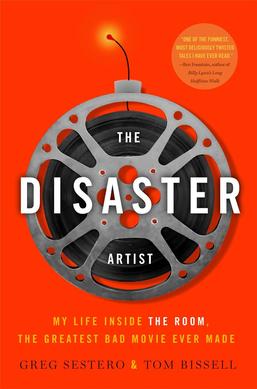
There is, apparently, a cottage industry of people affiliated with godawful-terrible movies telling the story of their experience making them. Michael Stephenson got in on the game a few years ago with his documentary Best Worst Movie about his involvement with Troll 2, and now Greg Sestero has gotten the story of his involvement in The Room out there. Sestero's story is set to form the basis of a film adaptation starring James Franco. Thankfully, I don't believe anybody is planning a tell-all about Birdemic yet. Despite the claims of people selling the stories of their own particular worst movies, Birdemic, for my money, remains the worst movie. But I've already harvested those fields.
I am deeply ambivalent about The Room, and to be honest, I'm pretty ambivalent about most of Sestero's account of his involvement with it. It has been a real struggle for me to separate my feelings about this particular work from my feelings about this field in general. See, I myself have been involved with some terrible, incompetent productions. I have been through the grind of acting workshops and castings and hunting for an agent and the stop-start pull of trying to get traction for a career in movies. Fully one-third of The Disaster Artist chronicles these activities in the young Greg Sestero's life, as he takes acting workshops in his Bay Area hometown, contemplates a move to LA, finally does move, gets an agent, takes more classes, auditions, questions himself, wonders if his mom's nay-saying was right, and struggles with the reality of having to get a day job that still accommodates increasingly infrequent auditions. To me, this was laborious stuff to get through, because I lived it. There are a million and a half people living it right now within a thirty-mile zone around where I type this, and there have been a million and a half people doing it here every day since Clara Bow put stars in the eyes of would-be it-girls and it-boys all around the country. It is a story that is profoundly unexceptional.
What makes Sestero's story different, though, is a peripheral character who evolves into a central one — the riddle wrapped in a mystery inside an accent that is Tommy Wiseau. Greg meets Tommy in an acting class in San Francisco, as Tommy murders a scene from A Streetcar Named Desire. Tommy's performance is so bizarre and incoherent that Greg asks Tommy to be his scene partner just to try to figure out what makes this odd man tick. It's unclear if Greg has yet, to this day, figured it out, but he's come closer than anybody else. If you don't already know, here's the mystery of The Room: In 2003, Hollywood witnessed the independent theatrical release of an evident ego-service project written, produced, directed, and starring an unknown, unkempt, and vaguely foreign cat named Tommy Wiseau. Wiseau's odd, heavy-lidded face stood twenty feet high, looming over motorists on scenic, heavily trafficked Highland Blvd from a billboard. That billboard stayed there for years and years. So too, the film played at midnight at the Laemmle Sunset 5 theater (across from LA's best deli, Greenblatt's. This point is not open for debate.) for years, and began to attract crowds drawn by word-of-mouth about how awful and bizarre this movie was, and the question of who was this ego-manaical oddball at the center of the whole thing?
Here, then, is the mystery of Tommy Wiseau: How did a man of totally indeterminate age and origin amass a fortune that allowed him to spend millions of dollars making and promoting a totally incomprehensible vanity project with characters, stories, and diseases that magically come and go, never to reappear again? Why did he make the baffling decisions on display in the film? Just, why? Wiseau has always been publicly circumspect regarding the answers to these questions, so The Disaster Artist is as close as we're likely to get to any answers. Where the book excels is in conveying the utter lunacy of the actual production, and the revolving door of cast and crew members trying to get this thing in the can. It also, in spite of everything, makes you feel sympathy for the inscrutable Wiseau.
As the RiffTrax for The Room points out (co-written by past NoaF interviewee Sean Thomason), the water in a fountain featured prominently in one shot is full of the tears of talented filmmakers whose films will never see the light of day as we all ironically watch The Room. In the end, the success of The Room, which is only reinforced by the narrative of The Disaster Artist, is both a testament to and an indictment of the way America awards success to individuals.
The Math
Baseline Assessment: 5/10
Bounses: +1 for the book's alternating narrative structure, which I credit to co-writer Tom Bissell; +1 for Sestero's narration in the audiobook, chiefly his impersonation of Wiseau; +1 for Tommy Wiseau as a character, even if key mysteries remain unanswered
Penalties: -1 for the Sunset Blvd and The Talented Mr. Ripley quotes that kick off each chapter — we get it, we get it, ok?;
Nerd Coefficient: 7/10 (audiobook) (a mostly enjoyable experience); 6/10 (in print) (still enjoyable, but the flaws are hard to ignore)
*** Posted by Vance K — nerds of a feather co-editor and cult film (and attendant baggage) reviewer, and LA-denizen since before the billboard for The Room disappeared from Highland Boulevard.
Reference: Bissell, Tom and Greg Sestero. The Disaster Artist [Simon & Schuster, 2013].
I’ve written and tossed two versions of this already—including one that extensively deconstructed the various puppy claims. But other people have already done this, and I doubt one more would do anything other than stir the pot one more time. And who needs that, really? So I’m going to try to do something different here.
See, while I’m utterly frustrated by the current situation, I’m also the kind who thinks it’s better to dial it down than dial it up when things get too heated. That doesn’t mean accepting bullshit—like, say, watching the individual who wrote this publicly claim that someone else has committed slander or libel, and then have a major publishing house take it seriously. But it does entail remembering that not everyone who sympathizes with the puppy campaign is cut from the same cloth, as well as considering that maybe it’s time to try to shift the discourse in a more constructive direction.
Because I’ve had it with all the negativity and recrimination. Like many people, I’m utterly frustrated by the transformation of a field that most of us enter as a pastime into yet another tiresome battleground in the so-called “culture wars”—a dynamic that, of course, only benefits the most deeply committed culture warriors. I like having cordial, measured conversations with people who don’t see the world through the same lens as me, yet that is increasingly difficult to do when everyone’s supposed to pick a side. And, again, I am not alone in this: most people I’ve spoken to are just as frustrated by the posturing, pontificating, attention-seeking, rabble-rousing, logrolling, dog-piling WANK of it all.
So maybe—just maybe—it’s time to pull the plug on #Hugowank. Here’s how I’m planning to do that (for myself):
1. Isolate and address the legitimate grievances
The sad version claims its campaign is really about sticking up for fun and/or commercial and/or pulpy and/or conservative and/or apolitical science fiction and fantasy against the onslaught of intellectual snobs and/or “social justice warriors” who have forced works of high-minded and/or message-driven and/or progressive literature on the unsuspecting masses of fandom.
Despite finding the majority of victimization claims empirically bogus, I do have some sympathy for the base-claim that popular genre is often crowded out by a specific style of literary-minded SF/F. But in short fiction, where voting pools are small and its likely that writers, editors and slush readers represent a disproportionate slice of the electorate. And it’s not the result of conspiracy but an institutional effect—a self-replicating mechanism that structures the field. Jonathan McCalmont explains how that works in these (one, two, three) articles.
For the record, I see no evidence of this in the best novel category. In fact, I see the opposite—voters rewarding novels that are, on the surface, light and breezy, but have some deeper messages if you bother to look for them. However, it’s not necessary to do that if you just want fun and adventure—sort of like Firefly. (Actually a lot like Firefly, come to think of it.) Plus several Hugo winners, Redshirts and Among Others in particular, are aimed directly at so-called trufans: Redshirts is a Star Trek parody and the protagonist of Among Others
is literally a trufan. These are genuinely popular books, and if being a fan is a major part of your life, then there’s an even stronger chance you’ll connect with them. But New Yorker material they are not.
What's more, even if certain kinds of short fiction enjoy institutional advantages at the moment, pulpy SF/F has not been shut out. Brandon Sanderson, for example, won Best Novella in 2013 for the popular and commercial The Emperor's Soul. And though I understand Charles Stross is, for some, a demon whose recent Hugo successes haunt dreams and stalk imaginations, 2014 Novella winner "Equoid" (on Tor dot com) is actually super pulpy.
It's just that, in recent years, a disproportionate percentage of:
Hugo/Nebula/Locus winners in the short fiction categories
Selections in the annual “best of” collections
Stories published in the pro-paying markets (Analog excluded)
...seem to conform to a certain narrative format, where genre elements are
thin but literalized and employed as a metaphor through which to explore
emotional or psychological issues. These are all connected, and reinforce one another. Voters are more likely to nominate works in high-prestige markets, while high-prestige markets are more likely to publish works that look like award-winners. Over time, in such an environment, writers are more likely to shift toward the successful narrative models, as these are the ones that will advance their careers. The institutional structure thus provides clear incentives for narrative convergence.
But I'm also convinced that the narrative convergence described above is underway (in the prestige circles that matter for short fiction), and I don’t think convergence--on any style--is healthy. In any given year there are really worthy examples of pulp SF/F, or SF/F that is high-minded or literary but doesn’t adhere to the literalized metaphor model. And I’d like to see that kind of stuff get more serious consideration—from editors, publishers, readers and Hugo/Nebula/Locus voters—than it has over the past few years. For the record that includes stuff that puppies like on stylistic grounds, as well as stuff puppies dislike on political grounds.
[Editor's Note: for clarity's sake, this is not a justification or rationalization of any puppy claims. Please see my reply to Jonathan M. below for further explication.]
2. Just say no to slates
The puppies claim they want to broaden the field too, though in reality slates like theirs reduce narrative diversity, impose severe limitations on what's chosen and, as such, work against that stated goal. So we here at ‘nerds of a feather, flock together’ are hereby adopting a strong anti-slate position.
Why? Because if slates are bullshit, and this year proves that they are, then I don’t want to be part of the problem—even tangentially. I mean, the Hugos are supposed to be a celebration of what we love. It’s supposed to be about individual fans selecting the things that moved or excited them, and any ballot or shortlist published while voting is on going potentially encroaches upon the autonomy of the individual voter.
To that end, I won't tell you who I've voted for this year's awards until after voting closes. As for next year, we’ll be publishing a longlist instead of a shortlist, one that draws on the whole ‘nerds of a feather' team’s reading/consumption experiences over the previous calendar year, and which provides at least 15 suggestions in every category we decide to comment on. We won’t recommend that anyone do anything other than read/consume the things we put on it, and we won’t lend support to anyone else’s efforts to sway voting.
We do, of course, reserve the right to thank anyone who sees fit to include us on their own lists, or mention that someone else’s list fits our various definitions of “good.” We just won’t get behind any organized effort to mobilize or influence voters. No sides, no teams, no bullshit.
3. Stop feeding the wank
I'll freely admit, there have been days where I've read every last word of every last blog post that made the daily file770 roundup. Mike Glyer has done an incredible job chronicling the whole sordid affair, and indeed some of the editorializing has been quite good (hi, Spacefaring Kitten). But at some point #Hugowank achieved perfect circularity. For me the moment came when Mike linked to a tweet that referenced a comment left on a previous daily #Hugowank roundup.
So as far as I can see, there isn't very much left to say--and yes, in case you are wondering, I do recognize the irony of asserting such a thing in the midst of a long post on #Hugowank. But it's true. I could deconstruct the puppies or come up with some new, flashy acronym to describe those terrible people who don't like the same books as me (TTPWDLTSBAMs). Only what would that accomplish? And what would reading more about TTPWDLTSBAMs accomplish, for that matter?
On the other hand, I think there's much to be gained by denying oxygen to a raging flame. It's not the only way to go about one's business, but as far as I'm concerned, it's the healthier option. I'm just gonna keep doing my thing, evangelizing the stuff I think is deserving and griping about the stuff that bothers me. Don't like it? Take a number.
Of course this is going to get a lot harder to do when the results are announced. Most people I know are assuming it'll go like last year, when the puppies got a bunch of stuff nominated but had little-to-no success in the final round. But remember--a lot of people who voted last year and nominated this year, were LonCon 3 attendees who are unlikely to pay for a Sasquan supporting membership, especially in the current climate. Most British LonCon 3 members I know shifted attention back to the BFSAs this year. So while I don't think many puppy candidates will win, I suspect more will be in the running than last year. I don't think the "no award" folks are going to get their desired outcome.
(As a reminder, I do not back the "no award" campaign, but rather will only put "no award" above nominees who are also activists for one of the slates, or for works that are not appropriate for/worthy of the award they are nominated for.)
4. Keep trying to improve the Hugo system
For the past two years I’ve advocated changes in how the Hugos are set up—getting rid of or rationalizing nonsensical categories, simplifying byzantine terms of inclusion, calling for Worldcon to lower cost of voting, etc. I doubt these efforts have had much impact, in the grand scheme of things, but I’m going to keep it up as long as the Hugo categories remain the clusterfuck they are. Meanwhile, it's at least theoretically possible that a reform movement could highlight areas of common interest among those who care about the Hugos.
Put another way, while I realize this blog has limited influence in fandom, I’m reaffirming commitment to working toward the end of rationalizing and streamlining the Hugos in a way that isn’t exclusive to the like-minded. To that end I will reach out to people who care as deeply about the Hugos--regardless of whether we read the same books or have the same politics.
That would, at least, be a small patch of common ground to stand upon.
***
POSTED BY: The G--purveyor of nerdliness, genre fanatic and 'nerds of a
feather, flock together' founder/administrator.
It is hard to believe that my annual excursion to San Diego is a mere four weeks away. One of the biggest draws to SDCC is the exclusives. I try to pay it forward in terms of exclusives for family members and friends who aren't able to make the trip themselves. I tend to go for the exclusives that I know I have a chance of getting and for those that won't break the bank. This week I will discuss the exclusives that I am going to try to pick up, and those that I covet.
My heart's desire:
Certain booths, due to their popularity, I don't even attempt until Sunday. Things might change for me this year, as Funko has announced an exclusive Gold Bender Pop!Futurama holds a very special place in my heart and I would love to add this piece to my collection. Odds are I will not want to attempt the craziness that is a popular booth at SDCC and try my luck on Sunday. Hasbro, another booth that I have yet to attempt prior to Sunday, announced The Combiner Hunter Series. This three pack of female
Transformers who are taking on the Devastator in an upcoming IDW comic arc. The final item I covet this year is the Gentle Giant R2-D2 Droids Jumbo Figure. I have not attempted to buy anything from Gentle Giant, but it is a bit out of my price range, but it sure is glorious!
My plan:
Thanks to the great pre-order system that Mattel uses, I will be bringing home the Monster High Villain 2-pack. This marks the first Monster High exclusive that I have
been able to score and she is excited to add two new characters to her
collection. For my wife, my plan is to pick up the SNL Weekend Update Tina Fey and Amy Poehler Action Figures from Entertainment Earth. She is normally the hardest person to shop for, but I think these will be a hit. For my son, I am back on the Mattel bandwagon and preorderd him a pair of exclusive Halo BOOMco. Blasters. He has other BOOMco. blasters and we always enjoy going to battle with each other. The guns look great and there is one for each of us!
Pick of the Week: Saga #29 - When I heard that Brian K. Vaughan was going to write Saga in a way that would make it virtually impossible for a film or TV studio to produce, he wasn't joking. Despite the truly shocking panel, Saga continues to stress me out as I am losing confidence in whether Marko and Alena will ever be reunited. The robots continue to be my favorite group in this series and when the Prince had to shoot in front of Hazel I loved that he put a smiling flower on his monitor. Moments like that make this book very special.
The Rest:
Other noteworthy books this week included major developments in Birthright, Commissioner Gorden filling in for Batman as Convergence is happening, and an uplifting Walking Dead with an unexpected twist. POSTED BY MIKE N. aka Victor Domashev -- comic guy, proudly raising nerdy kids, and Nerds of a Feather contributor since 2012.
I'm no stranger to long running book series, even if the longest I've read is most of the Malazan Book of the Fallen series. However, I don't think I've ever come into a book series from anywhere but the start, until Dark Intelligence. It's the first book in a series within an multi-series known as the Polity universe. And it's good, I liked it, but there are parts that made me question whether I'm missing something because I'm walking in on a movie part-way through, or because it's the first in a series that will continue beyond the bounds of the novel.
Dark Intelligence is about Penny Royal. Penny Royal is a "black AI", an artificial intelligence that turned against the Polity, committing crimes against its citizens and worse. Penny Royal, it's told, touched a lot of lives in the century since he (AI have genders in Dark Intelligence) went black. The story follows some of those lives as they find themselves either hunting Penny Royal, or being manipulated by him, or both.
The main character, whose chapters are written in the first-person perspective while all others are written in the third, is Thorvald Spear. Spear's got a a grudge against Penny Royal ever since the black AI turned against his unit during the war against the Prador (a race of giant crabs) and killed him a century ago. Through the magic of technology, he finds himself resurrected post-war, and goes out to find and destroy Penny Royal. With similar motives, the AI is also sought out by a crime lord, a Prador captain, and an assassin drone.
As I said earlier, this might be the first time I've come into a book universe without starting from the beginning, so it was odd to me that Spear was immediately set upon by a cat-like woman, seduced by her, and then the woman disappears for the rest of the novel without much explanation for the encounter at all. In fact, having been resurrected a century after your death and having sex with the first woman that approaches you at the bar sounds like a particularly bad idea! Maybe she was a bigger figure in previous novels. Maybe not and this scene was written to set some future plots in motion. Another sex scene occurs near the end of the novel, and I can't help but shake the feeling that they were included just to make sure this already mature novel earned a solid R rating in its movie adaptation (that's a metaphor, I don't know if there's a movie coming). It's not that they're poorly written, but that they seem sudden and out of place with the rest of the novel.
But beyond those seemingly out of place scenes, Dark Intelligence was a real enjoyable read. There are other characters and locations that speak to a universe larger than what I read, and what I read makes me want to go back through those previous novels. Dark Intelligence had a lot of things I like in my sci-fi: planet hopping, space ships, evil AI, inscrutable aliens, war-like aliens, human augmentation, biological warfare, and some body horror. It's got a touch of cyberpunk and a touch of biopunk. There are enough blurred lines that I spent most of the story questioning whether or not Penny Royal was the monster that everyone else in the story made him out to be. It's a story that kept me guessing at the AI's motives, even if the rest of his pursuers were seemingly more clear cut.
Dark Intelligence is the first of the Transformation series within the Polity universe, and I'm officially looking forward to the next book. It's solid sci-fi combined with excellent universe building kept me interested from the start.
The Math
Baseline Assessment: 8/10
Bonuses: +1 excellently employed sci-fi tropes
Penalties: -1 sex scenes that don't really contribute much to the story
Nerd Coefficient: 8/10 (Well worth your time and attention)
***
POSTED BY: brian, sci-fi/fantasy/video game dork and contributor since 2014
Reference: Asher, Neal. Dark Intelligence [Night Shade Books, 2015]
This is Part 2 of the epic Blogtable: "Cyberpunks on the State of Science Fiction, Then and Now." For those who are just jumping on, please read Part 1 first--it includes an introduction, bios of our four participants, my question on whether SF is in "crisis" today, and whether that crisis mirrors and responses to the question I posed from Rudy Rucker and Paul Di Filippo. Today we feature cyberpunk pioneers Bruce Sterling and Pat Cadigan, responding to the same question--as well as to the other participants.
The Question Redux
At
the USC symposium on cyberpunk, Rudy Rucker recalled how cyberpunk
emerged in reaction to the prevalent "arena rock" quality of science
fiction in the 1970s--its emphasis on spectacle, elitism and tired,
endlessly-rehashed tropes. Fans of the era, Rucker suggested, were
comfortable "wallowing in their castles and space navy bullshit."
Cyberpunk aimed to transgress, disturb and upend these conventions and
expectations.
Arguably we stand in a similar position today. Bruce Sterling,
speaking on the same panel as Rucker, argued that science fiction lacks a
"rhetoric of the 22nd century" analogous to the rhetoric of the 21st
that served as the pulse of 20th century science fiction. Similarly, the
critic Paul Kincaid has framed the problem as one of "exhaustion"--a
loss of faith in the idea that the future is knowable, and consequent
retreat to formal explorations, the old "castles and space navies"
tropes, and the comforting simplicity of nostalgia (including for
cyberpunk).
As Sterling and Kincaid both note, few practitioners seem to be
looking forward and engaging in rigorous speculation on the future. Yet
even in this environment, there are voices within the community loudly
complaining that science fiction is too challenging, too
intellectual--essentially that it is not "arena rock" enough.
So my question is: what would it take, in today's environment, to
restart the kind of transgressive thinking that fueled cyberpunk? What
lessons can writers, critics and fans draw from the 1970s and 1980s, and
what should they specifically ignore about that context? What does
science fiction need to do, or be, or try to do or be, to break out of
its current inertia?
Bruce Sterling
I don't think it's "transgressive thinking" that solves your alleged problem there. Actually science fiction doesn't have "inertia" now. It's not stuck in place, it's crumbling, disintegrating, like print media and book retail in general in most parts of the world.
Rigorous speculation isn't in fashion now because science isn't in fashion. You're not gonna get a lot of "science" fiction when science is on the back foot in mass culture. People like product-development now, they don't much like science -- they like "technology," by which they mostly mean commercialized digital technology.
It's like you're asking guys in ham radio circles: how can ham radio be really transgressive and cutting-edge? It sorta can, but who would notice, and why would ham radio be a platform from which you would wanna do that? Science fiction in the days of Gernsback was very closely allied to ham radio. Ham radio is still around as a medium.
This isn't a counsel of despair or anything -- if you look at, say, the Hugo Awards, you can see that the people in science fiction are not old-fashioned people, they're neck deep in echo-chamber social-media flame war, just like everybody else. Plus, there are genre emanations like Game of Thrones that are colossal, just global-scale phenomena. Star Wars is like an international holiday now.
You've got to be in trans-media to do that, it's got to be book plus TV plus movie plus collectibles plus social media fandom, but it's not a dead or inert means of expression, it's just that current media structures are quite weird. Why Harry Potter as a titanic world enterprise when writers can no longer afford to live in London?
It's always better to have novel, intelligent ideas than "transgressive" ideas. If you're "transgressing" all the time, you always have to be getting into somebody's face. You misbehave, sure, but you're letting the straights set the standards for what you can do. That always ends up looking corny in the long run.
A few specific responses to points Rudy made yesterday:
Fast forward to 2015. Has the publishing category of SF become as plastic and bogus as it was in 1979? Time for another revolution! Is the SF industry being run by tiny cartel of greedy multinational corporations and book distributors? Is 99% of the attention and money going to 1% of the writers? Are the Nebulas and the Hugos complete bullshit?
Well, no--the situation's not like 1979 any more than it is like 1959 or 1939. The entire economy's run by tiny cartels now, it's not just publishing that was cornered by ultra-rich elites.
It's true that the mid list has dwindled and more money and attention goes to fewer science-fiction creatives, but that's also true of movies, nonfiction books, acting, pop music, all kinds of pursuits. Even heads of corporations have a one percent of ultra-wealthy moguls towering over them. I dunno why, but it's clearly something broad and systemic, it's not about some personal injustice done to some particular writer somewhere.
I would also argue that popular writing kinda needs a lot of dross available. Popular writing needs room for badness. You don't get great writing without a lot of just, writing. When I look at a bookstore rack and it's all junk I feel a sense of relief: it's like the swimming pool still has water in it.
So where does this leave the ambitious, literary, independently-minded young author of the genre formerly known as SF?
It leaves them messed up and in a global Depression, but I would definitely hang out with young people if I was a young writer now. I'd be spending huge effort looking for my own generational voices and I'd try hard to make them famous. I'd be looking for conspiratorial cliques who understand that the fix is in and aren't willing to pretend otherwise.
Awards aren't much use. They're like placebo pills, really. If you believe they matter then they matter. It might be argued that awards give writers in writers organizations some reason to participate in writers organizations.
Just in passing--[The G] mentioned the rhetorical question of whether the SF publishing niche needs more badly written, middlebrow space operas and thrillers populated by emotional ciphers. Do billionaires need more tax breaks? Does the media run too many articles about art? Is TV news too liberal? Is the right wing being oppressed? Is science taken too seriously by congress? Is global warming a hoax?
Enjoy yourself there, I hope that feels better...
Pat Cadigan
Returning to G's original question:
What would it take, in today's environment, to restart the kind of transgressive thinking that fuelled cyberpunk? What lessons can writers, critics and fans draw from the 1970s and 1980s, and what should they specifically ignore about that context? What does science fiction need to do, or be, or try to do or be, to break out of its current inertia?
I was actually supposed to answer this days or weeks ago. But then, I was supposed to be at the conference where Henry Jenkins and Bruce and Rudy and others talked about cyberpunk, except I was still having chemotherapy and couldn't travel. So it goes.
Chemo is a month in the past; it wasn't as hard on me as it is on many other cancer patients and I'm feeling better, but I don't have the energy to write a survey of the genre over the last thirty years. My perspective on science fiction in general and cyberpunk in particular is different. Being a cyberpunk didn't mean my experience was less sexist than it would have been otherwise. I had people trying to pick fights with me over this or that thing they'd read that Bruce Sterling had said somewhere, over whether I actually was good enough to be in the august company of the "real" cyberpunks or had I just been included because I knew them, and even over whether women could write science fiction at all.
It was never as straightforward for me as it was for the guys. Before I could engage in a discussion of cyberpunk's qualities/merits/whatever, I had to deal with the whole gender thing. And not because I wanted to.
The gender thing always got in the way. People would talk to Bruce and Rudy and Paul and the other guys about cyberpunk. Then they'd turn to me and ask what it was like to be a woman in a male-dominated field. My standard answer became, "Well, for one thing, I have to answer this question all the time."
This is one of the very few times I've been asked a straight question about cyberpunk. However, in order to provide some background to my career/personal history, I have to bring it up. So it goes.
And after that, I'm not sure where to begin.
We're not going to see cyberpunk as everyone remembers it now because we're living in the cyberpunk future we were writing about thirty years ago. In introducing the question, G said:
Bruce Sterling, speaking on the same panel as Rucker, argued that science fiction lacks a "rhetoric of the 22nd century" analogous to the rhetoric of the 21st that served as the pulse of 20th century science fiction. Similarly, the critic Paul Kincaid has framed the problem as one of "exhaustion"--a loss of faith in the idea that the future is knowable, and consequent retreat to formal explorations, the old "castles and space navies" tropes, and the comforting simplicity of nostalgia (including for cyberpunk).
Well, of course SF doesn't have a rhetoric of the 22nd century. It hasn't even been a a whole two decades since the 21st century began. And it began with the nasty surprise of 9/11, which affected everyone, not just the US, because it's the cyberpunk future–we're all networked up. It affected airport security everywhere, permanently. How can you have an idea about the 22nd century when you're still trying to figure out the 21st?
Cyberpunk was–to me–the impact of technology on people, who would then have an impact on technology, which would then...you see where I'm going.
Take communications and surveillance. The two have become inextricable. If you use the internet, you open yourself up to surveillance. Tweet about something you're doing and everyone knows where you are. Maybe nobody's actually surveilling you in particular but it doesn't matter. It's like being in the background of a photo. It wasn't intended to be a photo of you in particular...but it is.
I can't think of a more cyberpunk situation. Personally, I'm not done dealing with that kind of thing in my work. I'm still writing what I've always written. Call it cyberpunk or don't call it cyberpunk but I'm writing about it. It doesn't read like stuff written in 1985 because it isn't 1985 any more and I'm twice the age I was back then. How old is too old to be a punk? And what are you after that?
"Transgressive"?
I've been transgressive my whole life, not because I wanted to get in someone's face but because there was always someone objecting to my being who I was in whatever context: e.g., a cyberpunk; a woman in a male-dominated field. Hell, in high school, I was the only girl in my physics class. That was 1970. I spent the first half of the school year just defending myself–and the teacher was the biggest jerk of all.
I don't know. You guys, talking about writing "arena rock" science fiction. Do you have any idea that there's more going on than just "Do I choose arena rock sf or what?" Have you heard of diversity? Does the word just make your eyes glaze over while visions of "political correctness" dance in your head?
That's the thing about cyberpunk. It was transgressive and bolshy and rude and different but the one thing it wasn't: ethnically diverse, at least in terms of the writers. The best we could do was to widen the focus of Ameri-centric sf.
And son of gun, just as more diverse writers have begun to enter the field, a bunch of good old white guys figured out how to game the Hugo Award, in the name of restoring science fiction to its "former glory" as the pulpy stuff for people who want to read about white men in space.
Yeah, yeah, everybody's going to say awards don't mean anything. Maybe not. But when a bunch of xenophobic reactionaries figure out how to steal an award ballot--and not just any award but the one that's most well-known--I think that means something.
If we want to stay alive, we have to stop thinking in terms of imposing labels on this or that from our own perspective and adjust our vision so that we can see what is happening...whether it's happening to us in particular or not.
That was cyberpunk's great strength--it wasn't just concerned with science fiction. It was holistic--it was SFand music and technology and art and cultures other than our own. It wasn't comfort food, it didn't indulge, and it didn't pander–it asked the hard questions and it talked about things that made people uncomfortable––not just for the sake of making people uncomfortable but because these were things we cared about.
I don't know what anyone else is going to do but that's what I'll be doing for whatever time I have left. And somewhere, someone will be taking issue with it.
Fuck 'em if they can't take a joke.
***
POSTED BY: The G--purveyor of nerdliness, genre fanatic and 'nerds of a
feather, flock together' founder/administrator.
Welcome to a special edition of Blogtable! Normally, a prompt is issued by a regular contributor to nerds of a feather, flock together, which is then answered by three guest bloggers in turn. However, this time we have four esteemed guests, each of whom was gracious enough to lend their time and energy to this project. And what guests they are! Please join us in welcoming:
Rudy Rucker
Photo by Sylvia Rucker
Rucker's novel Software (1982) is considered by many to be the first cyberpunk novel ever published (as well as the first in which a mind is downloaded into a robot body). Both it and sequel Wetware (1988) won the Philip K. Dick Award. The full Ware Tetralogy is available free via creative commons license, or as a trade paperback
with a nifty introduction by fellow cyberpunk innovator William Gibson. (Get the paperback, though--it's well worth it.) Rucker has published 17 additional novels and 5 short story collections, many of which feature his signature "transrealist" approach to science fiction writing. He is also a prolific writer of non-fiction--you can check out his Collected Essays, including "Transrealism" and "What is Cyberpunk," at his website. Rucker's latest book is his hefty Journals: 1990 - 2014, a tome which in some ways anticipates Karl Ove Knausgaard's My Struggle as a transrealist work of self-reinvention.
Paul Di Filippo
Photo by Rudy Rucker
In addition to contributing the excellent short story "Stone Lives" to Mirrorshades (the essential anthology of early cyberpunk), Di Filippo is author or co-author of 13 novels and 15 short story collections, including the highly influential Steampunk Trilogy. He is also a prolific reviewer and essayist--where, this humble blogger suggests, Di Filippo sets an impossibly high bar for the rest of us wannabes. (I mean, come on.)
Bruce Sterling
Photo by Rudy Rucker
Sterling has been called the "unofficial spokesperson" of cyberpunk and "Chairman Bruce" for his role in the emergence of the style. He edited the fanzine, Cheap Truth, that served as the ideological center of the nascent movement, edited Mirrorshades and has authored a number of critically-acclaimed and influential novels (including the excellent Islands in the Net and Schismatrix Plus). Sterling has worked as a journalist, teacher, activist and speaker, and is involved in multiple projects investigating the intersection of art, design, technology and social interaction.
Pat Cadigan
Photo by Christopher J. Fowler
Cadigan is author of the seminalcyberpunk/postcyberpunk novels Mindplayers (1987), Fools (1992) and Tea from an Empty Cup (1998), which are collected in this fantastic omnibus--as well as the equally good Synners (1991) and Dervish Is Digital (2000). She is a two-time winner of the prestigious Clarke Award (for Synners and Fools), and in 2013 won a Hugo for the novelette "The Girl-Thing Who Went Out for Sushi" (Edge of Infinity). Cadigan is also a prolific writer of short fiction, and one of the authors who--many years ago--convinced a certain blogger that science fiction could work as serious literature. [See also: my recent review of Mindplayers.]
Background
This special edition of Blogtable was inspired by a recent symposium hosted by the University of Southern California, which both Vance and I attended. "Visions and Voices: Cyberpunk - Past and Future" was, in a word, fascinating--and featured enough material to build a year's worth of Blogtables (check out the videos to see what I mean). But it was the first panel, featuring cyberpunk pioneers Rudy Rucker and Bruce Sterling, that really blew my mind. So much so that I spent about 10 minutes composing a question about how and to what degree one might compare the state of the field of science fiction today to what the cyberpunks rebelled against.
Unfortunately, time ran out before I could ask it. Thankfully both Rudy and Bruce agreed to answer my question via email--only by that point, the idea had grown in my mind. I needed to turn this into the next episode of Blogtable--the biggest and boldest yet. Enter Paul and Pat, each of whom enthusiastically agreed to participate. Frankly, I'm still amazed that everyone said yes. And humbled, because these are four people whose work I've admired for a long, long time.
Because this Blogtable is so big, however, we're going to split it into two parts. Today we are posting the question and the responses by Rudy Rucker and Paul Di Filippo. Tomorrow, we'll repost the question alongside the responses by Bruce Sterling and Pat Cadigan.
But enough about all that...to the question!
EPISODE V: In which The G attempts to draw a tenuous historical parallel...
At the USC symposium on cyberpunk, Rudy Rucker recalled how cyberpunk emerged in reaction to the prevalent "arena rock" quality of science fiction in the 1970s--its emphasis on spectacle, elitism and tired, endlessly-rehashed tropes. Fans of the era, Rucker suggested, were comfortable "wallowing in their castles and space navy bullshit." Cyberpunk aimed to transgress, disturb and upend these conventions and expectations.
Arguably we stand in a similar position today. Bruce Sterling, speaking on the same panel as Rucker, argued that science fiction lacks a "rhetoric of the 22nd century" analogous to the rhetoric of the 21st that served as the pulse of 20th century science fiction. Similarly, the critic Paul Kincaid has framed the problem as one of "exhaustion"--a loss of faith in the idea that the future is knowable, and consequent retreat to formal explorations, the old "castles and space navies" tropes, and the comforting simplicity of nostalgia (including for cyberpunk).
As Sterling and Kincaid both note, few practitioners seem to be looking forward and engaging in rigorous speculation on the future. Yet even in this environment, there are voices within the community loudly complaining that science fiction is too challenging, too intellectual--essentially that it is not "arena rock" enough.
So my question is: what would it take, in today's environment, to restart the kind of transgressive thinking that fueled cyberpunk? What lessons can writers, critics and fans draw from the 1970s and 1980s, and what should they specifically ignore about that context? What does science fiction need to do, or be, or try to do or be, to break out of its current inertia?
Rudy Rucker
That’s very much a multipart question, G man. So I’ll give a multipart answer, breaking it into sections with italicized headers.
1. Why SF?
When I’m talking aloud I get loose and I say things that I wouldn’t write in an essay. So it’s amusing to hear that on the USC Cyperpunk panel in 2015 I spoke of “castle and space-navy bullshit” as being kinds of SF that I don’t enjoy.
My point was that I prefer to see SF that’s about ordinary kinds of people, as opposed to being about aristocrats, power elites, military officers, or police. To this end, I often use my so-called transreal approach of basing my characters on myself, my friends, or people I casually know. It’s a way of making the SF real, and not veering off into the writing about generic kinds of characters. Above all, I don’t want to base my characters on characters in movies, TV show, or other books I’ve read. I want them to be real people in a SFictionally doctored world. I want them to be transreal.
I like the idea that SF acts as a funhouse mirror to show us what our current lives are really like. And there’s the persistent wishful hope that SF might raise people’s awareness and somehow change the world. Like, during the long years when the US was under the yoke and lash of the Bush-Cheney administration, I made a point of writing novels in which the US President was a stupid and evil man—I had Dick Too Dibbs in Hylozoic, and Joe Doakes in Mathematicians in Love. I was doing my part for political change—as surely as if I’d been handing out leaflets door to door. It almost goes without saying, by the way, that a transreal book is intrinsically antiestablishment. The goals of individuals are forever antithetical to the goals of power elites.
2. The Birth of Cyberpunk.
Jumping back to the birth of cyberpunk—it’s not like it was a considered and well-thought-out campaign. In 1980 my biggest beef with the SF scene was that my books weren’t getting much attention. I’d hoped to find a home in the SF world, and I had a feeling I wasn’t welcome there. And now in 2015, thirty-five books later, I have much the same feeling about SF!
My 1980 malaise about SF mirrored the fact that, in the wider world, the system was bent on grinding me into dust. I’d barely escaped being sent off to die in Viet Nam. I was unable to get a secure academic job. Our nation’s leaders hated me. I’d fled reality for SF, and I wasn’t welcome in SF—so then what? Then I was lucky enough to meet some people who were writing like me.
I’ve sometimes compared cyberpunk to Beat literature. The Beats had Jack Kerouac as their angelic voice and Allen Ginsberg as their agitator. We had William Gibson for our star. He’s a sheerly wonderful writer—a master of language, aphorism, imagery, characterization, and attitude. And we had the manic, motor-mouthed, confrontational Bruce Sterling for our advocate.
I met Allen Ginsberg in person around 1981, and I asked him how it was that the Beats had gotten so much press. His answer: “Fine writing.” We cyberpunks were very focused on being good writers. We wanted to write avant garde, high-lit books that used the tropes of SF, with the added factor that our books had a rebellious, anti-establishment quality—the punk thing. And, of course, we dealt with the uneasy fusion between humans and machines. The cyber thing.
3. Trad SF and Crypto-SF.
Fast forward to 2015. Has the publishing category of SF become as plastic and bogus as it was in 1979? Time for another revolution! Is the SF industry being run by tiny cartel of greedy multinational corporations and book distributors? Is 99% of the attention and money going to 1% of the writers? Are the Nebulas and the Hugos complete bullshit?
Could be, seekers, could be.
Just in passing—you mentioned the rhetorical question of whether the SF publishing niche needs more badly written, middlebrow space operas and thrillers populated by emotional ciphers. Do billionaires need more tax breaks? Does the media run too many articles about art? Is TV news too liberal? Is the right wing being oppressed? Is science taken too seriously by congress? Is global warming a hoax?
No, no, the majority of the books being published under the science fiction label really are quite dull and generic these days. The other day I was looking at the SF rack in an airport shop. Yeecchh. It really is like the late 70s.
But, unlike the old days, that’s not the whole story. If you’re a regular reader of, say, the New York Times Book Review, you will have noticed that a lot of recent mainstream novels have SF elements in their plots. I’d guess that fully a third of all new mainstream novels are crypto-SF.
Of course the tame mainstream critics never use the SF label when enthusing over these new books. The works are visionary, speculative, powerfully imagined, and magical—but they’re not science fiction. Couldn’t possibly be. The New York Times doesn’t review SF.
4. Breaking In and Dropping Out.
So where does this leave the ambitious, literary, independently-minded young author of the genre formerly known as SF? Well, even now, the SF publishing system does grant newer writers with a certain novelty credit. Nobody ever knows what’s going to sell, and they have to hedge their bets. So you do have a possibility of selling a non-traditional, transreal, politically subversive novel. Your novel, launched in the usual blaze of no publicity and no reviews, will probably bomb. Maybe you can sell a second, but not a third. And then what?
Maybe, if you’re enough of a shapeshifter, you can knuckle under, bloat up, and dumb down. Or maybe you can manage a YA book. Or maybe you can sell into the mainstream market—although, if you have a track record as an SF writer, the mainstreamers will be loath to consider you. You’re tainted. Potentially subliterate.
So then you might go hat in hand to a series of small publishers, abasing yourself in the hope of no advance, a shitty cover, an ugly font, no ads, five free author copies, and potentially iffy royalty payments! (Just rhetoric here—I really do love my small press friends.)
Or maybe you get into self-publishing . That’s where I’ve been at for my last two novels. It’s not bad. A little like being under house arrest. If you put in seven or eight painful months of trial and error, you can figure out how to create legit-seeming PDF interiors and covers for print-on-demand paperbacks. Plus you’ll make ebooks for the Kindle and other readers. And you can sell your paperbacks and ebooks via Amazon and maybe via the one or two pipsqueak alternate venues that still happen to exist. If you do all this yourself, it doesn’t cost you anything—although you do need to get access to some software along the lines of InDesign, Dreamweaver, Photoshop, Sigil and Calibre.
A plus is that, as a self-pubber, if you’re pushy and high-profile enough, you can run a Kickstarter to score the equivalent of a cash advance for publishing your book. Really when you crowd-source and offer rewards, you’re doing advance sales of a collector’s edition. You’re likely to score more money this way than you’d get from a small press, and maybe even more than you’d get from an SF industry house.
5. Reforming SF.
But these are the perhaps too gloomy musings of an old man. What about the dream of writing a style of SF that changes the genre and gets noticed by the wider world? Okay, that’s possible.
Certainly it helps if you can band together with a couple of other writers. Starting an online ezine is a good way to do this. In my opinion, online ezines should be free—especially if you want a lot of people to read them. Forget about nickel-and-diming your initial readers, if you can get a groundswell of interest going, then you’ll be making money at the back end of the process, that is, when you start selling books or Kindle singles or commercial stories.
I had a little experience with this in publishing and editing my ezine Flurb from 2006 to 2012. You can read all thirteen fab issues free online. It was fun for me to be in touch with other writers. Shout-outs to: Adam Callaway, Brendan Byrne, Eileen Gunn, Cory Doctorow, James Worrad, Kek, Emily Skaftun, Leslie What, A. S. Salinas, Wongoon Cha, Mac Tonnies, Rudy Ch. Garcia, Bruce Sterling, Charlie Jane Anders, Madeline Ashby, Bef, Jon Armstrong, Paul Di Filippo, John Shirley, Seth Kallan Deitch, Anna Tambour, Howard Hendrix, Cody Goodfellow, Kim Stanley Robinson, Charles Stross, Martin Hayes, Alex Hardison, Ian Watson, Christopher Shay, Charles Platt, Lavie Tidhar, Th. Metzger, Kathe Koja, Carter Scholz, Michael Blumlein, Tamara Vining, Danny Rubin, Annalee Newitz, Marc Laidlaw, Richard Kadrey, Ernest Hogan, Terry Bisson, Doug Lain, Brian Landis and all the other deviants involved.
Flurb did get some notice—we were getting hundreds of thousands of hits. It was art, and it was interesting, but did we change the face of SF? Hard to say. It’s not clear that our lumbering multinational commercial publishers ever look at anything but spreadsheets. A cultural democracy in action, with every consumer-dollar a vote. And just look how wonderfully democracy does in selecting the very cream of the crop to serve as our representatives in the Congress!
Another angle for changing SF from within is to start writing about a set of ideas that haven’t really been touched upon yet. That’s a true and hardcore kind of SF endeavor. It’s not easy. You have to get yourself to look at the present day world with new eyes—as if you’re a Martian. You pretty much want to forget about all the SF plots and futurist-type prognostications. In the same sense that your characters shouldn’t mirror characters in existing works, your ideas shouldn’t mirror futurist ideas that you might read in magazines.
A good rule of thumb here is that if most people believe something—then it’s wrong. Consider: a hundred years ago, the human race pretty much didn’t know jack shit about science or modern technology. A hundred years from now, just about every single bit of tech that we’re using today is going to be gone.What’s going to replace it? Anything you want. Make up the weirdest shit you can think of. Be optimistic. Why not a new force of nature? Why not aliens from the subdimensions? Why not telepathy with every single object that you see?
Pile on the bullshit and keep a straight face. As the immortal David Lee Roth said, “It’s not who wins or loses—it’s how good you look.” If you and your friends can make your books fun and quirky, then maybe the soggy, stodgy SF ship of state will change its course.
6. Abandoning SF.
Or maybe at this point it’s impossible to change the commercial genre known as SF. In 2015, there’s an alternate path. What if you sidestep the SF publishing niche, and shoot for mainstream publishing from the start?
It could be that the whole SF publishing industry is on its way out—or down. There will still be some great science-fiction books, yes, but they’ll be called something else. Transreal, visionary, speculative—like that. And the hidebound old trad SF label might really be fated to descend into subliterature. Maybe in ten years nobody will even consider publishing a good SF novel under the old SF rubric. Maybe the old category has been eaten by parasitic Martian blimps with electric news-crawl letters on their sides, or by institutional politics left and right, or, more simply, by cultural dynamics and the processes of media change.
It’s a bit sad. For me, it’s like I grew up in a nice small town—cue the silo-fulla-corn nostalgia routine—and I go back thirty years later and it’s all strip malls, and the city core is stone cold dead. As the Pretenders put it in My City Was Gone: “Ay, oh, where did you go, Ohio?”
The big loss for us mad-scientist, freakazoid, pinpoint-pupil SF nut-cases is that the mainstream market is harder to break into than SF publishing. Here in the nest it’s kinda okay for us to write funny. Me, back at the very start I was so daunted by the whole Brahmin Mandarin New Yorker vibe that I never tried selling into that market at all. I liked the idea of being an SF writer. I liked the image of being a rock and roll musician instead of an orchestra violinist.
But…if the orchestras are trying playing rock and roll, however ineptly, why not try for a gig with them? If you keep your soul, you’ll still be writing SF. Maybe better than before. Educating the squares. Showing them where it’s at.
Many paths, many futures.
Write on.
7. Further Reading.
In the DIY punk tradition, I self-published my Collected Essays as an ebook in 2012, and in the fuck-it hacker tradition, I also made the essays available for free. Relative to the topics I’ve touched on here, you might check out “What is Cyberpunk,” “Cyberpunk Lives, ” “New Futures in SF,” and/or “The Great Awakening."
Paul Di Filippo
In that video referenced in the introduction to our discussion, Rudy remarks that it's awfully hard to be the speaker who has to follow the jaw-droppingly articulate and idea-overflowing Bruce Sterling. Of course, the same might be said for following Messr. Rucker himself, as I am feeling now. Rudy lays down a brilliant, accurate history of the past thirty years of SF (my God, where did those decades go?!?), and then projects a myriad fascinating future vectors for this narrative and thematic mode to pursue. There is nothing I see to contradict in his presentation, or deficiencies to repair, so I will have to content myself with riffing off certain things he's said, then maybe adding a new slant or two.
First, let me structure my reply this way, in two parts. In my personal life and in my observations about the world, I oscillate between two contradictory viewpoints, whose synthesis might be that both are simultaneously true. So I will look at SF from each of these POVs separately.
First, "'Twas ever thus." (And here I'm going to cite Robert Crumb's great illo of Mr. Natural atop a grinning tractor as he proclaims this truth.)
People and their cultures are eternal. (At least until we start installing permanent changes in the human genome.) The same old ways of being have persisted forever, since hominids emerged. The same set of desires and responses, the same kinds of love and hate, the same issues of art and religion and politics. "They heard the call and they wrote it on the wall, before there was even any Hollywood," as Steely Dan opined about cave art. This moment in time, this fix we are in, has happened before, many times, and will happen again. Nothing to worry about. Hang loose.
Rudy gets at this a little bit by comparing cyberpunks to the Beats. What the Beats faced circa 1948, we faced circa 1984 (nice Orwellian synchronicity with those two dates). So the process of reinvigoration of any genre is perpetual, and nothing special for this moment. This is something of the Buddhist View of Science Fiction.
But another constant to consider is Sturgeon's Law: 90% of everything is shit. There is no way we can turn a marketing genre around to some kind of utopian state of brilliant perfection. By default, the great bulk of stuff is, has been, and always will be trivial trash. There are indeed Silver and Golden Ages, when the ratio of shit to diamonds shifts a bit in favor of gems. Rudy and I and the other cyberpunks were lucky enough to experience one of those moments, as were the New Wave folks, as were the Campbellian Revolution folks, as were the Gernsbackians, and so forth. Golden Ages are hard or impossible to predict or manufacture.
But I'd like to address Rudy's use of the word "elitist." I know he's using it to mean narratives wherein upper classes receive all the attention of the storyline. But art itself is ineluctably elitist. If art means anything, it means a spectrum of quality, difficulty, impact and performance. The ten percent of genius that Sturgeon's Law alludes to. Unless we have sieves for genius, we will always be swamped with shit.
I guess this observation brings me to my other, antithetical viewpoint that I cherish on alternate days of the week.
This era is unique and full of special challenges and opportunities.
Rudy does a magnificent job of addressing this viewpoint. He speaks of self-publishing, slipping under the radar of mainstream, creating ezines, etc. I would also mention the great resource of the internet allowing writers to research and communicate beyond anything that has gone before. Imagine how the cyberpunk movement was conducted with paper fanzines! But he does not mention a few of the factors that are making the life of the SF writer so difficult. How to tackle these trends and issues is not something I have an easy answer to.
First is the very lack of gatekeepers and healthy elitist attitudes. The internet has "disintermediated" the hell out of a system that worked, in however flawed and biased a way, to produce the incredible canon of SF that we all cherish. It took Frank Herbert over twenty rejections to get Dune published. Would Herbert's career have taken off better if he had self-pubbed it with no hassle? Maybe, maybe not (see below). The self-publishing movement, however valid and worthy in some cases, has also opened up the floodgates to a tsunami of crap. Amateurs ruin everything, I'm sorry. When asked if writing workshops discouraged fledgling writers, Flannery O'Connor said, "Not enough." It's just Gresham's Law as applied to SF: bad fiction drives out the good. When presented by Amazon with a hundred new ebooks, 90% of which are shit, and one of which is Rudy's and nine others of which are good stuff too, guess what the odds are of a random reader buying Rudy's book, or one of the other nine?
Whenever I hear that the field discourages Group X from entering or being heard, my immediate response is to say, "Great! Our work is partly done. Now if we could only discourage Groups A, B, C and Z as well!" (Let Z stand for white male conservative writers if you will.) The barriers to getting published should be high enough to discourage dilettantes and the talentless, regardless of any other classification they belong to. Do you know the story of the fellow who approached the Zen monastery and asked to be enrolled as a student? The Zen Master told him, "No, sorry, full up," then shut the door in his face. The student-to-be then camped bareheaded and without food or water outside the gates for three days, in rain and heat, till he fell over unconscious. Only then did the Master take him in as his acolyte. Why can't this be our template, instead of handing out "participation awards" to every Tom, Dick and Harriet who can string some two-syllable words together into a cliched story?
Another trend we are facing is the fragmentation of the audience into niches, otherwise known as the "There Can Never Be Another Beatles" problem. We could produce another whole cyberpunk-like set of genius writers, and they would go unheard, due to the immense variety of subgenres and entertainment activities available to the audience. Take a figure like George R. R. Martin, famous and best-selling enough to appear in Entertainment Weekly magazine. There are fans who have certainly never sampled him and never will. Same goes for Stephen King. The chances of producing another figure with the stature and influence of a Robert Heinlein are correspondingly reduced.
Another matter is the sheer weight of genre history. If we date SF back to Jules Verne (rather than Mary Shelley, who, while brilliant and a real forerunner, left no real school of imitators), then SF originated in 1851, with Verne's "A Voyage in a Balloon." Consequently, we now have over 150 years of literature on our backs. It's all available too, thanks to digitized books and the internet market for second-hand physical books. There's no excuse for not knowing your chosen past. It would be like trying to be a dancer and never knowing Isadora Duncan or Martha Graham. We can't reinvent the wheel, we have to put new spins on old tropes. Every now and then, a really fresh idea pops up. The Singularity was probably one such, which explains why it was glommed-onto so enthusiastically. But otherwise, every time we want to write about one of Rudy's "Power Chords," the educated, savvy SF writer (as opposed to some unschooled amateur or idiot savant) is forced to face what Hemingway saw as his own major challenge: "to beat some dead man at his own game." It's hard work.
All of these things would be immensely discouraging, save for one ineluctable truth: great SF somehow continues to be written! When I read a new book by Rudy, or Hannu Rajaniemi or Nick Harkaway or M. John Harrison or China Mieville or Karen Joy Fowler, then my faith in our ability to produce relevant, touching, tragic, funny, hip, truly speculative SF is reaffirmed. I study them and try to take direction and excitement from them, and improve my own work. That's the eternal process all true artists throughout time have employed.
It's like the old urban legend about the scientist who proved bumblebees are aerodynamically unable to fly. You just have to point to a bumblebee to disprove him!
Let's all try to be the best bumblebees possible, and sting the asses of complacency, sloth, ineptness and narrow-minded lack of real visions!
[To be continued.]
***
POSTED BY: The G--purveyor of nerdliness, genre fanatic and 'nerds of a
feather, flock together' founder/administrator.


 and
and  in particular, are aimed directly at so-called
  . And though I understand Charles Stross is, for some, a demon whose recent Hugo successes haunt dreams and stalk imaginations, 2014 Novella winner "Equoid" (on
  ) or Aliette de Bodard's "Immersion" (in


 with a nifty introduction by fellow cyberpunk innovator William Gibson. (Get the paperback, though--it's well worth it.) Rucker has published 17 additional novels and 5 short story collections, many of which feature his signature "transrealist" approach to science fiction writing. He is also a prolific writer of non-fiction--you can check out his Collected Essays, including "Transrealism" and "What is Cyberpunk," at his website. Rucker's latest book is his hefty
  , a tome which in some ways anticipates Karl Ove Knausgaard's My Struggle as a transrealist work of self-reinvention.
 (the essential anthology of early cyberpunk), Di Filippo is author or co-author of 13 novels and 15 short story collections, including the highly influential
  . He is also a prolific reviewer and essayist--where, this humble blogger suggests, Di Filippo sets an impossibly high bar for the rest of us wannabes. (I mean,
 and
and  ). Sterling has worked as a journalist, teacher, activist and speaker, and is involved in
 --as well as the equally good
  (1991) and
  (2000). She is a two-time winner of the prestigious Clarke Award (for Synners and Fools), and in 2013 won a Hugo for the novelette "The Girl-Thing Who Went Out for Sushi" (
 , and Joe Doakes in
  . I was doing my part for political change—as surely as if I’d been handing out leaflets door to door. It almost goes without saying, by the way, that a transreal book is intrinsically antiestablishment. The goals of individuals are forever antithetical to the goals of power elites.
 published. Would Herbert's career have taken off better if he had self-pubbed it with no hassle? Maybe, maybe not (see below). The self-publishing movement, however valid and worthy in some cases, has also opened up the floodgates to a tsunami of crap. Amateurs ruin everything, I'm sorry. When asked if writing workshops discouraged fledgling writers, Flannery O'Connor said, "Not enough." It's just