So last night I went to see a John Scalzi reading/signing for his new novel REDSHIRTS. It was at the Burbank Central Library, which seems like a pretty special community space for Burbankians (Burbankites?), because it's well-stocked with books, staffed by nice people and open until 9pm (unlike our budget-strapped libraries here in LA).
I got there early, so I could pick up an extra copy of REDSHIRTS to be signed. By the time Scalzi arrived at 7pm, the room was pretty full. I'm terrible at estimating crowd sizes, but I feel like there were about 200 people there. In any event, it was a pretty big crowd for a book reading/signing, but given Scalzi's popularity, both as an author and blogger, that's not too surprising.
At this point, you may want me to explain why I put "reading" in quotation marks/double inverted commas...
[SPOILER ALERT: if you're going to see Scalzi read on the rest of his tour, consider NOT proceeding further. I'm not going to reveal anything "big," or give you a blow-by-blow account in detail, but I will discuss my experience at the reading, and you may prefer to go in clear-headed, as I did. If not, read on.]
Thursday, June 14, 2012
Wednesday, June 13, 2012
RANT: This. Must. Change.
Saladin Ahmed, author of THRONE OF THE CRESCENT MOON and someone I consider a friend of this site, recently posted this on his blog:
Three Things To Take Away From This
1. Saladin needs support, both material and spiritual, from his fans. If you count yourself as one of them, then I urge you to consider giving your patronage. If you are not, but have been curious about THRONE, then I strongly encourage you to pick up a copy.
2. This situation is a direct result of the LACK of proper compensation given to authors. Let me spell it out for you: a typical publishing contract gives authors a 17.9% royalty rate. Booksellers, including ebook retailers, take about 30%; the rest goes to publishers. Now, admittedly, all stops on this supply chain do essential work, and all have been struggling as of late (with the exception of ebook retailers).
But I'm going to say it straight--it's messed up that the people actually coming up with the ideas and actually putting words onto paper and actually creating the worlds and characters and situations we get our pleasure reading about are getting the smallest share, and it's decidedly too small.
This is EXACTLY why self-publishing has become so enticing to so many emerging authors...because you can take 70% of royalties instead of 17.9%. Sure you miss out on all the stuff publishers provide, but you can sell 1/4 the books and still makemore just about the same amount of money. For those who are not at the apex of their careers, and who are unlikely to ever become GRRMs or Grishams, this is starting to make more and more economic sense. As self-published books grow more acceptable to readers, this potentially creates a serious problem for publishing companies.
3. Don't take this as a rant against publishers. As I said above, they are also struggling, and you just need to look at imprints like Tor/Daw and Gollancz/Orbit to see how essential they are to maintaining the health and progress of SF/F as a set of genres. But if publishing companies are going to survive, they collectively need to re-examine their compensatory models. Publishers need to consider raising the wholesale prices of books and ebooks to up that royalty rate, at least to 20%, if not 25% or higher.
Now before you go all DOJ on me and claim I'm calling for some sort of anti-consumer price fixing, let me just say that I don't like the idea of spending more money either. But I can't see any way around the fact that authors should be compensated better than they are, or the notion that a generalized price increase is the most efficient way of getting to there. We--as readers--should be willing to pay a little bit more for books than we do, provided we know that extra money is going straight to the people responsible for expanding our horizons and providing endless hours of entertainment.
Hello. If you’re reading this, chances are pretty good that you’re a reader of my fiction and/or an IRL or online friend. In any case, a warning: This post is quite long, and it’s deeply (perhaps uncomfortably) personal.I won't get into more detail, but let you track back to his blog if you want to know more. Suffice to say, he's in financial trouble and that trouble is directly related to the struggle of trying to make a living as a writer.
I’m writing this post because I am, not to put too fine a point on it, in trouble and in need of help...In essence, this is a plea for a sort of patronage. A number of you have bought or spread word about my first novel, Throne of the Crescent Moon, and I can’t thank you enough for that support. I’ve also had a humbling number of readers write to ask how they can further support my writing. So here I’m offering up a new piece of fiction and, with it, a request for further support. Depending on who you are, this support might be described as help for a friend in need, patronage for a writer whose long-term career you’d like to support, or both
Three Things To Take Away From This
1. Saladin needs support, both material and spiritual, from his fans. If you count yourself as one of them, then I urge you to consider giving your patronage. If you are not, but have been curious about THRONE, then I strongly encourage you to pick up a copy.
2. This situation is a direct result of the LACK of proper compensation given to authors. Let me spell it out for you: a typical publishing contract gives authors a 17.9% royalty rate. Booksellers, including ebook retailers, take about 30%; the rest goes to publishers. Now, admittedly, all stops on this supply chain do essential work, and all have been struggling as of late (with the exception of ebook retailers).
But I'm going to say it straight--it's messed up that the people actually coming up with the ideas and actually putting words onto paper and actually creating the worlds and characters and situations we get our pleasure reading about are getting the smallest share, and it's decidedly too small.
This is EXACTLY why self-publishing has become so enticing to so many emerging authors...because you can take 70% of royalties instead of 17.9%. Sure you miss out on all the stuff publishers provide, but you can sell 1/4 the books and still make
3. Don't take this as a rant against publishers. As I said above, they are also struggling, and you just need to look at imprints like Tor/Daw and Gollancz/Orbit to see how essential they are to maintaining the health and progress of SF/F as a set of genres. But if publishing companies are going to survive, they collectively need to re-examine their compensatory models. Publishers need to consider raising the wholesale prices of books and ebooks to up that royalty rate, at least to 20%, if not 25% or higher.
Now before you go all DOJ on me and claim I'm calling for some sort of anti-consumer price fixing, let me just say that I don't like the idea of spending more money either. But I can't see any way around the fact that authors should be compensated better than they are, or the notion that a generalized price increase is the most efficient way of getting to there. We--as readers--should be willing to pay a little bit more for books than we do, provided we know that extra money is going straight to the people responsible for expanding our horizons and providing endless hours of entertainment.

Tuesday, June 12, 2012
CONTRIBUTOR PROFILE: Philippe
A hearty, nerdy welcome to our newest contributor, Philippe! A prototypical post-hipster nerd, Philippe will be our point man on comic books/graphic fiction. But that's not all, folks: expect this nerd-for-all-seasons to grace us with his strong opinions on film, television and non-graphic fiction as well.

NAME: Philippe
SECRET UNDISCLOSED LOCATION: Undisclosed until I return to L.A.
NERD SPECIALIZATION(S): comics, films, time travel
MY PET PEEVES IN NERD-DOM ARE: Nerds
VAMPIRES, WEREWOLVES, ZOMBIES, ALIENS OR ROBOTS: Private Investigators
RIGHT NOW I'M READING: Bukowski's Hollywood
...AND A COUPLE BOOKS I RECENTLY FINISHED ARE: Ham on Rye, Breakfast of Champions
NEXT TWO ON QUEUE ARE: Finishing Claremont's run on X-Men
MY FAVORITE SUPERHERO AND SUPER-VILLAIN ARE: John Constantine and John Constantine
IF I WERE A SUPERHERO/VILLAIN, MY POWER WOULD BE: Rakish charm
THE BEST COMIC FILM OF THE PAST 5 YEARS IS: When did Ghost World come out?
THE WORST COMIC FILM OF THE PAST 5 YEARS IS: I haven't seen Green Lantern yet, but I am going to say Green Lantern
I JUST WATCHED [FILM X] AND IT WAS AWESOME: Does the first three seasons of Community count?
I JUST WATCHED [FILM Y] AND IT WAS TERRIBLE: Goon
EVERYONE SHOULD SEE [FILM Z] BEFORE IT'S TOO LATE: Three Amigos
BEST SCIENCE/SPECULATIVE FICTION SHOW OF THE PAST 10 YEARS: Heat Vision and Jack
WORSE ENDING--LOST OR BATTLESTAR GALACTICA: I couldn't make it to the end of either
THE OFFICE--BRITISH OR AMERICAN VERSION: The American. And soccer is a boring sport.
GAME OF THRONES--LIKE OR DISLIKE DEVIATIONS FROM THE BOOKS: Like, though I can't remember the books all that well. There was something about a power ring, right?
[Previous entries in this series: The G, Vance]

NAME: Philippe
SECRET UNDISCLOSED LOCATION: Undisclosed until I return to L.A.
NERD SPECIALIZATION(S): comics, films, time travel
MY PET PEEVES IN NERD-DOM ARE: Nerds
VAMPIRES, WEREWOLVES, ZOMBIES, ALIENS OR ROBOTS: Private Investigators
RIGHT NOW I'M READING: Bukowski's Hollywood
...AND A COUPLE BOOKS I RECENTLY FINISHED ARE: Ham on Rye, Breakfast of Champions
NEXT TWO ON QUEUE ARE: Finishing Claremont's run on X-Men
MY FAVORITE SUPERHERO AND SUPER-VILLAIN ARE: John Constantine and John Constantine
IF I WERE A SUPERHERO/VILLAIN, MY POWER WOULD BE: Rakish charm
THE BEST COMIC FILM OF THE PAST 5 YEARS IS: When did Ghost World come out?
THE WORST COMIC FILM OF THE PAST 5 YEARS IS: I haven't seen Green Lantern yet, but I am going to say Green Lantern
I JUST WATCHED [FILM X] AND IT WAS AWESOME: Does the first three seasons of Community count?
I JUST WATCHED [FILM Y] AND IT WAS TERRIBLE: Goon
EVERYONE SHOULD SEE [FILM Z] BEFORE IT'S TOO LATE: Three Amigos
BEST SCIENCE/SPECULATIVE FICTION SHOW OF THE PAST 10 YEARS: Heat Vision and Jack
WORSE ENDING--LOST OR BATTLESTAR GALACTICA: I couldn't make it to the end of either
THE OFFICE--BRITISH OR AMERICAN VERSION: The American. And soccer is a boring sport.
GAME OF THRONES--LIKE OR DISLIKE DEVIATIONS FROM THE BOOKS: Like, though I can't remember the books all that well. There was something about a power ring, right?
[Previous entries in this series: The G, Vance]
INTERVIEW: Djibril al-Ayad of The Future Fire
We were at Nerds of a Feather love us some short fiction, and believe that many of the most daring attempts to push, alter and expand the boundaries of science and fantasy fiction are happening within the short fiction form. To that end, we continue our interview series with Djibril al-Ayad, editor of The Future Fire magazine and--in his spare time--a writer and academic historian. Along with publishing generally high quality fiction, The Future Fire seeks to expand the range of voices represented in SF/F, and, to use their own words, publish "dark science fiction and art with a social conscience, a political sensibility and of the highest quality." The G sits down with Djibril to discuss the these topics and more.

The Future Fire was originally founded by five friends scattered across the globe (California, Switzerland, England and Scotland), with the idea that it would encourage experimental fiction and media that avoids the restrictions of genre while doing what all good fiction and art does, which is reflect the philosophies, politics and agendas of the world around us. Over time the editors have come and gone—I am the only one of the original five currently working on the magazine—but we still have editors in three countries. While all of the ideas we started with still apply (we'd love to run experimental and multimedia or interactive fiction, for example), our focus now is on social-political speculative fiction with no restrictions of genre.
How does The Future Fire fit into the world of SF/F journals? What journals or magazines do you feel an affinity to? How is The Future Fire different from the mainstream journals?
I'm not sure what the "mainstream journals" you refer to are.
I mean the traditional magazines in SF/F, ones like Asimov's or F&SF that, consciously or unconsciously, speak with a sort of institutional voice within the genre.
Okay. Well, I don't know those magazines very well, I almost entirely read small press speculative fiction, so I I can't speak to that. But as regards our difference from the mainstream, I would rather say that we have a niche, that we cater for a particular flavour of political and inclusive fiction, and I think we're known for the very high quality of the fiction we publish (especially considering the low rates of payment a nonprofessional 'zine can offer).
Everyone has their niche, and some are more experimental and interesting than others. I don't think any magazine is completely unique, but all have their strengths and weaknesses, and the good ones are still learning and are prepared to change things as time goes on. Other magazines that I would like to think exist in the same ecosystem as we do would include Not One of Us, Sein und Werden, Crossed Genres, Expanded Horizons and International Speculative Fiction.
You’ve described The Future Fire as a home for “science fiction with a social conscience.” What range of material does that term encompass? How do you see science fiction fitting into the broader world of social consciousness and activism?
All fiction says something about the cultural milieu in which it is written, about the beliefs and assumptions of the author and the shared world-view of the audience. Our attitude is that we should make sure the assumptions and the culture espoused in our fiction are socially responsible ones. This can mean: stories that tell cautionary tales about runaway free-market capitalism, imperialism, prejudice, security theatre, state surveillance and environmental damage; or optimistic stories that show a world with more freedom, with better representation of repressed people including women, quiltbag, disabled, non-white or non-anglophone people etc. Of course you can also have political stories about how immigration is a threat to civilization, or healthcare leads to communism and totalitarianism, but we're not interested in telling those stories. We make a choice, as everyone does, and we have our opinions about what "social responsibility" means.
Do you a potential within science fiction to affect politics, or popular views of politics, beyond the confines of literature?
Speculative fiction may not be going to save the world, or change a lot of people's opinions, but of course all art is part of political discourse, and all discourse or communication is and should be political. I don't mind even if we're only preaching to the choir, because (as Ursula Le Guin said in an article for _Gobshite Quarterly_ 2003), "if you don't preach to the choir the choir won't keep singing. We need to hear each others' voices."
How about with regards "diversity?" I think this can sometimes be a problematic term, especially when it just acts as a code for “tokenism,” like someone saying: “what we need is a black guy or a woman” and thinking that solves the problem, as opposed to seeking out different and challenging perspectives, and being open to whatever, and whomever, you find at the end of the road. But there’s also the tangible issue of marginalization, and we probably both agree that, in science fiction and fantasy, some voices are more marginalized than others. Could you speak to this issue? Do you see things trending in a more inclusive direction, or are there still major barriers to non-traditional (i.e. non-straight/white/male/Anglophone) voices in SF/F?
I'm resistant to the idea--which I know you're not espousing--that actively striving for more diversity does or should end with tokenism...
Monday, June 11, 2012
Summer Reading List: Vance
At some point, I lost track of new things. I used to follow authors who are/were alive and working, and I'd get their new books when they came out. Same with music, but in that case I can still identify some prominent album misfires that weaned me of the habit -- get my hopes all up, race to get the new thing the day it comes out, only to find out I'd been looking forward to a stink bomb. I still discover new music and books, but mostly through word-of-mouth.
I say that to say this: my summer reading list is super lame, since the most recent title on it came out in 2004. My selection criterion was nothing more than the single fact that these are the titles that have been giving me the dirtiest looks every time I walk past my bookshelf on the way out the door.
Full disclosure, I may not get to any of them. I am currently shoulder-deep in Marcel Proust's Swann's Way, which is book one of his In Search of Lost Time/The Remembrance of Things Past. My plan is to finish Swann's Way and put Proust aside for quite some time -- I love it, but I don't intend to read nothing but Proust for the rest of my 30s -- so hopefully I'll at least take a bite out of this list by September.
Vance's Summer Reading List
 1. Gun, With Occasional Music by Jonathan Lethem [Harvest, paperback] (1994)
Thanks to my infatuation with Dashiell Hammett and Raymond Chandler, I have an abiding love for the hard-boiled detective story. Horselover Fat (or Philip K. Dick, if you prefer), also holds a special place in my heart because somehow, since moving to Southern California, Dick's worldview seems to make a lot more sense. I'm sure that says terrible things about me... I am led to believe (by The G and others) that this book is "a high-octane blend of Raymond Chandler and Philip K. Dick" (Boston Review). Sign me up.
 2. Jonathan Strange & Mr. Norrell by Susanna Clarke [Bloomsbury, paperback] (2004)
This book landed on my radar, like it did for a lot of people, after Neil Gaiman's hearty endorsement got the thing published in the first place. My wife was quite hopelessly casting about for something to fill the Harry Potter-shaped void in her life after The Deathly Hallows was published, so I gave her this. So now she and Neil Gaiman have recommended it unequivocally, and I can no longer hide behind its length as an excuse for not reading it. Because I'm reading Proust.
 3. The Stranger by Albert Camus [Vintage, paperback] (1946)
Both this book and The Plague were breathlessly recommended to me by two separate friends. I read The Plague first, and didn't love it. I chalk that up, however, to having seen or read so many things that owe so much to Camus' book that what seemed groundbreaking in 1948 feels overly familiar now. That's not the author's fault, though, so I am happy to give The Stranger a shot...even though I'm not sure I've ever agreed with Camus' take on The Myth of Sisyphus, for which he is quite famous.
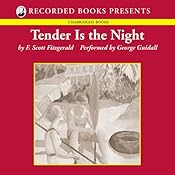 4. Tender is the Night by F. Scott Fitzgerald [Scribner's, audiobook] (1933)
The Great Gatsby suffers today from a couple of terrible film adaptations and being on high school reading lists. I think to really appreciate Gatsby, you have to have an actual past upon which to look back, significant regrets, and a bone-deep emotional understanding of what "shallow" really means. High schoolers tend not to possess these in any significant measure. I returned to Gatsby maybe five or six years ago after having found it mediocre in high school, and now realize that it is, in fact, and you better damn not argue with me on this, The Great American Novel. I don't expect this to be as good, but I owe Fitzgerald a lot more of my time than I have given him thus far.
 5. The Crying of Lot 49 by Thomas Pynchon [Harper Perennial, paperback] (1966)
Pynchon is a personal favorite (and if we're playing the Six Degrees of Separation game, I am only one degree away from him (wait, is "one degree" if you know them, or know somebody who knows them?)(I may be two degrees)(I've made a mess of this)). Re-reading this for the...third?...time. But it's been too long. Also, fun fact, Polish death metal band Vader's song "Silent Empire" is based on this book. And there's a place in my neighborhood called Trystero Coffee.
 6. Cat's Cradle by Kurt Vonnegut [Delta, paperback] (1963)
Kurt Vonnegut is, for me, the writer that most makes me want to give up writing. He has set such an impossibly high standard that I shrink from asserting that he and I are both in the same game. We're not. Reading Vonnegut is like coming home for me. Don't know how many times I've read this book, but I have to come back to it every few years. Since I finished all of his novels, I haven't read him as frequently as I would have liked. This must change.
Maybe I should do a "Best Vonnegut Novels" post and see how quickly the Internet tries to murder me via hateful comments from people who disagree slightly.
Maybe someday...
I say that to say this: my summer reading list is super lame, since the most recent title on it came out in 2004. My selection criterion was nothing more than the single fact that these are the titles that have been giving me the dirtiest looks every time I walk past my bookshelf on the way out the door.
Full disclosure, I may not get to any of them. I am currently shoulder-deep in Marcel Proust's Swann's Way, which is book one of his In Search of Lost Time/The Remembrance of Things Past. My plan is to finish Swann's Way and put Proust aside for quite some time -- I love it, but I don't intend to read nothing but Proust for the rest of my 30s -- so hopefully I'll at least take a bite out of this list by September.
Vance's Summer Reading List
Thanks to my infatuation with Dashiell Hammett and Raymond Chandler, I have an abiding love for the hard-boiled detective story. Horselover Fat (or Philip K. Dick, if you prefer), also holds a special place in my heart because somehow, since moving to Southern California, Dick's worldview seems to make a lot more sense. I'm sure that says terrible things about me... I am led to believe (by The G and others) that this book is "a high-octane blend of Raymond Chandler and Philip K. Dick" (Boston Review). Sign me up.
This book landed on my radar, like it did for a lot of people, after Neil Gaiman's hearty endorsement got the thing published in the first place. My wife was quite hopelessly casting about for something to fill the Harry Potter-shaped void in her life after The Deathly Hallows was published, so I gave her this. So now she and Neil Gaiman have recommended it unequivocally, and I can no longer hide behind its length as an excuse for not reading it. Because I'm reading Proust.

Both this book and The Plague were breathlessly recommended to me by two separate friends. I read The Plague first, and didn't love it. I chalk that up, however, to having seen or read so many things that owe so much to Camus' book that what seemed groundbreaking in 1948 feels overly familiar now. That's not the author's fault, though, so I am happy to give The Stranger a shot...even though I'm not sure I've ever agreed with Camus' take on The Myth of Sisyphus, for which he is quite famous.
The Great Gatsby suffers today from a couple of terrible film adaptations and being on high school reading lists. I think to really appreciate Gatsby, you have to have an actual past upon which to look back, significant regrets, and a bone-deep emotional understanding of what "shallow" really means. High schoolers tend not to possess these in any significant measure. I returned to Gatsby maybe five or six years ago after having found it mediocre in high school, and now realize that it is, in fact, and you better damn not argue with me on this, The Great American Novel. I don't expect this to be as good, but I owe Fitzgerald a lot more of my time than I have given him thus far.
Pynchon is a personal favorite (and if we're playing the Six Degrees of Separation game, I am only one degree away from him (wait, is "one degree" if you know them, or know somebody who knows them?)(I may be two degrees)(I've made a mess of this)). Re-reading this for the...third?...time. But it's been too long. Also, fun fact, Polish death metal band Vader's song "Silent Empire" is based on this book. And there's a place in my neighborhood called Trystero Coffee.
Kurt Vonnegut is, for me, the writer that most makes me want to give up writing. He has set such an impossibly high standard that I shrink from asserting that he and I are both in the same game. We're not. Reading Vonnegut is like coming home for me. Don't know how many times I've read this book, but I have to come back to it every few years. Since I finished all of his novels, I haven't read him as frequently as I would have liked. This must change.
Maybe I should do a "Best Vonnegut Novels" post and see how quickly the Internet tries to murder me via hateful comments from people who disagree slightly.
Maybe someday...
Saturday, June 9, 2012
E3: Star Wars 1313

This year's E3 was a bit light on triple-A game announcements. STAR WARS 1313 was a notable exception. That might seem odd, given the vast quantity of medicore-to-terrible STAR WARS products that have come out over the past 5 years. There have been a few notable gaming exceptions: the two KNIGHTS OF THE OLD REPUBLIC games, for one, and their MMORPG successor for another. But yeah, most STAR WARS products released since 1999 seem to exist only to soil the memory of the glorious original trilogy of films. So what about this one? As per IGN:
LucasArts isn't revealing much at this point, but we do know the basics on 1313's setting. It takes place between the trilogies, and is set on level 1313 of the Imperial capital, Coruscant. Coruscant has over 5,000 levels, and 1313 is a part of the planet's underworld, a seedy place full of criminals and lawlessness. The setting itself has never been delved into all that deeply in the girth of Star Wars novels, but LucasArts hopes that this will provide an appropriate stage to tell a mature Star Wars narrative.
While LucasArts wouldn't rule out a "Mature" rating for 1313, the team is definitely not trying to toss in gratuitous gore to make sure you're shocked into paying attention, either. No one was ever dismembered or disemboweled during the short demo, and the lead character never tossed out swear words as he reloaded or beat down an enemy. This isn't the black and white portrayal of Star Wars set up by the films or cartoons, but a complicated world where the "good" and "bad" people tend to be harder to discern. LucasArts wants 1313's maturity to come across in its themes, in the way it tackles heavy moments, and presents a darker side of the Star Wars universe -- expect more Mos Eisley cantina, less Ewok village.

That sounds good. That sounds really, really good. But, of course, you need more than a cool setting and shades-of-gray morality to make a really compelling game. One thing you won't have to worry about, it seeems, are the production values. According to Game Informer, the high production values on display stem from a collaboration between the developers and LucasArts' famous film and effects studios:
From a development perspective, 1313's most surprising feature is the group of people working on the project. Ostensibly a collaboration between LucasArts, LucasFilm, Industrial Light & Magic, and Skywalker Sound, there are tremendous resources at play in bringing the game to fruition. 1313 is described as a meeting point between tense action/shooting and harrowing platforming. It's a description that would fit well onto games like Uncharted, and we suspect this isn't the first or last time people will compare the two games.How about gameplay in the E3 demo?
The firefight that ensues on board the ship is a familiar mix of cover based shooting and occasional melee exchanges. With the ship they're on about to crash, the elder bounty hunter evens the odds. Flinging an enemy combatant and a thermal detonator into an escape pod, he launches the pod into the enemy ship, resulting in an impressive conflagration.See for yourself:
Friday, June 8, 2012
Bethesda's Hot New IP: The Dishonored

There's usually one game demo-ed at E3 that blows people away, and this year it seems to be THE DISHONORED, from ELDER SCROLLS V: SKYRIM and FALLOUT developers Bethesda Softworks.
Let me start by saying that I trust Bethesda to deliver quality. Buggy quality, but quality nonetheless. SKYRIM is possibly my all-time favorite video game, and though I had some issues with it, FALLOUT 3 had me hooked for months. I love their open-world approach, their impeccable aesthetics and the fact that they take their time delivering quality, rather than churning out sequel after sequel just in time for the holidays.
That said, THE DISHONORED represents a departure of sorts for Bethesda. It's not an open-world action-RPG, but an open-world stealth-action game! Oh wait...did I not mention that I'm a complete stealth-action addict?? The SPLINTER CELL and DEUS EX series ARE up there with THE ELDER SCROLLS at the top of my my list, so the idea of combining the two is giving me goosebumps and the return of an eye twitch I thought I left in New York when I moved out West.
But enough about me, let's talk about the game. According to ripten:
The story of Dishonored follows the standard conspiracy and revenge, in which the main character, former bodyguard Corvo Atano, is framed for the assassination of the Empress and must hunt down the parties responsible and clear his name. The game is set in an open-world environment that is fashioned after Victorian England but is teaming with Steampunk-esque enemies. When it comes to combat, first-person melee combat with swords, daggers and occasional firearms is the order of the day. Supernatural abilities such as freezing time and summoning plagued animals to attack your enemies round out your skill sets. The game is focused largely on stealth action and the trailer shows off plenty of fancy swordplay that will be employed during the game.
 |
| Steampunkish, Victorianesque, Bioshocky |
Harvey Smith (he of lead designing Deus Ex 1 and 2) and Raphel Colantonio (Dark Messiah of Might and Magic, Arx Fatalis) are the lead designers on this ambitious and hugely stylish game set in a notionally steampunk-tech-level world already reasonably far apace into its own industrial age—carriages, cobblestones, fey snooty top-hatted nobility, and the looming specter of rat-born Plague, yes…but also smoke-belching factories, exotic electrical intrusions, stilt-legged, ‘meched-up armored constables-cum-executioners tottering around the city streets, the age-old furball between Technology and that other technology called Magic…and quietly (insidiously?) lubricating it all, that oh-so topical, allegorical (and, it would appear, damn-near all-purpose) precious fuel, whale oil. It also boasts a compellingly evocative world-that-might-have-been-somewhere setting, and some of the best, most thoughtful game-character/vehicle modeling ever created—simultaneously dramatically exaggerated, unflatteringly, warts-and-all ‘realistic’, and painstakingly, anachronistically crafted (of course that’s how the chassis suspension would be on a heartless Neo-Victorian noble’s personal armored carriage—it’s so obvious!)Excited yet? I am. But don't take it from me, watch this trailer:
Subscribe to:
Posts (Atom)