Showing posts with label rogue-lite. Show all posts

Friday, October 3, 2025

Video Game Review: Balatro by LocalThunk

You'll be seeing poker hands in your dreams.


I was skeptical of Balatro when I heard of all the praise it received last year. How could a roguelite game about making poker hands become something so lauded that it propelled the little indie title into the stratosphere? Not only has it succeeded critically, becoming a nominee for game of the year at the Game Awards (and winning best indie, best debut indie, and best mobile game), but also commercially, selling over five million copies as of earlier this year. The developer, LocalThunk made the wise decision to remain anonymous, so though I can't mention him/her by name, know that minus the music, one person made this entire game (who is now set for life, thanks to Balatro). Because of PlayStation Plus’ monthly offerings, I had the opportunity to check it out for free. I’d just finished up Clair Obscur: Expedition 33 and had Death Stranding: Director’s Cut next in the lineup and decided I needed a palate cleanser. Enter Balatro.

As aforementioned, Balatro is a game about creating poker hands. That is the main hook of the game. Simple, effective, and increasingly challenging. You make hands to reach a certain chip score. In order to beat a blind (level), your hands need to make enough chips to surpass the blind. Every round, Balatro gives the player a certain number of hands and discards to work with. You use these to ensure you have the best offerings when you put your cards up. If you’ve used all of your hands and still haven't met the threshold of the blind, it’s game over and time for a new run. Getting to the boss blind (a more difficult blind that gives the player a detriment) when you know your jokers aren't quite where you want them can be intimidating.

But wait, there’s more! In addition to creating better hands, there are ways to amplify your chip score… and this is where Balatro shines. That little joker that smiles menacingly at you from his white background on the title screen is one of only 150 jokers that can be utilized throughout the game. Many of those need to be unlocked through specific criteria, but can all show up throughout your run once you’ve unlocked them. The fun of Balatro comes from managing your jokers and hoping that you can find such strong synergy amongst them that you make millions upon millions of chips per hand. And when that chain of points goes off, boy is it a satisfying feeling (I had to turn the game speed up to four times, otherwise it was a bit too slow).


But wait! Yes, there’s even more. In addition to jokers, there are vouchers, tarot cards, spectral cards, and planet cards that can help boost the score of your runs in immeasurable ways. Vouchers are expensive (you use money earned from victorious rounds to purchase them), but effective. They can increase your hand size or discard count and are endlessly helpful. Tarot cards can do anything from changing the suit of a few cards, to adding a steel card to your deck (which multiples your Mult by 1.5), to increasing the amount of money you have. Planet cards are specifically for hand types, so you can upgrade how much a straight or flush gives you every time you use it. Spectral cards are tricky and sometimes require sacrifice, but they can pay off big time when you get when you want of it. Changing a dozen cards to a single suit or card number/face card can alter your run big time. Sure you’ve heard of four of a kind, but have you ever played a five of a kind? Full house, okay, but what about a flush house? Layered on top of all of this is the ability to choose your deck, each one offering different boons and blights that more layers to your run. Altering your deck to fit your run is an increasingly satisfying endeavor, and when you're on a roll, you feel unstoppable.
 
But that’s the thing about roguelites, right? When you have a good run, it’s great, but when you don’t… Well, then it can be irritating, grating, and sometimes can feel like a total waste of time. The higher you increase the challenge, the more elements get introduced that induce that time-wasting feeling. For instance, on Gold tier (the highest difficulty) they introduce rental jokers, after already introducing permanent jokers and perishable jokers. Sometimes this feels like artificial difficulty and can make a run feel immediately useless. After building up so much and getting past a few antes, it feels like a slap in the face when you run into jokers that will only help for a few rounds. If your build can account for it already, great, but if not, it’s game over. I feel like the player should fail because they took certain risks with their hands (like trying to discard for a Royal Flush and coming up short) or mismanaging their hands and jokers, not because the game doesn't give you the tools to do so. Though, anyone who has ever played a roguelite will know it’s just the way it goes. If you play these types of games, expect to be frustrated at times, most of which will have nothing to do with your own incompetence, but with the hand you’ve been dealt.

I don’t speak too much on the other aspects of the game because the graphics are simple, effective, and serviceable. The different art for new jokers is always fun to come across, but otherwise nothing here that will etch itself into your memory (though maybe your retinas) for years to come. The music does the job, though I honestly listen to other music soundtracks or sports games in the background. The sound effect for racking up points is a bit addictive and exciting to hear as it ding ding dings you into the millions. There is no story here, so the gameplay has to be enough for you, or it has nothing.

Do you like poker? Do you like a challenge? Do you like the rush of watching your poker chips pile up before you as you hoard them like Smaug in a gold vault? Sometimes frustrating, sometimes unfair, but despite this, still addictive, Balatro manages to be more than the palate cleanser than I thought it would be. In fact, it’s both. Sometimes you want to read some snippets of a coffee table book between two sci-fi epics... and sometimes that coffee table book is so interesting that you read it front to back. Be it your main obsession, or a game that you’ll pick up from time to time, Balatro deserves many of the accolades it’s earned, and LocalThunk all the praise for single-handedly creating one of the most recent roguelite fads.


--

The Math

Objective Assessment: 8.5/10

Bonus: +1 for synergistic gameplay. +1 for addictive fun.

Penalties: -2 for unfair runs that aren't the player's fault.

Nerd Coefficient: 8.5/10

Posted by: Joe DelFranco - Fiction writer and lover of most things video games. On most days you can find him writing at his favorite spot in the little state of Rhode Island.

Monday, April 15, 2024

Review [Video Game]: Children of Morta by Dead Mage

Full of heart, but could use a bit more soul.


As the Corruption spreads across the land, infecting animals and terrain alike, it is up to a single family to push back the darkness; the Bergsons. They are tasked with bringing light to fight the shadows that have consumed Mount Morta, and in the process, discover the truth behind the corruption. While seeking the truth, each family member finds that they have something to contribute to the cause and raises their sword (or hammer/daggers/staff) in support.

Children of Morta
’s story mode sports hack-and-slash dungeon crawler gameplay with rogue-like elements. Through the course of the game, the player uses different Bergson family members to navigate the beautiful modern pixelated levels. While the levels are procedurally generated, the boss battles for each sector stay the same. The main connection to the rogue-lite genre lies in the game’s random level generator and having to restart an entire area upon death. That said, meta progression is strong and you won't find yourself caught up for too long. For more of a challenge, players can either A) increase the difficulty, or B) play the game’s rogue-lite-specific mode (which cuts most meta progression and is more demanding).

Upon booting up the game, I could see the care and attention that went into the beautifully realized world of Children of Morta. The modernized pixel art is vibrant and elegant. The detail is evident, and the shadow and lighting play is top-notch. Each character's design is distinct, despite their simplicity. And the Bergson's home, which was crafted to exude warmth and comfort, does so with ease. Playing this game puts the player back at the Bergson estate quite frequently between runs (either from death or from completing a dungeon), so it’s nice to feel comforted when I was welcomed home.

The story is narrated much in the same way as a story book, or popular indie darlings like Bastion. Ed Kelly lends his smooth voice to the narrator role and injects just the right amount of balance of emotional investment. He seems to care for this family of heroes, and it helped get me invested, even when I found the writing trite. The attempt to create a gripping tale involving this unique family shows a lot of heart, care, and attention. The writing sometimes does this a disservice, as the narrator’s lines sound like they could be plucked right out of a book titled “Generic Fantasy Mumbo Jumbo 101”. This isn't to say it’s all bad, far from it.


Sometimes when one of the Bergsons comes back from a dungeon, I was greeted with a cutscene. Unfortunately, they never added a pause button during cutscenes, so if someone needed to ask me something in the real world, I would have to ask them if they could wait a few moments. A rather odd oversight. While I generally enjoyed the cutscenes, as they expanded the world and lore, they didn't always feel properly paced. When you first start a dungeon, every time you die or complete a floor, you'll get new cutscenes. Then they dry up for a while, leaving an opening until you get to your next dungeon. Some cutscenes are very short and feel randomly placed. For most of the game, however, they are quite welcome.

The beauty of Children of Morta’s gameplay is in the character variety. Instead of simply having new weapons to unlock over multiple runs, you unlock new characters, each with their own unique abilities and skill trees. My favorite part about these skill trees is that leveling up one Bergson helps all Bergsons. For instance, if you reach a certain level with Lucy, all characters will spawn with a gemstone when they start a run, level her up further and she’ll create a distraction for another character when they’re in a tight spot! This helped me to level up characters that I wasn't initially as fond of (Mark and Kevin) and learn how to use them with less consequence. Mark and Kevin were initially a bit too squishy and needed to be close to damage enemies, so it took a while for me to adapt to them, but in the end, I enjoyed all of the characters. I appreciated that the game gives characters fatigue (which you can clear with a rare egg). This makes it difficult to do too many consecutive runs with a character because their initial health will be reduced (more and more each time). Giving them a break means trying another character. Thankfully they're all enjoyable (though Lucy was always my favorite). The only issue I had with having so many characters was the effect it had on cutscenes. The narrator would always say “the Bergson” (i.e. “The Bergson looked upon the corpse in horror.”) instead of the character’s name, which I understand from a financial and development point of view. But it was at times immersive breaking, especially when playing with the add-on character who wasn't a Bergson.

The game provides a good amount of diversity between its three main levels (which are divided into sub-levels) but doesn't offer much challenge later in the game. For instance, I beat the final boss with almost no effort. While far from being a reason to dislike the game, it did make the end feel less rewarding than it should have been. The enemy and boss battle variety is solid, especially considering the length of the game. I always enjoyed running into a red or yellow-outlined enemy for a higher challenge. The enemies are quite different depending on the biome, and it’s fun to figure out how enemies react to different characters' moves and devise a strategy.

I did experience a few mishaps throughout the game where my character froze or the game froze on the loading screen. When my character froze the few times I died and collected my earnings (though it was annoying because it also added fatigue to a character I wanted to continue using). In the case of the loading screen, I had to reset my system, which meant I lost all progress running through the level. It didn’t happen many times thankfully, but still irritating.


Dead Mage has concocted a neat little title that blends traditional dungeon crawling with a few rogue-lite elements in a beautifully wrapped package. Though Children of Morta's story didn't always grip me due to some generic fantasy writing, it still managed to keep my interest enough with its interesting setting and charm. Even if I found that the writing could sometimes come off as cheesy, it was still a pleasure to hear Ed Kelly narrate it. While by no means the best rogue-lite-inspired game, Children of Morta is still a game worth exploring for its visual beauty and fun gameplay variety. If you've never played the rogue-lite genre, this may be a great entry point. Oh, and it drop in has co-op.

--

The Math

Objective Assessment: 7.5/10

Bonus: +1 for beautifully realized art, world, and lore. +1 for fun character selection.

Penalties: -1 for some trite writing. -1 for occasional bugs.

Nerd Coefficient: 7.5/10

Posted by: Joe DelFranco - Fiction writer and lover of most things video games. On most days you can find him writing at his favorite spot in the little state of Rhode Island.

Monday, February 12, 2024

Microreview [Video Game]: Inscryption by Daniel Mullins Games

Say cheese and die.


A wooden table lies before you, darkness all around. A door creaks, and from the void peer two eyes. “Another Challenger… It has been ages,” reads the text above. The menacing music reverberates through the room and into your very soul. Your generous host helps coach you through the basics in case you’ve forgotten. He reminds you that sacrifices must be made, and though your beasts’ suffering is real, they will make their way back into your deck. Your host will continue to tell your tale through a series of maps. You have to win battles to advance further toward your destination. If you fail, you die. But don’t worry, your gracious host will stuff you in a room and take a picture for posterity. A lesson to those in the future.

Inscryption is a hybrid roguelite/deck builder/puzzler. Its unique mix evokes elements from Slay the Spire, Yu-Gi-Oh!, and the Zero Escape series. Though not quite as deep on the puzzle segments or as complex as Yu-Gi-Oh!, the game still creates a deep, accessible, and addictive gameplay loop that makes time become a trivial thing. Who needs sleep when one more run might be all you need to get to the next part of the game?

The music isn’t the only menacing part of the game. The atmosphere is top-notch. Leshy’s cabin creates an odd mix of comfort and foreboding. The lingering sense of potential dread is the cherry on top. Seeing Leshy’s eyes follow you around the cabin is nightmare fuel. Thankfully Inscryption isn’t a horror game, it’s just atmospheric and well-thought-out. The atmosphere has a lot to thank the design team for. The graphics are fantastic and serve the narrative and tone of the game in a precise fashion. Daniel Mullins Games achieved what many developers can only dream of, by tying all their gameplay elements together with their art, story, and music, Inscryption does everything it sets out to do and nails just about every aspect.


The embedded narrative trope plays out well here and keeps the player guessing throughout Inscryption’s dozen hours of main story gameplay. As a service to the reader who may not have played this game and may potentially want to try Inscryption, I will avoid mentioning much of anything regarding the story to save the sanctity of the first run for the player. That said, the game handles its flow and pacing with expertise, making the hours melt away as you try to solve what’s going on. Two specific moments in this game are memorable for reasons I won’t mention, but when something can both be brilliant and subvert my expectations, I’m all in. There are tonal shifts that may turn some people off, and certainly, some parts of the game were more enjoyable than others, but this didn’t detract from my enjoyment of the story.

The card gameplay is pretty straightforward, getting more complex as more is revealed. You have creatures that you want to summon to the board and do damage directly to your enemy. The first person to tip their enemy’s scale (by having a five-point lead) wins the round. The problem is that your enemy will also try to summon creatures to defeat you, and each creature has different effects and types. These can be used to create combos that can devastate a board (going against an Ant deck in Kaycee’s Mod is a nightmare). Choices must be made, cards can be fused to create more powerful cards, and some cards must be sacrificed. These are some of my favorite parts of each run.

Once you beat the main story, you unlock an extra mode called Kaycee's Mod. This allows the player to truly test their mettle as a rogue-lite strategy card game player. With each difficulty you unlock, you can add modifiers to each run to increase the challenge. While I enjoyed the initial struggle, it eventually became a ridiculous game of luck. It stopped being about which cards you chose and the strategy you played and became a game of whether or not you got offered very few specific cards and beneficial maps. Unlike many other deck-builder roguelites, Inscryption doesn’t give you many opportunities to narrow your deck. Sometimes you’ll find your deck bloated with nothing to do about it. But this a problem for someone playing with a ton of modifiers on, trying to test their skill to the max, so it may not be an everyone problem.


Out of respect for the developer and for the potential player, I’ve been taciturn in regards to the story. If any of the elements of this game seem appealing to you, the reader, and you enjoy a story in your games, do yourself a favor and pick up Inscryption. I’ve played tons of games, and this is a memorable one. Just try to set a reminder to check a clock once in a while, the game can get… distracting.


The Math

Objective Assessment: 9/10

Bonus: +1 for atmosphere and story. +.5 for addicting gameplay. +.5 for REDACTED.

Penalties: -1 for focusing on luck in later challenges. -1 for REDACTED.

Nerd Coefficient: 9/10

Posted by: Joe DelFranco - Fiction writer and lover of most things video games. On most days you can find him writing at his favorite spot in the little state of Rhode Island.

Wednesday, February 16, 2022

Microreview [Video Game]: Returnal by Housemarque

Can you break the cycle?


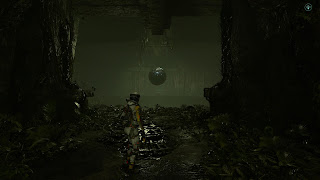
Hurtling through the atmosphere of a foreign planet, Helios crash lands onto the surface of Atropos. From it’s ruins steps our protagonist. You are Selene, tasked with finding the White Shadow and making an escape from this far off hellscape. But what is this mysterious White Shadow? And why are remnant corpses of Selene littered across the surface of Atropos?

Returnal throws you into its unforgiving world with the promise of a well crafted story. The initial moments made me feel like I was in for some slow cooked, properly placed reveals that would leave me with my jaw agape and hands ready for applause.

The first taste of gameplay reminded me just how great the dualsense is. The haptic feedback is used to its full potential. Each rain drop pitter-patters across your fingertips oh so delicately, making Returnal the best use of the controller’s feature set since Astro’s Playroom. The adaptive triggers are used to good effect, with L2 being multipurpose. Lightly depressing L2 zooms in while a further press will activate alternate fire. This may not sound like much, but in the heat of battle, one less finger movement can be the difference between continuing your run and having to start anew.


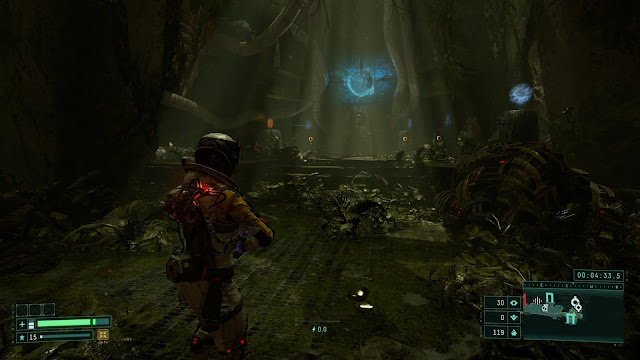
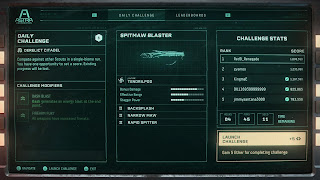
Each gun in Returnal has it's own unique personality. From the shotgun like Spitmaw Blaster to the poisonous single shot Rotgland Lobber, each weapon offers different strategies that can be used for specific situations, though well rounded guns like the Tachyomatic Carbine can be used in every encounter. As I increased my weapon proficiency level, each gun had perks that I could unlock and upgrade by playing with it. This reminded me a lot of the Ratchet and Clank games: a diversified arsenal with strange abilities that can be upgraded through use. The Thermogenic Launcher on full auto almost makes the games easy.

Controlling Selene is a smooth experience. This was an absolute must from Housemarque considering the stakes of each run. The frenetic gameplay demanded well polished controls and the developer delivered. There is a vaulting mechanic (which occurs when Selene reaches an edge that she hasn’t quite cleared) that can sometimes interrupt the flow of the combat. It seems slow when compared to the action all about you and can cost the player their precious adrenaline streak. Any control that leaves the player’s hands, even if briefly, feels like forever in Returnal, especially when vulnerable to enemy fire.

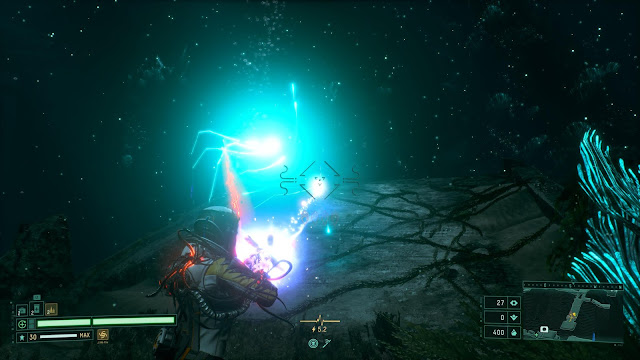
Not only does the game play incredibly well, but looks and sounds fantastic too. The six biomes in the game are varied and detailed while always feeling somewhat fresh due to the nature of procedural placement. The visual effects when in combat, especially the boss battles, are a sight to behold. The bullet hell spectacle is astounding and all runs at a steady frame rate with very few drops throughout my time with the game. The amount of particles and effects on screen at once is impressive.

Along with the stimulating visuals, the audio was a phenomenal accomplishment. 3D audio is applied expertly in Returnal, allowing the player to hear exactly where enemy fire originates as well as the enemy’s proximity to the player. This helped me plan my next move without visual confirmation and got me out of many a tough battle.


Though I did face some challenge throughout the game, especially in the containment rooms, I never found myself stuck. Returnal didn’t have me restarting very frequently, and only once in my first run of the game did I die to boss. I actually beat the final encounter with no healing consumables and only half a bar of my original health. While the fights are an enjoyable spectacle, the lack of adversity amongst bosses creates a deflated sense of accomplishment. What should have been a relief and a triumph had me thinking, “That was all?”

This isn’t to speak of the enemy designs themselves, many of which feel like they could be found in a Lovecraft tale. While the boss fights were underwhelming—though still exhilarating—the lockdown rooms and containment gates lifted the game high, keeping me on my toes, at peak awareness.

Being conscious of Selene’s physical presence isn’t quite as taxing as dissecting her mental state. Each victory gets you closer to a piece of Returnal’s lore, and though the final cutscene had me scratching my head after three acts, I know Housemarque’s deliberate reference to mythos serves a purpose. The names of Greek deities are intertwined with this mysterious narrative. Selene and Helios, gods of the sun and moon, drawing their chariots across the sky in a continuous cycle. It’s this type of storytelling that, while not immediately satisfying, brings me to question every aspect of the story. I have to believe this was the developer’s intention, otherwise any semblance of story falls apart under close inspection.

My time with Returnal was a positive one. Though there were a few issues that reared their ugly heads, like the occasional invisible ceiling enemy or a random sound error (resulting in a loud static burst), they were incredibly rare and were nothing more than momentary annoyances. What the game does best is create a great atmosphere and enticing gameplay, sucking players into Selene’s mysterious adventure—even if you’re not always sure what’s going on. When a game makes me want to go for just one more run at two in the morning, I know the developer must have done something right. Housemarque’s latest is a great game on it’s own, but it’s also a showcase for the potential of this nascent console generation and a solid building block for future triple A rogue-lites.

The Math

Objective Assessment: 8/10

Bonus: +1 for engrossing atmosphere and strong sense of mysticism. +1 for great gameplay.

Penalties: -1 for unclear story beats/ending. -1 for easy bosses.

Nerd Coefficient: 8/10

Posted by: Joe DelFranco - Fiction writer and lover of most things video games. On most days you can find him writing at his favorite spot in the little state of Rhode Island.

Orignally posted at: https://josephdelfranco.wixsite.com/pforp/post/can-you-break-the-cycle


Wednesday, January 5, 2022

Microreview [Video Game]: Hades by Supergiant Games

 If at first you don’t climb your way out of hell, try, try again.


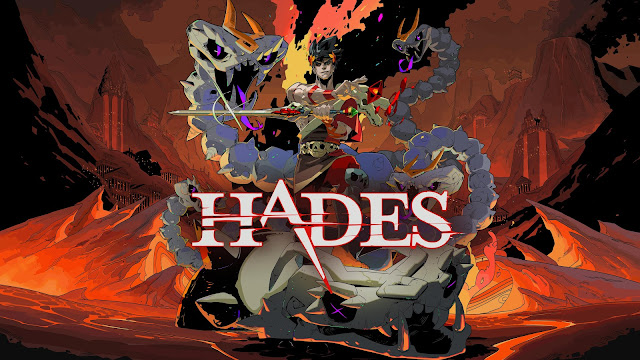
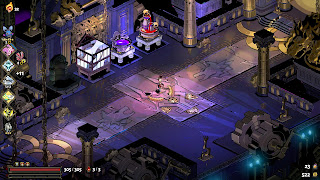
The main gameplay loop of Hades has players accompanying Zagreus in his many attempts to escape the Greek underworld. In this rogue-lite adventure, every failure (and success) advances both player skill and story. Hades has a way of making every failure feel meaningful, never frustrating. This is a title that excels in nearly every aspect of the medium. From the divine voice acting and masterful storytelling to the brilliant visuals and finely crafted gameplay, this game exudes quality and should not be missed.

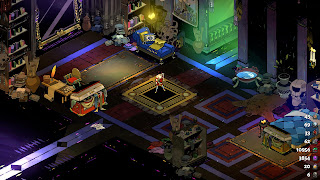
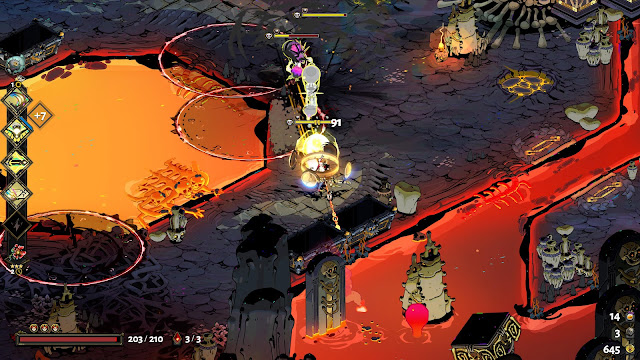
From the moment I booted up Hades, I could tell I was in for a treat. In traditional Supergiant style, the game has a gorgeous art style. Each environment is distinct; from the House of Hades to the Temple of Styx. Supergiant’s stylish characters and levels are still captivating after over eighty runs.

The developer was aware of the repetitive nature of the genre and instilled within Hades the gift of variety. Though running through the same gorgeous levels repeatedly is the hook of the game, every attempt feels different due to the variability of boons (power-ups from different Olympian benefactors) and the players' choice of weapon. Not only are there six unique weapons, but each one has various aspects to be unlocked which creates even more layers to the gameplay. For instance, the Heart-Seeking Bow's standard attack shoots a single charged up arrow and its special attack is a volley of arrows that shoots in a V formation before Zagreus. If the aspect of Chiron is equipped, every enemy struck by a standard attack gains a target for the special attack, turning that V formation into a volley of homing arrows that follow said enemy. Combo that with a certain character’s freezing boon and I would instantly put my enemy in stasis, allowing for more time to strategize when clearing a room.

In addition to the selected weapon, Zagreus also has access to his “cast”, an ability that shoots at enemies and can be leveled up (via Nyx’s Mirror of Night) and equipped with boons to have extremely different effects. An upgrade from the king of Olympus has Zag’s cast become a ball of electricity, chaining lightning between enemies, while a blessing from Dionysus sees that cast create an area effect that stuns enemies intermittently. The combination of different weapons, boons, Daedalus upgrades, and aspects make each run feel fresh.


What extends Hades’ longevity even further is the sheer amount of unique dialogue for each character. Offering any character nectar, whether it be Chthonic deities, Olympian kin, or shades of the underworld, results in an increased bond which leads to more conversation from any given character. In addition, each event encountered or surpassed may trigger a special dialogue with certain characters. This makes Hades aware of itself, like a unified composition where everything feels like part of the whole with nothing included for the sake of padding. Such a numerous amount of voice-overs and unique writing was an impressive inclusion that elevated the entire experience. After clearing the main story (about ten completed runs), I assumed the unique dialogue would dissipate soon after, but there was still so much the game had to give. It took the span of around eighty runs before I saw repeated dialogue from one of the bosses. This made me a bit sad, but also grateful for all the content Supergiant had created for the player.

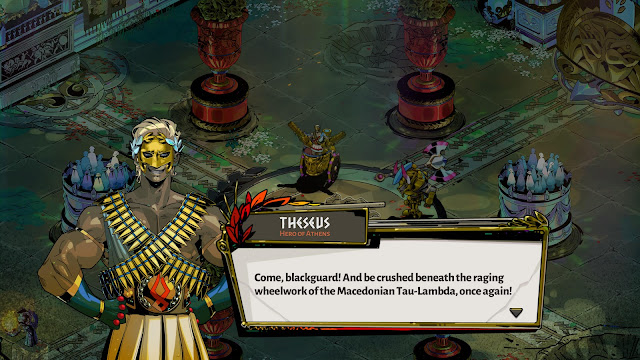
Hades is a retelling of one of my favorite classic Greek myths with a Supergiant twist. Zagreus, son of Hades, wants to discover why his lineage has been hidden from him. While Zagreus is the biggest straying point from the myth, the character is an essential part of what makes the story work. Darren Korb lends his voice to the character and does a lovely job of bringing the cheeky young god to life. The casting for the rest of the gods and Greek denizens of Hades are impeccable. Cyrus Nemati’s portrayal of Theseus offered great comedic relief in the middle of each escape attempt.

The game’s soundtrack elevates every enemy encounter and increases the tension during fights while also causing relief when the heat dies down. My favorite song, “Good Riddance”, performed by Eurydice (Ashley Barrett) occasionally occurred on my treks through Asphodel. I would put my controller down and listen to the beautifully executed performance every time I entered her chamber and let the tune entrance and calm me during an otherwise adrenaline-fueled experience. Orpheus’ (Darren Korb) “Hymn to Zagreus” is a great showcase for Supergiant’s tongue-in-cheek humor. Without playing Hades, one could still appreciate what the soundtrack has to offer.

One of the things I respect most about Supergiant’s effort is their consideration for the player. After completing one run, I was given access to the Pact of Punishment: a list of additional challenges that increase the difficulty of the next escape attempt. One of these challenges adds a timer. Instead of keeping the clock ever ticking, Supergiant made sure to pause the timer if the player wanted to use a fishing spot, take a moment to select which boon they wanted, engage in conversation, or whenever they enter one of the respite chambers. Having trouble with the game? Turn on God Mode for a damage resistance buff that increases after each defeat (incurring no penalty to the player’s ability to unlock in-game items or trophies/achievements). Is the game getting too easy? Raise the heat level and increase the challenge in unique ways instead of making enemies mere bullet sponges. Hades puts the players’ needs and wants front and center, making for very few incidents where I wished things were different.

My lengthy playtime consisted of a few glitches, one of which occurred at the end of a thirty-two heat run (very high difficulty). The game didn’t offer me the item I needed to advance at the end of the run. I was pleased with my progression and boons during that attempt and was disappointed when I was forced to restart without a chance at the final boss. There were also a few times when I was unable to cure my poison despite depleting the antidote basin. This contributed to a few failed runs that exacerbated my irritation from combatting enemies with a poison mechanic. Though I loathe any sort of poison-inducing enemies, Hades makes it as bearable as possible—except the few glitches I encountered—by keeping the antidote a few dashes away.


When looking at Hades in its entirety, the few minor flaws I encountered didn't do much to alter my overall enjoyment of the title. In a sub-genre known for its difficulty, Hades never feels like a Sisyphean task. Every success and failure brings the player closer to the truth and every run made me love the game more. This game is a complete experience. It's the perfect example of a studio figuring out its purpose and leaning into development with every trick they’ve learned along the way. I find Hades to not only be Supergiant’s best game but one of the best video games of the last decade.

The Math

Objective Assessment: 9/10

Bonus: +1 for incorporating fluid sexuality seamlessly. +1 for additonal additional storylines to some of my favorite greek myths.

Penalties: -1 for ending my best run with a technical bug. -1 for poison mechanics at the end of each run.

Nerd Coefficient: 9/10

Posted by: Joe DelFranco - Fiction writer and lover of most things video games. On most days you can find him writing at his favorite spot in the little state of Rhode Island.

Orignally posted at: https://josephdelfranco.wixsite.com/pforp/post/hades-review