Showing posts with label leigh bardugo. Show all posts

Tuesday, May 21, 2024

Book Review: The Familiar by Leigh Bardugo

A step somewhat outside of the author's usual métier... but plus ça change for Leigh Bardugo, it seems

Luzia is a maid in 15th-century Madrid, a poor girl with Jewish heritage trying to hide from the attention of the Inquisition in already hostile circumstances… and it's made only worse by the fact that she has something more to hide: Luzia can do magic. Little charms, taught to her by her aunt, things that help around the house—unburning the bread, mending things that have broken. But little things could be enough to put her in big trouble. So Luzia keeps it all under wraps, until a slip-up means her mistress catches on. Under pressure, knowing the trouble scrutiny could get her into, Luzia is forced to use her magic to help her employers grasp for better social standing, and from that everything spirals out, bringing her to the notice of those with power to harm her, harm her aunt, and affect the power balance of the whole country. She is forced to compete to serve the king with her skills, and walk a dangerous line of pious, Christian mysticism, hiding who she is, where she came from, and the realities of her magic.

As a blurb, it sounds a little… pat. The "magical competition" angle is hardly underdone in fantasy, after all. But in the reading of it? It actually works. And I think there are two reasons for this.

Firstly, the choice of setting. 15th-century Spain was, to put it bluntly, not a fun time for quite a lot of people. Shit was brutal. And when your central character is someone trying to hide their Jewish heritage from the Inquisition during the worst of it? Well. And Bardugo never shies away from that. She does her best to give us a real sense of what that might feel like, what life might be like. Luzia's day to day is grim and hard, and especially early in the book we get a lot of her musing on memories of her father and the life he faced—not even necessarily one of pointed, deliberate oppression, but the simple cold, awful reality of living in a time where there was no care for people like them, where a slip in circumstances could mean death, where an illness could mean the end of everything. Luzia, we come to know very quickly, is keenly aware of the precarity of her position in the world as a poor person, as a woman, as someone with something to hide from the Inquisition. And having all that grounding laid out so well, so clearly, gives us a really good position to build from when we get into the complexities of Luzia as a person, when the choices she makes begin to contrast with what she ought to do, what she knows is sensible but cannot bring herself to settle for.

Secondly, the pacing and the tone—we don't get to the competition aspect of the story for a good while, so we're bedded into the world, the characters, the reality of it, and we've had time to acclimate to the far more serious and thoughtful vibe that this is going for, compared to many magical competition stories. It's not an action adventure, despite the events of the story fitting that pattern. And the thing that pulls it away from that is the writing, and Luzia's perspective, the way she sees and thinks about the world. It's too real, too thoughtful, too complex—angry and determined and ambitious and fearful and regretful and naive by turns. And because the writing is so closely bedded into her thoughts, that perspective comes through in the tone, making it all the richer.

Because Luzia is, for the most part, an exceedingly well-written character. She has a complexity to her that sells her as a fully realised human being, grounded in, but not wholly bound by, the constraints of her setting and situation. Luzia wants more, when she dares to let herself hope for it, and we cannot help but hope for it with her, even as we see the risks it involves.

And the writing is genuinely lovely. Bardugo focuses in a lot here on descriptions of place, of texture and food, and the little things that build up to a full picture of a real life. Cloth and clothes and scents and lights and movements, temperature and embodiment in the moment. All of it gives us little links into that setting that Bardugo has worked hard to craft, without ever feeling the need to shout about it or go into heavy exposition.

So, focusing on that, on Luzia and her characterisation, on the setting… it seems like a well-told historical novel with some magical elements thrown in, right?

Well. The bit where it gets tricky is that there's another strand to this, another thread of the supernatural that messes things up a little. Because the powerful man whose attention Luzia's magic brings to her master and mistress? He's not a stranger to the supernatural. He already has someone in his employ who has his own expertise and backstory, his own angle. In and of itself, that would have been fine, especially as it gives us some grounding in magic in the world outside of the tight restrictions of what Luzia herself can plausibly know. The problem is that he's a dark, sexy, grumpy man with an extremely chequered and/or dubious past that haunts him still, an archetype Bardugo cannot seem to quite leave behind, especially not as a love interest.

In the novel the blurb sounds like this is going to be, Santangel fits right in. Feared assassin rumoured to have demonic powers? Grumpy but with a sympathetic streak for Luzia? Absolutely, bang on the tropes. But for the novel it began to seem like we were getting? The thoughtful, historically grounded one that cares about a realistic portrayal of 15th-century Spain and the perspective of someone in Luzia's position? The complex character study, giving us someone whose pragmatism, changeability and hunger for a better life are both incredibly sympathetic and full of foreshadowed pathos? He feels like an off note, a character from a different story altogether, dragging us away from complexity and into something altogether more trite.

In the moment of reading, this is easy to skim over. The prose is good, the story moves at an easy pace, and there are some genuinely stunning romantic lines sprinkled throughout, as well as enough of a growing unease within the story, a sense of impending doom, that you cannot help but push through to find out how it's all going to shake out. Santangel's slowly melting heart, Luzia's increasing hunger for life and connection, they make sense in the moment, caught up in the emotion.

But when you look back after the fact, when the book begins to settle in the memory, that off note becomes more apparent. As the memory of the prose and the details fade, what lingers is this strange relationship, this strange foray into the far more typical fantasy repertoire in a book that is striving to break slightly less trodden ground. It's a call back to other Bardugo work, in a book that otherwise feels like a foray into new things for her.

Don't get me wrong, I have enjoyed other Bardugo. But the tropes that work in Shadow and Bone, or even in Ninth House, both of which are quite different but still quite traditional fantasy stories, do not quite land here. The Darkling or Darlington fit their settings in a way that Santangel never seems to quite gel into this one.

It's an interesting contrast to another book set in the same time, with Jewish perspectives, that I read recently: The Pomegranate Gate by Ariel Kaplan. On the face of it, that is a story that goes far more into traditional fantasy realms, with magical portals, fantastical places and people who aren't actually (or fully) human at all. But it has a coherence to it that The Familiar doesn't quite manage, and never lets the fantastical run contrary to the historical, instead having them genuinely work together towards the aims of the story. In some ways, The Familiar is a more ambitious work, striving for a greater closeness of perspective and embedding in the realities of the setting; but by having that single discordant trope, it never quite hits those goals. The Pomegranate Gate meanwhile knows exactly what it wants to be and does it with élan, and feels all the brighter and richer for that consistency.

Ultimately, The Familiar does feel more grown-up than some of Bardugo's other work, a foray into greater realism of setting, greater closeness of character, greater awareness of a complex, rich world putting its feelers through all aspects of the story, but it just does not linger in the memory in the way that Six of Crows or Ninth House does. It's good, it's an enjoyable thing to read, and it has some genuinely lovely prose at times, but it's just missing some of the magic. I hope it's a stepping stone. Because if she does something like this again, and just goes that little bit further with it? All the ingredients are there, and could make something truly special. We just need to leave the spectre of the hot, morally dubious man where he belongs. Or at least try to bed him into his setting as much as the protagonist (or as much as he beds the protagonist—wahey).

--

Highlights: lovely moments of description, absolute banger romantic lines, genuinely complex protagonist

Nerd Coefficient: 7/10

Reference: Bardugo, Leigh. The Familiar [Penguin Books, 2024].

POSTED BY: Roseanna Pendlebury, the humble servant of a very loud cat. @chloroformtea.bsky.social

Tuesday, August 22, 2023

Microreview [book]: Hell Bent by Leigh Bardugo

Hell Bent returns to Yale for more demons but less social commentary.

A silver and white cover with an albino white rabbit on the front. The text for HELL BENT takes up most of the cover.

Note: This review contains spoilers for Ninth House.

As the dark academia subgenre continues to grow, Leigh Bardugo returns to Yale in her sequel to Ninth House (which I reviewed here). In Hell Bent, Alex must rescue her friend and mentor Darlington even though the higher-ups in the magical underworld of Yale have forbidden her. Full of Yale mystery, Hell Bent follows the characters fans of Ninth House came to love, but the social critique falls off in this adventurous sequel.  

While Ninth House ended in a huge cliffhanger—Darlington being swallowed into hell—the sequel jumps right in with Alex on the warpath to save Darlington whether the people of Lethe want her to or not. While most consider him dead or a lost cause, Alex and Dawes, the PhD student and Oculus for House Lethe, are certain the right spell or ritual will bring Darlington back to them. With Dawes’ research skills, they discover a ritual to try, but something goes wrong. They aren’t sure exactly what they released from hell—or if Darlington could remain there for so long unchanged.

Meanwhile, Alex still has to manage being a daughter, friend, and powerful enforcer for a gangster in California. Thanks to her training with Darlington and her time at Lethe, she has much better control of the ghosts she can see—and now hear. But ghosts are not the only monsters lurking around Yale, and Alex has to appease predatory alumni come back to check on Lethe. 

While Ninth House had an exacting structure, Hell Bent more loosely plays with time when convenient for the narrative. Told from Alex’s point-of-view (rather than alternating as in the first book), we see how competent she’s become at her job as Virgil, reluctantly replacing Darlington. Alex revels in her power and knowledge, and its cathartic to see her use all the tools of Lethe and her power to bring back a person she cares about. While the previous book focused on her relationship with Darlington, in Hell Bent, she must build a team to help her descend into hell, including Turner, her connection on the New Haven police department. In their attempt to rescue Darlington, Alex and her team must face their personal demons, fleshing out these secondary characters who took a backseat in book one to the tension between Alex and Darlington.

One thing I appreciated in Ninth House is largely absent in Hell Bent and speaks to the larger tension in the dark academia subgenre: actually critiquing the systems of higher education. In Ninth House, Alex’s struggle as a student coming from poverty, moving across the country, dealing with the ivy league classism played a part in the story. Another plotline dealt with sexual assault on campuses. In Hell Bent, such commentary takes a back seat to the adventure. What gestures Bardugo does include, such as mentioning the racial history of New Haven and Yale, fall flat as they tokenize the only major Black character in the book, Turner. 

With the publication of R. F. Kuang’s excellent Babel, the subgenre of dark academia is at a crossroads of what the dark should mean. Is dark academia merely an aesthetic, set dressing for any story, with rich autumnal colors, ivied brick, and monsters lurking in the library? Or, does the “dark” reference the need to recognize the horrors inherent in higher education, from white supremacy and colonialism to classism and rape culture? Currently, the majority of books lean on aesthetic while less see critique as foundational, with Babel being the premiere example. Ninth House contributed to both sides, aesthetic and some cultural commentary, but Hell Bent lands squarely on aesthetic. 

While I wish Bardugo had returned to the critique woven into the first book, her use of Yale as a location is masterful. For those enamored with the campus after reading Ninth House, Bardugo continues to unearth new mysterious and magical locations within Yale’s campus, complete with bizarre architectural history. I worried she wouldn’t be able to center the campus so fully after unraveling the Yale mysteries in book one. While she doesn’t have to do as much worldbuilding to set the scene, she narrows her focus as Alex and Dawes search campus for clues about how to save Darlington. 

While the critique was lost, Bardugo did pump up the action. Due to the detailed worldbulding around Yale and New Haven combined with the strict alternating structure of both time and point-of-view, it was easy to feel lost in Ninth House. In Hell Bent, the action starts and doesn’t stop. This novel felt much more in line with The Six of Crows duology in terms of pacing and plotting. For fans of the dark academia aesthetic, this novel is a fast-paced romp throwing complication upon complication onto the initial plot: rescue Darlington. 

Fans of dark academia will be pleased with the aesthetic and setting of Hell Bent, though at the expense of the social critique. While Ninth House was at times a plodding meditation on character, the sequel turns up the tension and the pacing with a direct plot that becomes more complicated with each chapter. Alex remains a likeable character coming into not only her power as she is able to see, here, and call ghosts to her aid—but also her wrath. She is not afraid to be angry and use that anger against those that come for her found family. Overall, Hell Bent is an engaging and enjoyable sequel to the popular Ninth House, but I hope the next book returns to the social critiques present in book one.

--

The Math

Nerd Coefficient: 8/10: well worth your time and attention

Reference: Bardugo, Leigh. Hell Bent [Flatiron Books, 2023]

Posted by: Phoebe Wagner is an author, editor, and academic writing and living at the intersection of speculative fiction and ecology. 

Thursday, June 23, 2022

Microreview [book]: Ninth House by Leigh Bardugo

In Ninth House, Leigh Bardugo puts her own spin on the dark academia genre in her first adult novel.  

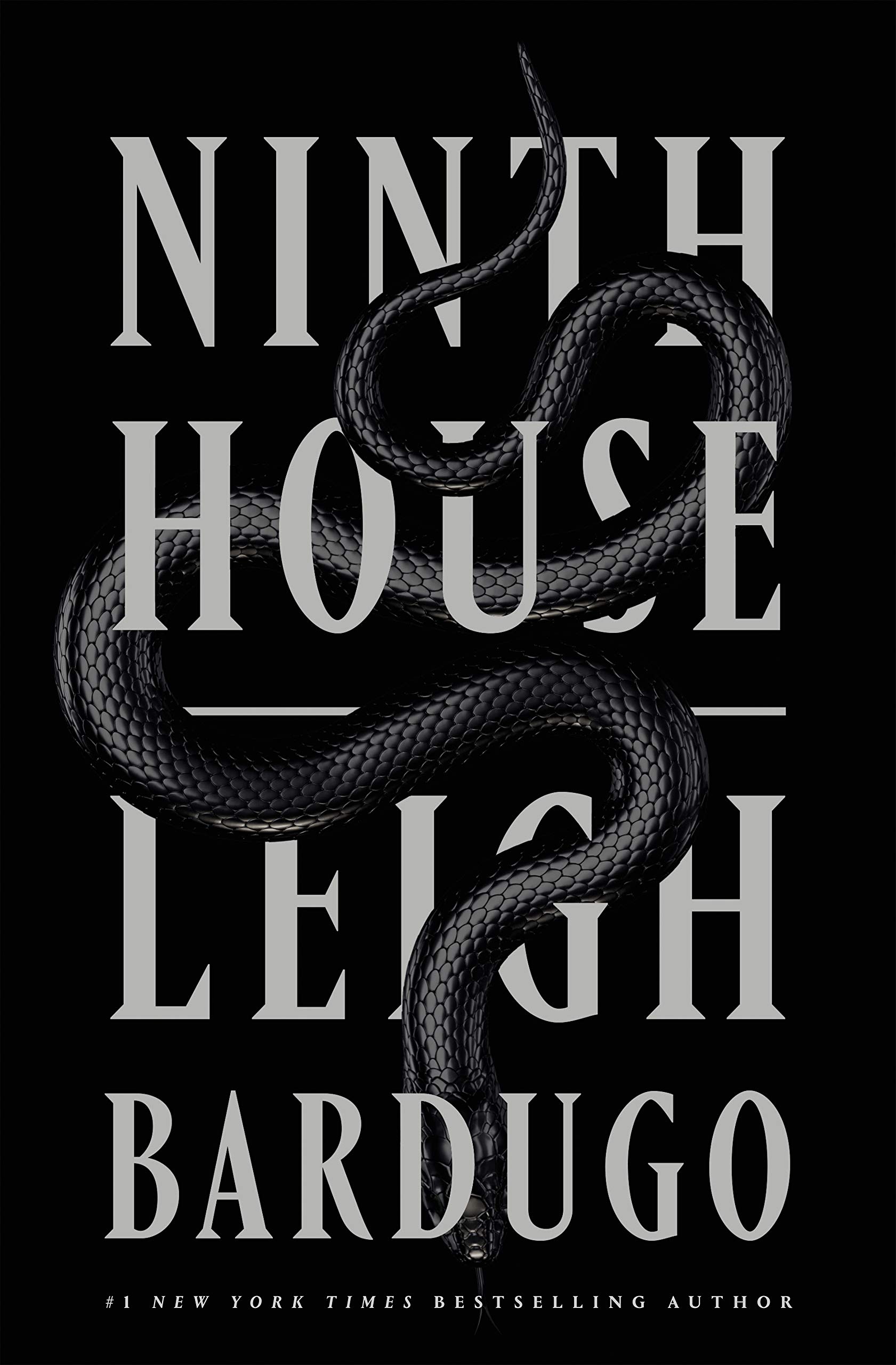
a black snake weaves between the large title font: Ninth House.

Note: While Bardugo is known for her young adult fiction, this novel is definitely adult. Content warnings include: sexual assault, rape, drug use without consent, gore. 

Alex Stern is only at Yale because she has a secret: she can see dead people. People who can actually see ghosts are rare in the magical underworld of New Haven. After a brutal murder that should have been the end of her future, instead, Alex is offered a new opportunity: serve as the Dante of Lethe House, which oversees the other hidden, magical houses that have graduated some of the rich and powerful, their fame and fortune protected by the spells performed by the underclassmen. 

The novel opens with a prognostication, where Alex must serve as Dante, alone, in observing the ghostly underworld while one of the Yale houses, the Bonesmen, produce their magic from a living sacrifice. With a living body splayed open on an operating table, Alex realizes the usually quiet-enough ghosts are not being quiet, but trying to break through her wards. Usually, her Virgil would be here to guide her through this prognostication until she learned all the ins and outs of magic, but her Virgil, Darlington, has gone missing. On top of all that, a young woman that reminds Alex of just where her life was heading shows up murdered on the same night the ghosts misbehaved. The cops, even Detective Abel Turner who is on Lethe's payroll, want to brush it off as just a girl from Town murdered over drugs. Alex suspects something more. 

In learning to navigate this unfamiliar world of both magic and ivy league “protocols,” Alex is shepherded by Darlington, the charming, rich, and smart senior who she will replace. The only problem: Darlington has disappeared, and Alex has to find out why—or she just might not survive finals, let alone killer demons.

A young woman from New Haven murdered on a magical night, her mentor Darlington gone missing, and her grades are slipping--Alex has her work cut out for her, but what makes everything harder is her status as an outsider. She's from California, grew up in poverty, has severe trauma from seeing ghosts but also from how that horrific ability impacted her mentally, leading her to drug usage. Now, she's dropped into not only the magical societies that influence Yale (and most of the rich and famous) but also has adjust to Ivy League classism, which Darlington--the educational superstar--struggles to understand.

Told in alternating chapters from the points-of-view of Alex and Darlington, Bardugo develops not just the world and magic systems, but also what it means to be an outsider in a place like Yale. It's not all magic and ghosts--Alex still has to pass her English class with its ungodly amount of reading. Importantly, the hierarchy inherent in academia is on full display, as different professors and deans play favorites with students, placing them in deadly situations, Alex included. But, those same people in power are unwilling to work to protect the students, even when Alex finds out certain students are using magic to drug others. Through this magical hierarchy, Bardugo is able to explore the toxic power dynamics of higher education, whether it's a hidden society, a frat house, or a sports team.   

Part of what makes this first novel a great addition to the dark academia subgenre is the focus on Yale lore. The ghosts, murderers, architects, and locations of Yale aren’t just included to spice up the story but actively tell the tale. In addition to critiquing the power Yale holds as an institution, the historical aspects balance out the magic, just as Bardugo confronts both magical obstacles and problems realistic to academia (such as scheduling appointments with your bougie advisor). Thus, the novel's alternating point-of-view, alternating chronology, and balancing of magic and reality come together to serve each other in a larger critique of institutionalized power.

While Leigh Bardugo's popularity comes from her Grishaverse novels (two of which I reviewed here), Ninth House represents a welcome change. Bardugo demonstrates her strength as a writer to capture reality and fantasy her exploration of a magical Yale with the same entertaining style that she brings to her young adult novels.

___

The Math

Baseline Assessment: 7/10 

Bonuses: +1 for the inclusion of Yale lore as well as ivy-league imposter syndrome

Nerd Coefficient: 8/10: well worth your time and attention

Reference:  Leigh Bardugo, Ninth House [St. Martin's, 2019]

Posted by: Phoebe Wagner (she/her) is an author, editor, and academic writing and living at the intersection of speculative fiction and ecology. She tweets as @pheebs_w.