Showing posts with label Stephen Graham Jones. Show all posts

Wednesday, April 16, 2025

Book Review: The Buffalo Hunter Hunter by Stephen Graham Jones

Stephen Graham Jones’ latest novel delivers on the promise of the title with a historical, fantastical spray of blood.

a buffalo head in profile with red letters spelling out the title The Buffalo Hunter Hunter

Since I heard the concept of this novel last year, it’s been one of my most highly anticipated titles. For regular readers of Nerds, you may have noticed that some books I was excited about didn’t quite land the way I hoped—not so with The Buffalo Hunter Hunter. This fast-paced story within a story of an Indigenous vampire hunting the buffalo hunters was exactly the kind of gory read I wanted in these troubling times. 

The basic idea of the book is mostly summed up in the title: Good Stab accidentally becomes a vampire and decides to hunt down white hunters as they eradicate the buffalo herds for profit. Jones delivers on the plot’s promise of revenge, but the novel isn’t so one-dimensional as that. First, the novel is a frame narrative. Nearly failed academic Etsy Beaucarne thinks she’s struck gold when she is able to transcribe, and hopefully publish, the journal of her distant relative Arthur Beaucarne. In his journal, Beaucarne has recorded the story of a Blackfeet man named Good Stab, where he explains how he became a vampire and hunted down the hunters. This frame narrative sets up not only the extractive nature of higher education when it comes to Indigenous topics but the idea of audience as Good Stab tells his story to a white man in order to achieve his goal. This idea of audience reaches beyond the novel, asking whom are these stories for

While Jones has been recognized in and outside of the horror genre as a top-tier writer, this layered frame narrative really demonstrates his control of voice. His ability to shift between Beaucarne’s journal entries and Good Stab’s “oral” story never felt jumbled. Both characters were clearly delineated, their voices unique especially when in contrast to the other. 

This emphasis on voice is particularly important to how Jones takes on the time-honored horror of the vampire. In the novel’s acknowledgements, Jones talks about starting this novel while wrapping up a graduate seminar course on “Writing the Vampire,” which is reflected in the way he picks and chooses what aspects of vampire lore to include, such as the quick healing abilities but not the lack of reflection. Good Stab keeps track of his reflection and the changes made by being a vampire because these new powers and restrictions make him unable to participate in the lifestyle that he sees as making him a Blackfeet. What makes one Indigenous is a throughline in this novel as Good Stab must come to terms with the changes his abilities bring as he is no longer able to go back to his home or his family and friends. 

While this book is deeply character driven via Good Stab’s voice, it is also a violent tale of revenge against the American empire. As Good Stab says: “What I am is the Indian who can’t die. I am the worst dream America ever had.” The novel’s plot begins with a white man found skinned on the prairie. Good Stab comes to the Lutheran pastor Beaucarne to tell his tale as the reader slowly figures out why Beaucarne is his chosen audience. While described on the inside flap as “literary horror,” the more literary aspects of the prose and frame narrative never get in the way of the blood and gore, but rather make the moments of intense violence more poignant or shocking.  

There’s so much more I could write about with this novel—the environmental commentary, the use of oral storytelling, the fun reinterpretation of the vampire—but this novel is my current top read of 2025. I’d rather leave you with a taste in hopes that you pick it up for yourself. Gabino Iglesias was right when he called this novel Jones’ “masterpiece” in his review for NPR. The prose, the characters, the plot, the commentary all come together seamlessly to create a book nearly impossible to put down. Good Stab’s voice will stay with me for a long time, and I know this is only the first of many rereads. 

--

Reference: Jones, Stephen Graham. The Buffalo Hunter Hunter [Saga Press, 2025].

POSTED BY: Phoebe Wagner is an author, editor, and academic writing and living at the intersection of speculative fiction and climate change.

Monday, July 26, 2021

Summer Reading List 2021: Phoebe

 Hi folks, even though I moved from the Southwest to the East Coast, it seems I can't escape the wildfire smoke or the constant reminder of the climate crisis--not that I'm particularly trying since I'm writing about ecological collapse and speculative fiction every day as part of my dissertation.

That said, I usually try to read a few books over the summer just for fun. In 2020, I was deep in the throws of reading a 200+ book list for my PhD comprehensive exams, so even though I'm working on my dissertation, this summer is a bit more relaxed reading-wise. The first half of the summer, I've spent reading a mix of dissertation novels (rereading Butler's Parable novels was a lot of feels), short story collections (still thinking about Brandon Taylor's Filthy Animals) to teach out of in the fall, and poetry (I'm late to the show but Kaveh Akbar's Calling a Wolf a Wolf is excellent).

What follows is a list of some books meant to distract me from the rest of my work. I hope, if you choose to read any of these, that they also distract you from what Joe Sherry called "the nineteenth month of 2020." Big mood.


1. The Other Lands by David Anthony Durham

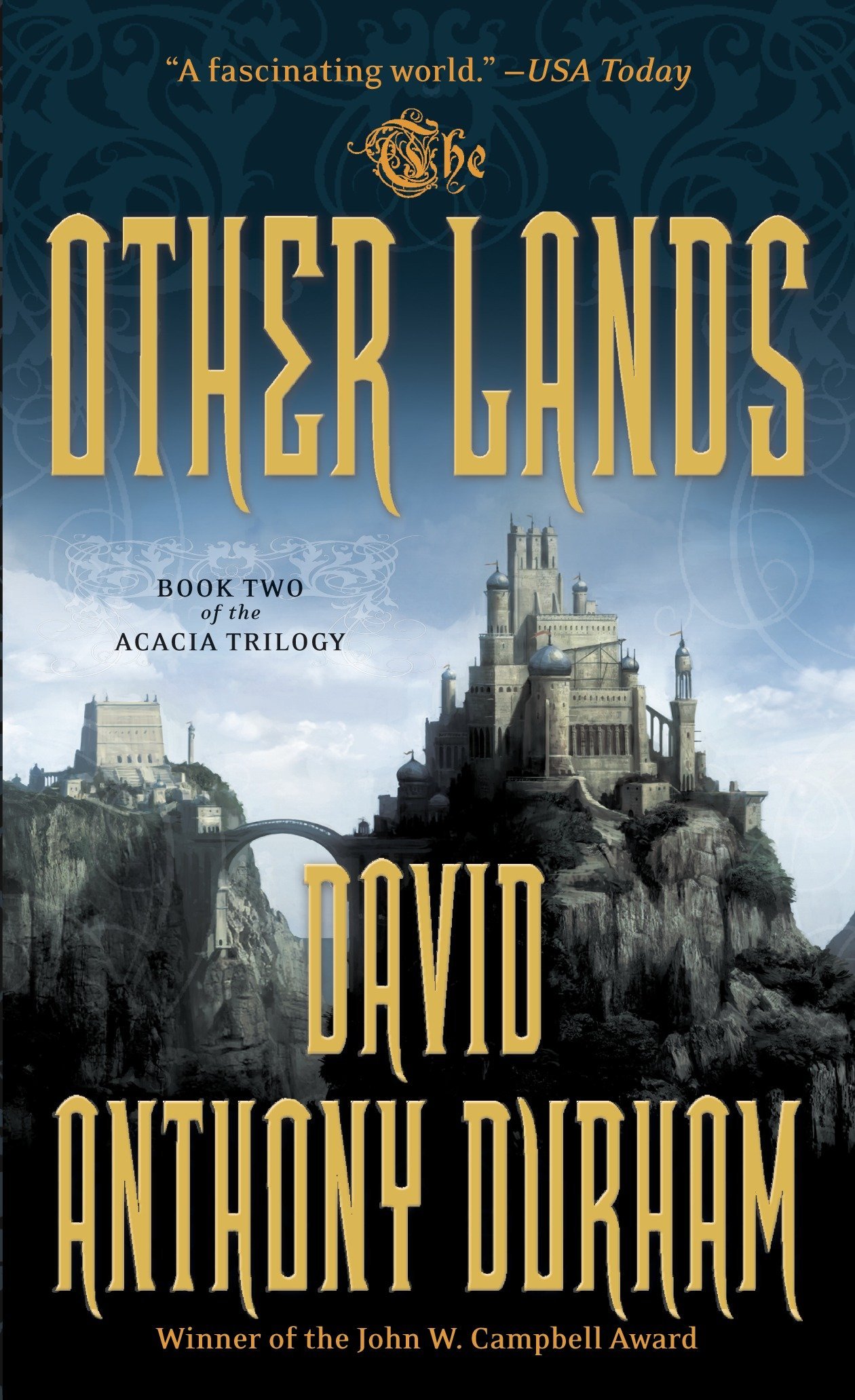
The past few months just have had me craving epic fantasy. Perhaps it's a comfort genre since my favorite authors as a kid were Tolkien and Lewis. Regardless, I've been meaning to get to The Other Lands for years. The second book in Durham's Acacia: War with the Mein trilogy, The Other Lands is set to explore more the fascinating world that Durham sets up the first novel, Acacia. I'm particularly interested to see how Durham continues the social commentary of empire that he sets up in the first book, which becomes a turning point at the end of the novel. 


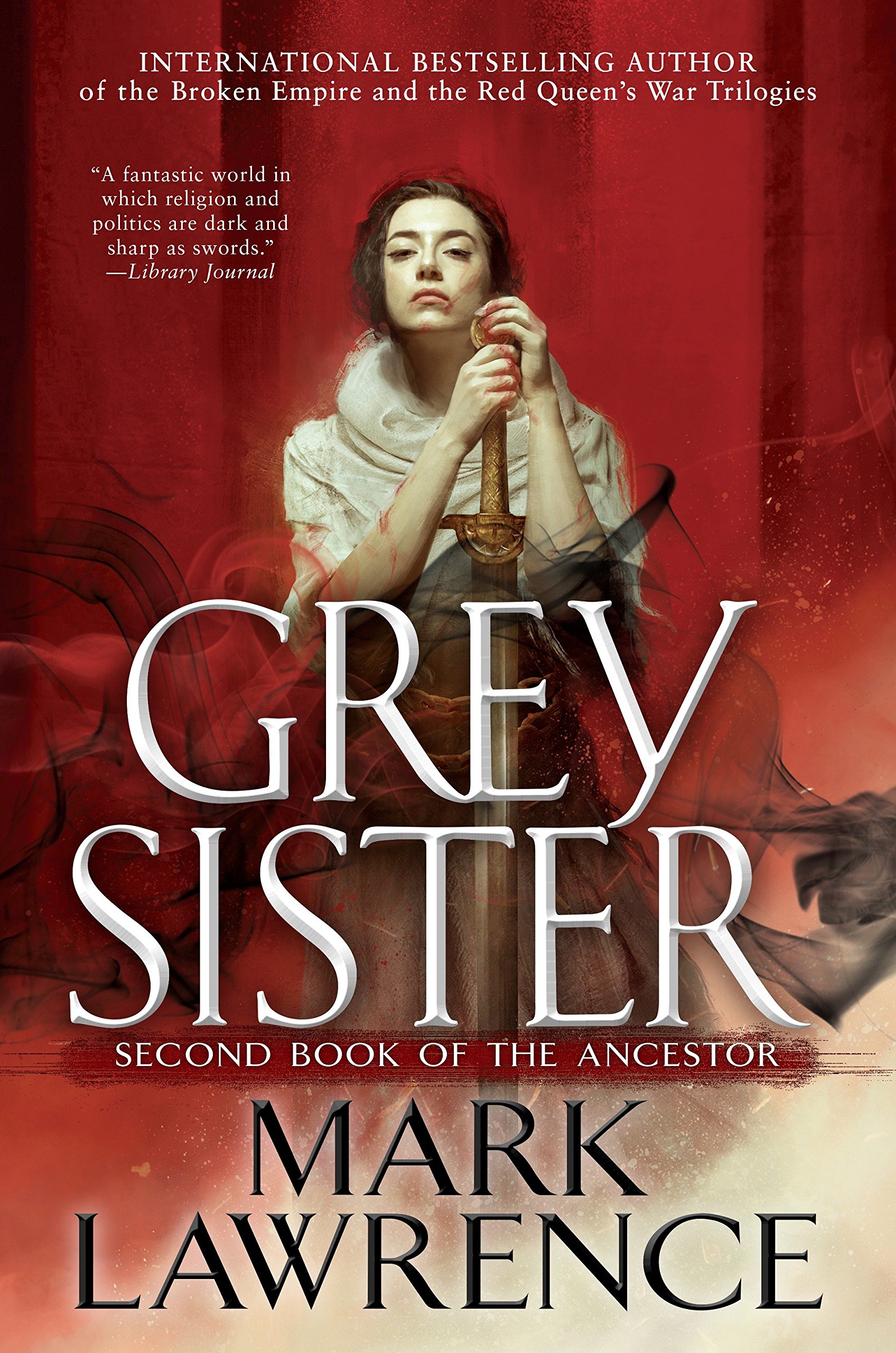
2. Grey Sister by Mark Lawrence

Another sequel in a trilogy, Grey Sister is not my typical read as I'm pretty hesitant to pick up a fantasy in the "blurbed by George R. R. Martin" variety. Setting that aside, a fellow fantasy fan gave me the first one as a belated Christmas gift, and after moving across the country into a new house, with most of my books still in boxes, I sat down to read it. I tore through the first one, totally engrossed in the best way. I'm hoping the second one, continuing the storyline of an assassin child with magical, invisible claws to protect her, keeps the same entertaining, fast-paced readability of the first novel.


3. NausicaƤ of the Valley of the Wind: the Manga

NausicaƤ instantly became my favorite Hayao Miyazaki film when I (finally) saw it last year. When I found out there was a manga that continues long past the film, I immediately put it on my reading list. The film follows Princess NausicaƤ as she tries to protect her home from an invading empire while teaching others to adapt and live in harmony with the toxic forest. At the end of the film, she takes on her prophetic role of "the man in blue" who will help the remnants of humanity thrive rather than fade into extinction. At the end of the movie, there's plenty of story left to tell, so I'm excited to see how Miyazaki completes what I consider to be a perfect piece of environmental storytelling.


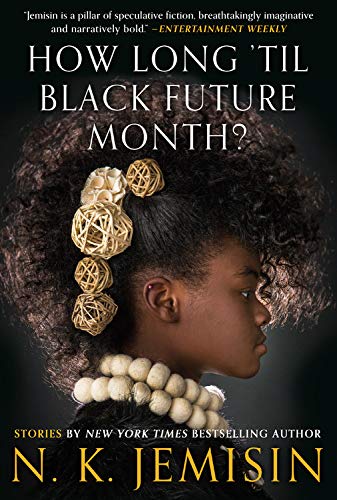
4. How Long 'til Black Future Month by N. K. Jemisin

As part of preparing to teaching creative writing at a small liberal arts school this fall, I've been catching up on my short story collections. At heart, I'm a reader and writer of novels, but as a teacher, I need to make sure my students have some sort of understanding of the short story form, which means giving lots and lots of examples. I'm a huge fan and wannabe scholar of Jemisin's work, so I'm excited to see how the larger themes and ideas I associate with her as a novelist boil down into short stories.


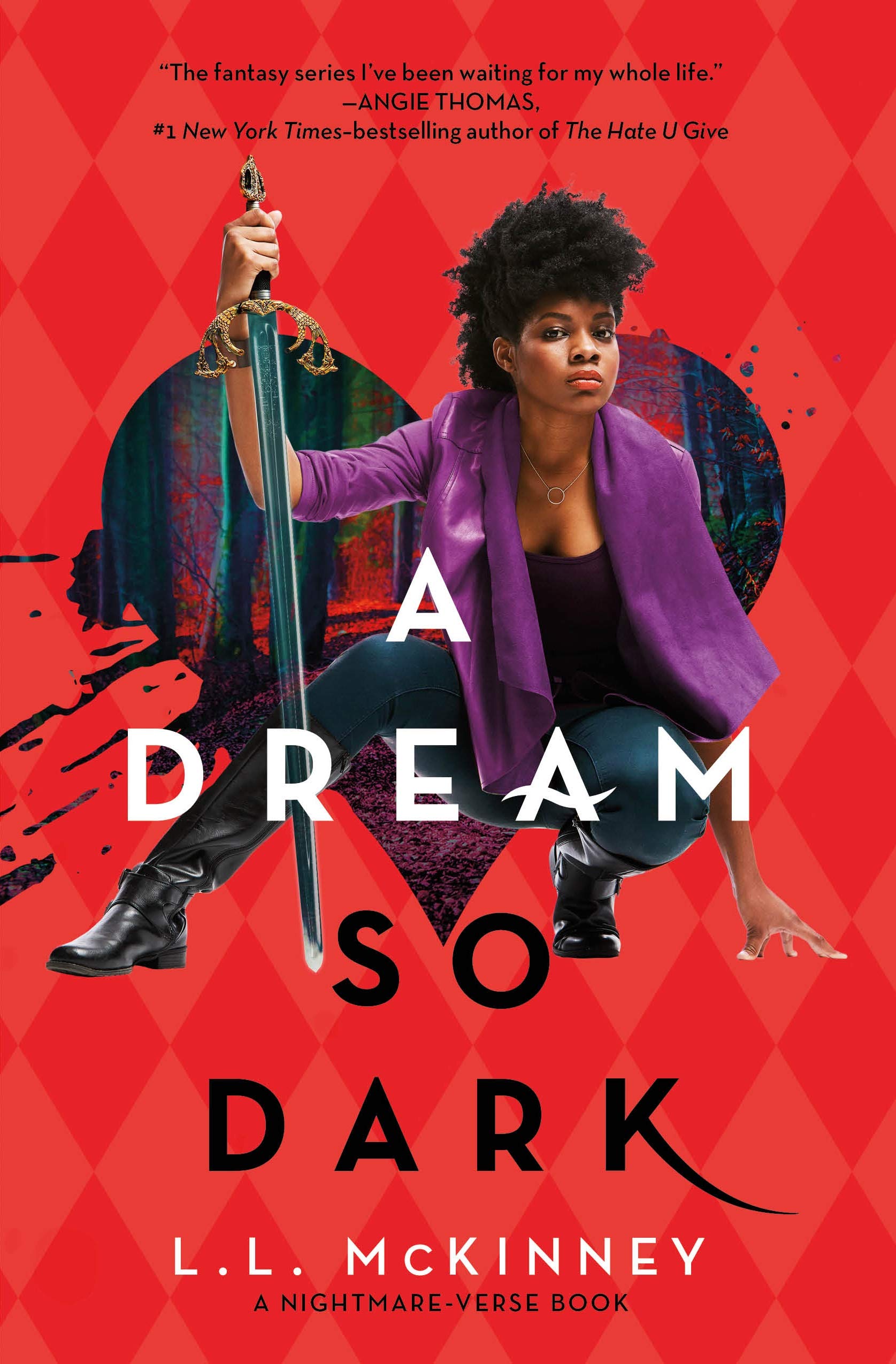
5. A Dream So Dark by L. L. McKinney

To me, nothing quite says summer like a stack of YA novels. A good YA book is almost always my beach read (or creek read, as things go in rural Pennsylvania). I read A Blade So Black last year and have been itching to dive back into McKinney's delightfully upturned wonderland retelling. With more of wonderland to explore and the main character gaining even cooler magical weapons, the sequel is set up to be a wild romp in this dream world. 


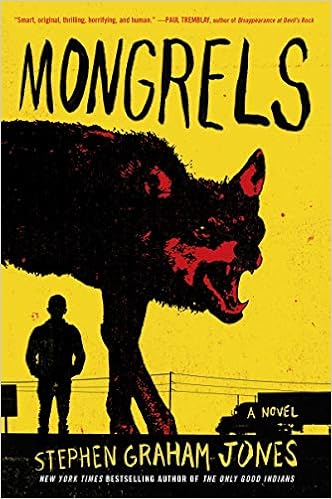
6. Mongrels by Stephen Graham Jones 

While everyone loves Jones's horror novels and novella, they are, ahem, a little scary for me. He's been on my radar since his 2016 werewolf novel, so I finally picked up a copy to read so I can join in on the SGJ love but still sleep at night. I'm sure I'll still have to read this during the day, but this coming of age werewolf novel seems a bit more my speed as the main character learns about his werewolf family while waiting to discover if he carries the same traits. 


Posted By: Phoebe Wagner is a PhD candidate at University of Nevada, Reno. When not writing or reading, she can be found kayaking at the nearest lake. Follow her at phoebe-wagner.com or on Twitter @pheebs_w.

Monday, September 28, 2020

Microreview [Book]: Night of the Mannequins by Stephen Graham Jones

Night of the Mannequins might be full of shaky anxiety, but its authorial voice is always sturdy.


Certain mental illnesses can color your perspective. Things become skewed and distorted. It's akin to having cinema seem more than just a credible imitation of reality, and instead feel like an overwhelming truth. And with a certain viewpoint, seeing an effigy of a human can convince you that you’re looking at a real, live one. But it’s not just what’s around you that becomes distorted—your interiority can become jagged, making you believe things to be true that are preposterous to most. That mindset can make crimes committed not from ill intent, but with a humanitarian bent--good intentions meshed with harmful actions. Real humans feel like simulacrums and irrationality coils around and obscures all else. Night of the Mannequins tackles that serious issue in a bloody, sometimes very extreme way but its intelligence and depth barely waver.

I’m going to be vague in my synopsis, because part of the fun in Night of the Mannequins is experiencing a specific shift in the story. The novel follows Sawyer – a teenage boy – and his friends. The group discover a mannequin in a creek, and take it as their plaything, developing a comical kinship with it, almost treating it like it’s part of their team. After they use the mannequin for a prank in a movie theatre, it walks right out of the theatre, somehow gaining the ability of mobility. That sight gnaws at Sawyer and devolves him into a spiral of desperation, weeping, and the desire to go to overreaching lengths to minimize the damage he fears the mannequin will cause. Then, a slasher-esque story with psychological undertones ensues.

When mental illness is covered in horror, authors sometimes find it easy to label those with stigmatized ailments as categorically evil. Thankfully, Night of the Mannequins doesn’t do that. All the horrors propelled by mental illness are done from characters with the intense compulsion to be utilitarian and as humane as possible. It humanizes mental illness by delving deep into the thought process of how someone could spiral down into a belief that causes harm, through a rationalization of charitableness.

That rationalization is underscored by the novel’s strong narratorial voice. The tone can pinball from humorous, to heartbreaking, to poetic, to horrific, without jarring tonal shifts. Despite the jumble of contrasting thoughts that twist and overlap like a coiled chain, the story never loses focus and barely stretches out into barren patches of inactivity. When the plot does halt at a standstill, it’s to illustrate the racing, repetitive thoughts from a certain character, which is easily apparent, and doesn’t justify making the reader go through the same line of thought again. The character’s recursive, swirly thoughts are established early on, and would be better if they weren’t hammered home.

The side characters are aptly established for a novella-sized length, but because of the skewed perspective of the story, I never really got a sense of who they were. I can’t fault that too much because it’s a side effect of the premise, but I think there are still ways to showcase and protrude their personality forward under an otherworldly lens.

Fiction is often an exercise in having a real author extract kernels of truth from unreality. The more kernels extracted, the more hard-hitting and real those stories become. And if the story is done right, for a little while we almost forget that what we’re reading or watching isn’t real. Night of the Mannequins takes that all-encompassing delusion that we all have forward and shows a perspective that is completely mired in unreality. But just like how most people cheer on the heroes of a book or movie, this character is moved to do what they think is the right thing and cheer on the seemingly right side. Night of the Mannequins could easily be a vapid slasher novella that keeps you entertained but fades from your memory immediately after reading. But Stephen Graham Jones adds nuance to create a pleasing simulacrum of slasher tropes and makes his story all the better for it.

The Math

Baseline Score: 8/10

Bonuses: +1 For a clever meshing of B-movie and “arthouse” tropes.

Negatives: -1 For a mixed bag of character development.
-1 For a slightly drawn out midsection.

Nerd Coefficient: 7/10

POSTED BY: Sean Dowie - Screenwriter, stand-up comedian, lover of all books that make him nod his head and say, "Neat!"

Reference: Jones, Stephen Graham. Night of the Mannequins [Tor.com, 2020]

Tuesday, June 4, 2019

Summer Reading List 2019: Phoebe

Hello, fellow nerds! As I've mentioned a few times on here, I'm currently in a PhD program studying English literature with a focus on environmental and speculative writers. For those of you who have lived the PhD life, you probably have an idea of what's on my summer reading list: comps. While I'm not super close to taking my comprehensive exams (basically a test with a lot of timed writing and hundreds of required books), I'm going to start chipping away at the list:


Since I'm studying speculative writers, much of the reading, especially at this early stage, will be books I've just missed or haven't gotten to yet, like Dhalgren. Of course, no comps list would be complete without plenty of theory, so when I'm exhausted from all the academic language, I picked up the perfect remedy at a used book sale:


Yes, that is a shelf of much pulpy speculative, with some classics thrown in. I figured what could be better than to de-stress from reading about postmodernism than unicorns on an epic quest?

So, as I embark on my own quest to defeat the dark lord of comprehensive exams, here's a snippet of what I'll be reading this summer!


1. Dhalgren by Samuel R. Delany (1974)

A sci-fi classic that I have stared at on the shelf for years, now. Growing up, I was much more of a fantasy-reading kid, so I knew of Delany but never picked up his books, even when I went through a classic SF reading phase. Of course, a comprehensive list of American speculative literature wouldn't be complete without Dhalgren, and I'm excited to dive in.


2. Imaro by Charles R. Saunders (1981)

Another classic of speculative literature, though less read, I believe. I first became interested in Imaro as an early example of sword & sorcery and diversity in SF. Since I read and wrote about Marlon James' Black Leopard, Red Wolf, I've become more interested in the power of sword & sorcery as escapist decolonizing fiction. I'm excited for a romp and will probably use this novel as a short, fun read when I'm exhausted by the heavy hitters.


3. The Sandman: The Complete Series by Neil Gaiman (1997)

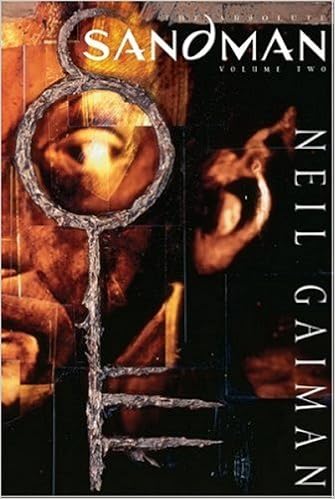
I've ready a lot of Neil Gaiman's other work, and he's one of my most influential authors as a young writer. I've paged through and read several volumes of Sandman, but I haven't sat down and poured over it. I have the four volume annotated editions, and look forward to following the Sandman into a dreamy extravaganza.


4. The Female Man by Joanna Russ (1975)

As I promised, lots of classics on this list. For a better write up than this tiny blurb, check out Vance's post right here at Nerds! When making my comprehensive exams reading list, there are certain books that one knows must be included if talking about American speculative writers. Of course, Russ is one of them. That being said, The Female Man is one of those texts that I've always heard about and referenced when discussing SF and feminism, but I haven't read it nor really know anything about it. But Vance's summary sounds pretty wild--time travel, alternate dimensions, assassins. I'm totally down for something like that being on my required reading list.


5. Staying with the Trouble: Making Kin in the Chthulucene by Donna Haraway (2016)

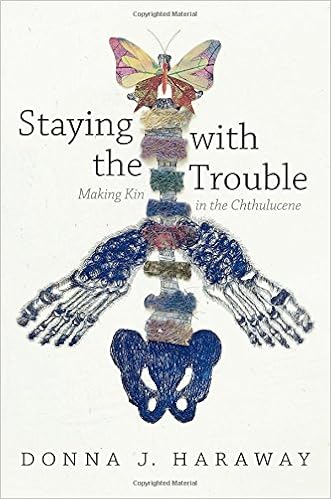
Haraway is known for her confusing, riddling academic language. This is an accurate depiction of her writing, though it is also kinda fun when you have words like "chthulucene" thrown around. The reason it my be of interest to readers of this blog is her inclusion of speculative writers like Ursula K. Le Guin and Octavia Butler. While she was known for her work in feminist theory (particularly the Cyborg Manifesto), this current book delves into eco-criticism, especially other-than-humans. I've flipped through this book, but don't normally make it more than a page at a time. This summer, though, I have hoped of writing an article titled "Tentacular Spectacular: Dungeons & Dragons as Embodiment of Nonhumanity," which would force me to read Haraway's book (as the title comes from one of her chapters) AND I'd get to write about my favorite D&D livestream The C-Team. Theory and D&D, no better pairing.


6. Mapping the Interior by Stephen Graham Jones (2017)

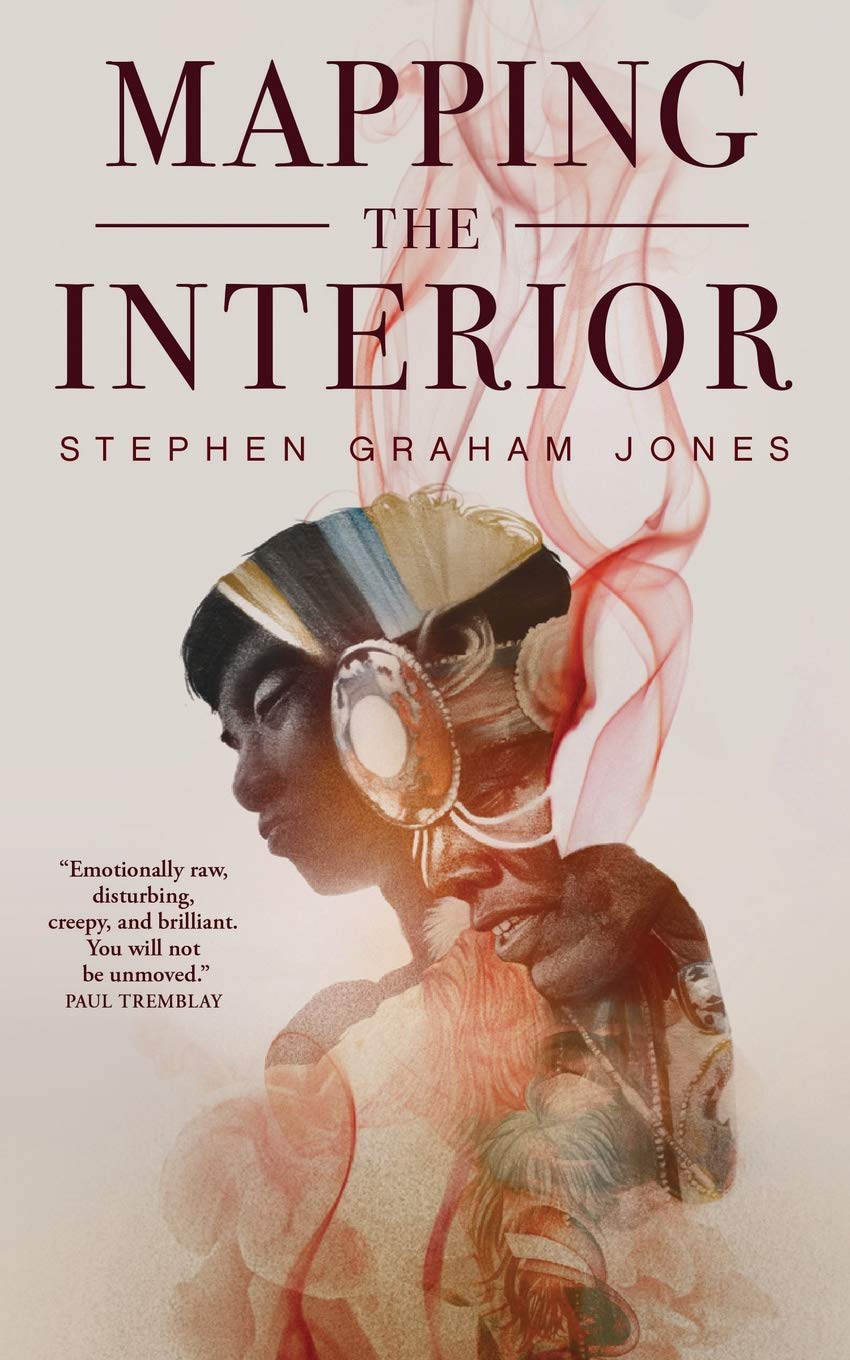
One of the more modern authors on my list, I've wanted to read Jones' work for quite awhile. I still hope to pick up Mongrels at some point (I'm a sucker for werewolf stories), but a horror story about mapping the interior of a house pushes so many buttons not only in speculative literature but also more broadly in the literary cannon. Additionally, it's a shorter read, which gives some nice balance to starting this list with Dhalgren. Overall, I've heard lots of good things about this novella and Jones' writing in general, so I'm happy to finally dive in!


Phoebe Wagner currently studies at University of Nevada: Reno. When not writing or reading, she can be found kayaking at the nearest lake. Follow her at phoebe-wagner.com or on Twitter @pheebs_w.