- Reviews
- _Book reviews
- _Film and TV Reviews
- _Game Reviews
- _Thursday Morning Superhero
- _Short Fiction Reviews
- Lists
- _New Books Spotlight
- _6 Books Posts
- _We Rank 'Ems
- Features
- _Interviews and Blogtables
- _Talking About Books
- _The Hugo Awards
- _Mini-Projects
- Projects
- _Nerds on Tour (2020)
- _The Hugo Initiative (2019)
- _Feminist Futures (2018)
- _Dystopian Visions (2017)
- Meet the Flock
- Review Policy
- Home
Monday, April 17, 2017
DYSTOPIAN VISIONS: Fahrenheit 451
Dossier: Bradbury, Ray. Fahrenheit 451. [Ballantine Books, 1953]
Filetype: Book
File Under: Statist Dystopia
Executive Summary: Guy Montag is a fireman. Long ago, in a time remembered only in rumors, firemen put out fires, but since homes were rendered fireproof, the new vocation of the fireman is to burn — and burn books, specifically. On the way home one night, Guy meets his new neighbor, a teenage girl named Clarisse, who is odd. She doesn't watch the walls — room-sized televisions that constantly feature vapid, incomprehensible, but addictive soap operas — she believes in conversation, and thinks that there is value in experiencing nature. This is all totally foreign to Montag, but she insists he is more like her than he realizes. Montag returns home to find his wife Mildred has overdosed on sleeping pills. He calls the paramedics, who perform this kind of routine nightly, and who assure Montage that she will wake the next day with no memory of what has happened.
Montag spends more time with Clarisse, until she suddenly disappears, and on his next fire callout, he watches a woman immolate herself rather than have her books destroyed in front of her. Montag, without thinking, secrets a book away for himself, and sneaks it home. After witnessing this woman's suicide and stealing the book, Montag begins unraveling. As it happens, he has stolen a number of books over the last year or so, but doesn't know what to make of them or of himself. Montag's fire chief, Captain Beatty, pays a house call on Montag to see why he has missed work, and casually lectures about how books were slowly banned in the name of public happiness, since people increasingly found books to be a troubling source of introspection and led to discontent.
Soon enough, Montag returns to work, but finds his next call to be out to his own home. Montag is faced with the decision to burn his own home and attempt to re-assimilate into a monolithic society he no longer feels he belongs in, or to try to fight back and see what happens next when the game goes off the rails.
Dystopian Visions: Americans read fewer and fewer books every year, but even so, I like to think most people would agree that an outright ban on books would be something to be universally resisted. Nevertheless, Bradbury here constructs a future society where the written word has come to represent certain patterns of thought — discontent, self-reflection, empathy, abstraction — that the government has deemed harmful to the populace. There is a pervasive passivity to the citizenry that echoes that of Huxley's Brave New World, except in this case the general numbness of the average citizen isn't engendered by drug use or casual sex, but instead by an addiction to vacuous television programs. In watching "the parlor walls," which utilize software that make them interactive and personalized, so that the people on TV look at Montag's wife and ask, "What do you think, Mildred?" people are made to feel included, loved, and important, and the heavy lifting of thinking about their lives or why bombers are flying overhead every day need not be undertaken. It is a world that criminalizes thought. And where Shakespeare wrote that "the devil can cite Scripture for his purpose," Bradbury gives us the figure of Captain Beatty, who is well-read and conversant in how the world came to its current form, and argues eloquently that all is as it should be. "The bigger your market, Montag, the less you handle controversy," he says, in laying out the reasons why the people themselves, not the government, not really, decided that it was in everybody's best interest if we all just put matches to anything that might be in the least provocative.
Utopian Undercurrents: Like so many of the dystopian works we've looked at in this series, our heroes are the outliers, and everybody else is pretty happy. They may be existing only a single rung on the ladder above lobotomized wards of the state, but they're happy enough about it. They don't question, their basic needs are met, and they're comfortable. This fundamental note that sounds across so many volumes and imaginings of future, terrible societies suggests that it is a commonly-held belief that the majority of mankind really don't care about anything outside of their own animal comfort. Bradbury works to undercut this a little, however, in that the vague war hinted at throughout most of the book does make an appearance at the end, and it's reasonable to assume that Montag's "difference," his outsider status or way of thinking, actually prolongs his life, rather than the opposite.
Level of Hell: Seventh. If you're a free-thinker, it doesn't get much worse, but if you're happy to veg out in front of the walls, you're pretty ok. Until the bombs start falling. Easy to imagine a sequel where this same landscape is as hellish as it gets.
Legacy: Simply put, this is one of the foundational texts of the dystopian genre. So many works owe so much to this book that the entire genre would likely be a different animal without it.
In Retrospect: This is a very, very short book that nevertheless manages to weave a compelling story that echoes very clearly with things that are going on today, and have been going on since its original publication. It's a book that manages to hit square in the zeitgeist, whenever a reader happens to come to it. I read this book twice, probably 25 years apart, and it was as resonant the first time as is was last month. There is a prescience in Beatty's recounting of a society's collapse into illiteracy that still sets off warning bells in the modern reader. There are some limits to the characterization, and in some ways those are improved upon in Francois Truffaut's film adaptation, but it's still a book that earns its reputation, and does nothing to harm Bradbury's inclusion on the Mt. Rushmore of sci-fi writers.
Analytics
For its time: 5/5
Read today: 5/5.
Oppressometer Readout: 10/10.
Posted by Vance K — co-editor and cult film reviewer at the now-Hugo nominated nerds of a feather, flock together since 2012, musician, and Emmy-winning producer.
Friday, April 14, 2017
THE MONTHLY ROUND - A Taster's Guide to Speculative Short Fiction, 03/2017
It's a new beginning for The Monthly Round, for a number of reasons. The first is, I've finally gotten around to making a graphic for it! Gaze at the wonder that is my graphic design skills (better known as: I probably like playing around in Photoshop too damn much). I've tried to capture the feel for the series/column/whatever as best I good, with stars and a wizard hat and a creepy little accidental face. In short, I hope you enjoy it.
But that's not the only reason why this is a new beginning for The Monthly Round. Regulars have perhaps noticed that over the past few months I've been experimenting with the format of my reviews. I think I finally have something that I like. At the same time, as much as I like having a shot to accompany most anything, I think it's best to focus on just the main six selections for the Tasting Flight. I will still be including at least one flash fiction story in my selections each month, but I'm otherwise going to discontinue my Shots reviews.
And all right, business out of the way, welcome to the March edition of the Round! Come in out of the void and shake the star-stuff from your jacket. Let me pour you something. Know what you're in the mood for, or maybe you'll let me show you what's on tap this month. It's a mix of a little bit of everything, from sweeping science fiction to devastating horror to inspiring fantasy. No matter what you're in the mood for, you're sure to find something to enjoy this month so sit down, relax, and let's begin.
Tasting Flight - March 2017
"The Cold, Lonely Waters" by Aimee Ogden (Shimmer)
Notes: You’d think this would be best served cold, but the real treat of this drink, which opens to smokey and rich flavors of cocoa and vanilla, is that it only really comes out of its shell at room temperature, like a traveler pushing through the ink dark to find a warm hearth and the hope of new friends.
![]() |
| Art by Sandro Castelli |
Notes: You’d think this would be best served cold, but the real treat of this drink, which opens to smokey and rich flavors of cocoa and vanilla, is that it only really comes out of its shell at room temperature, like a traveler pushing through the ink dark to find a warm hearth and the hope of new friends.
Pairs with: Vanilla Porter
Review: This story features mermaids in space. Mermaids. In. Space. Even a month later I am still delighted by that simple premise and the gorgeous way that the story unfolds. It imagines this great sphere made of glass and full of water, this incredibly delicate construct with three mermaids inside, three explorers looking to reach out to another world (or a moon anyway) for signs of life. For signs that they aren’t alone in the galaxy. The piece circles around the mysterious disappearance of humans on Earth even as the main character, a mermaid ill suited to the cold reaches of space, deals with the conditions. It’s a story that to me looks at the nature of isolation, looks at the tendency that we have to want to reach out and find someone else there. The mermaids were not treated well by the humans, not really, and yet the absence is like a wound, and though there are definitely dissenters among the mermaids the decision is still made to travel through space in hopes of finding company among the stars. It is not the happiest of reads, though, for all that it is breathtaking in its scope and execution. The action is at many times tragic and difficult, and there’s a heaviness to the piece, a weight from all the expectations and hope that the main character carries into the dark. It’s ultimately a very hopeful story, though, that reaches past the fear of failure, loneliness, and pain, and toward a warmth of belonging and community.
"It Happened To Me: I Melded My Consciousness With the Giant Alien Mushroom Floating Above Chicago" by Nino Cipri (Fireside Fiction)
Notes: With flavors of earth and air mingling in this strange, dark brew, the experience doesn't seem intense at first, but the more you consume the more you find yourself unable to put it down.
Pairs with: Shiitake Brown Ale
Review: There is a giant space mushroom floating over Chicago. And okay, yes, some people freaked out a bit at first. But, eh, it's Chicago, and as long as it doesn't mess with their commute it's no big deal. At least, it isn't for the main character of this story, until the episodes start. I love the framing of this series of stories, which take the form of confessionals you might find in some less-than-legit newsstand papers or on television on specials with names like "Bigfoot is my baby's daddy." And I love the way this story in particular shows how people can normalize so much weird in their life. So much that should make them turn and run but that once they've taken the first few steps it's nearly impossible to break away. And the story is about bridges, about a slow encroachment, about the ways that communing with a giant space mushroom might actually not be a bad thing because hear me out for a second. And I love that, the sly humor of the piece while at the same time there's something deeper going on here. That the main character has been chosen for this but maybe because they were desperate for connection in community, that even in a city of millions they were alone and vulnerable and the space mushroom offered them a way out of that. It's a story that mixes horror and fantasy because it seems to ask (for me, at least) if the space mushroom is any more nefarious or frightening than any other group out there that seems exploitative or suspect. We live in a world that so often seeks to exploit our need for comfort and understanding, and in that world this mushroom might not be so bad. It might beautiful, even, and if it isn't then this story certainly is.
![]() |
| Art by ilonareny |
"You Will Always Have Family: A Triptych" by Kathleen Kayembe (Nightmare)
Notes: Ethereal and ghostly and pouring a pale, clear yellow, the bracing and citrusy nose yields to a subtle bitterness that seems on the edge of transcendence.
Pairs with: White IPA
Review: Revealing the ways that loss and pain and grief can feed the fear of the different, can feed superstition and in turn violence, this story spaces itself over three sections and three characters all effected by a single rash action in the past. It begins most distant from that event, though, creating a mysterious and rather Gothic feel by having Izzy, a young woman trying to look after her uncle, a professor of stories and folklore. There's a forbidden room in his house, a missing son, and a fear in the uncle that creates at atmosphere of dread and anticipation. As the piece dives into the next character, Mbuyi, the missing son who turns out to be not so missing after all. The mystery of the forbidden room is revealed, as well as what the uncle is so afraid of, but the pains and betrayals go much deeper than that, and I love how the story adds layers to the narrative with each section, truly creating a triptych that, when complete, paints a vivid and complete picture of this situation, of this family. Which is what I feel the story is about. Family. The way that families can fracture and break and become abusive because a child is different. That by treating difference like a disease, like a wrong, it traps everyone in a sort of hell, unable to move forward and unable to heal and unable to fix anything because the real problem isn't the difference but the fear and hatred people respond to that difference with. The story reveals the tragedy of this family, made more harrowing and sad because it was completely avoidable, because very little of it had to happen. And yet once the first stone began rolling downhill it created an avalanche that devastates so much. Even so, the story does maintain a level of hope. Not to undo the harm done, but to prevent the avalanche from claiming even more. It looks at forgiveness and regret, violence and family, and it does it with a twist of horror and fantasy.
"Terra Nullius" by Hanuš Seiner, translated by Julie Nováková (Strange Horizons)
Notes: A strange and almost alien exterior gives way to an experience that is strangely salty and dark without being claustrophobic, opening up to reveal a surprisingly sweet finish.
Pairs with: Oyster Stout
Review: I've never read a story of alien invasion quite like this one, where the threat to humanity so closely mirrors one of the things that has allowed humans to become the dominant species on Earth—adaptivity. The invading force is able to create artificial worlds to help their offspring adapt to the very specific conditions of the worlds they arrive at, so that generation over generation they are able to overcome almost any obstacle. As adults, though, the aliens are static, rigid. The story explores how the environment they are raised in comes to define them, and how any chance at mediation or change has to start there, by reaching into those worlds that are supposed to exist only for teaching violence and colonization and trying something else instead. It's a beautiful story that shows just how difficult it can be to try and negotiate and coexist with people who have been raised to think a very rigid set of beliefs, who have been prepared and isolated since they were children to believe certain things, to promote certain kinds of violence and imperialism. It's a shocking piece that shows just how much it makes reality itself seem unstable, inconstant. How that level of manipulation and reality-curating can have huge effects even for those who don't subscribe to that vision of reality. And yet it manages to get to the heart and hope of this conflict, this war that's going on all over the story. That the key to avoiding human extinction is compassion and empathy and breaking through the isolation that allows these children to be turned into killers. That instead of continuing the narrative of inevitable war and violence the sides need to put their fear and aggression aside and work together toward a future they can all inhabit.
![]() |
| Art by breakermaximus |
"If We Survive the Night" by Carlie St. George (The Dark)
Notes: Pouring the color of blood in the water and with a soft white head that could be mistaken for purity, there is a sweetness that lies over a more complex and fiery flavor.
Pairs with: Red Ale
Review: Horror, like many genres, can sometimes be defined by its tropes. No where is this so clear than in one of the stalwarts of horror—the slasher. Whether on the page or, perhaps more memorably, on screen, slasher stories are all about violence and virtue. The feature a Chosen girl who is going to survive in part because she's Good enough to. Everyone else? Well… This story takes direct aim at slasher tropes and populates a house full of dead girls. Dead women. People who were too queer or too brown or too sex-positive or did drugs or didn't aspire to be the Good girl. The story swirls around these women as they reenact the same things every day—breakfast, some weird shit with angels, and oh yeah, being brutally murdered every night. It's a disturbing and wrenching premise that delivers on the horror but doesn't keep its distance, doesn't limit itself to the comforts of staying within the tropes. Instead it brings those tropes kicking and screaming into the light to try and reveal why they exist and what they are saying. The women all must live trying to figure out why they died, why they've been trapped in this hell, all the while these angels tell them to repent, that it's somehow within their power to escape, if only they'd…something. The result is a nightmarish place where the women turn on each other more than anything, so in pain that it takes them a while to realize that they do have the power to escape, just not in the way they're being told. The story is about taking back space and a voice, taking back a narrative that has been so twisted and poisoned that it seems impossible. And yet the piece manages to bring something almost redemptive out of the slasher tropes—the deconstruction of them. It's a harrowing and uncomfortable read but it is also amazingly crafted and hits like a well placed axe to the sternum.
"Suddenwall" by Sara Saab (Beneath Ceaseless Skies)
Notes: Pouring the color of packed earth with a touch of gold, the first taste seems almost simple and open until the complexity of the spices and zest set in, balancing the experience with a dense, almost mournful profile.
Pairs with: Abbey Ale
Review: In many ways Panette and Harvei have survived a war. Only it was never exactly a war and there are many ways that people can be alive without exactly surviving. Both women were pulled into the conflict for different reasons, Panette because she thought it was right, Harvei because she didn't have a better choice. There were clear lines and things seemed simple. Except they weren't. The story doesn't flinch away from tackling complicity and the complexity of violence and genocide. Both characters were part of a successful campaign to wipe out a people and a language. And both lived through that only to find that while they were away the nation they were presumably fighting for had a change of heart. And in order to avoid the guilt and shame of what had happened, the soldiers were all cast out into a new city, one with a morality of its own, one that would exile or kill any who broke its rules. Years after the war, Panette and Harvei have drifted apart despite an intimacy they had during the conflict. They are reunited only when the city rejects Harvei, and the old wounds and guilt and shame come flooding back. The story does a wonderful job of showing how violence and bigotry get into people, how they twist and corrupt. And it shows the uncomfortable reality of dealing seeing the pain of the soldiers left behind in the wake of genocide but not being able to see their victims, those erased by the campaign they were a part of. It shows what happens when people try to give up their ability to see right and wrong, when they rely on someone or something else to make their moral decisions. It shows how there can be no real healing without facing what has been done and learning from it, not just changing policy so that it doesn't happen specifically (by protecting just the one victimized group) but changing the way people live and think so that the same thing can't happen generally, so that people don't blindly follow. It's a tragic story not just because of how it plays out but because of how it reflects how we so often stop at treating the symptoms of intolerance rather than trying to get at the root of the problem.
---
POSTED BY: Charles, avid reader, reviewer, and sometimes writer of speculative fiction. Contributor to Nerds of a Feather since 2014.
Thursday, April 13, 2017
Thursday Morning Superhero
Last weekend, with the help of my team, we were able to secure SDCC passes for the whole group! Thinking about another lovely week in San Diego this summer makes me realize that there are a lot of other conventions that I hope to attend one day. Today marks the first day of Star Wars Celebration and I look forward to enjoying this convention from afar and hope to one day dive into four days of Star Wars fandom. In the meantime I will continue to read the new ongoing Star Wars comics from Marvel.
Pick of the Week:
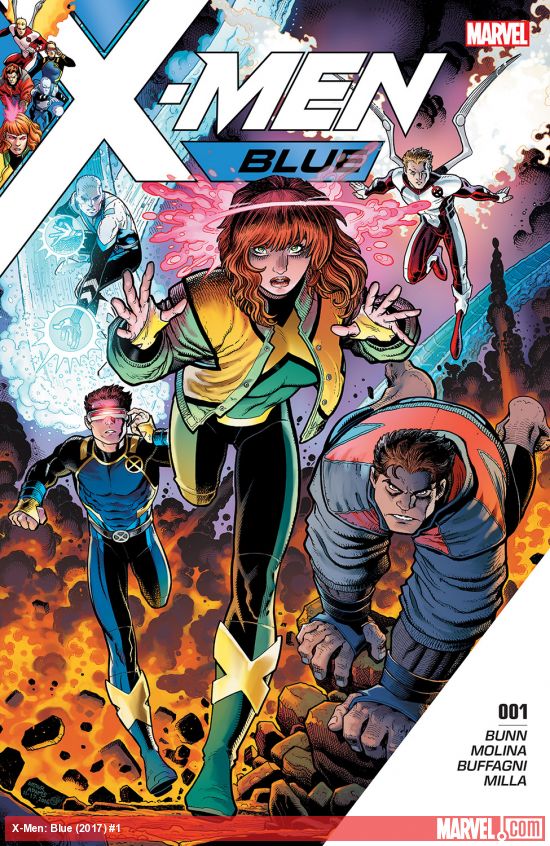
X-Men Blue #1 - This week we were treated to a new X-Men book penned by no other than Cullen Bunn! In this series, the original X-Men (Beast, Jean Grey, Cyclops, Angel, and Iceman) have been brought forward through time to protect them from a war among mutants. The first issue features an epic battle on a yacht and establishes the premise for why the X-Men were patrolling for other mutants. Toss in a Wolverine side story and a preview of what is to come establishes this as the X-Men title to read going forward. This series looks like a lot of fun and it looks like Bunn is going to pay homage to classic X-Men story-lines throughout the years.
The Rest:
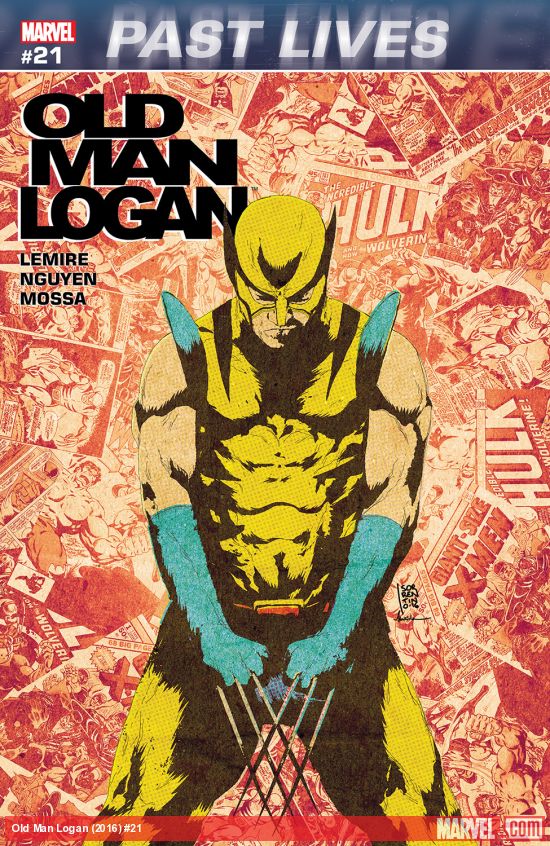
Old Man Logan #21 - Logan learned not to trust someone as nefarious as Asmodeus to help set things right. Instead of returning to the wastelands, Logan was sent back in time and quickly learns that he must try to figure out a way to return back to Asmodeus. Jeff Lemire plans on sending Wolverine back to some of the important milestones in his life in the latest arc entitled Past Lives. This issues is effective in setting up the new arc and outlines what Wolverine is going to have to overcome to return home. I won't spoil what Asmodeus has planned for Logan in the current time, but I hope that he is able to make his journey through his past lives quickly!
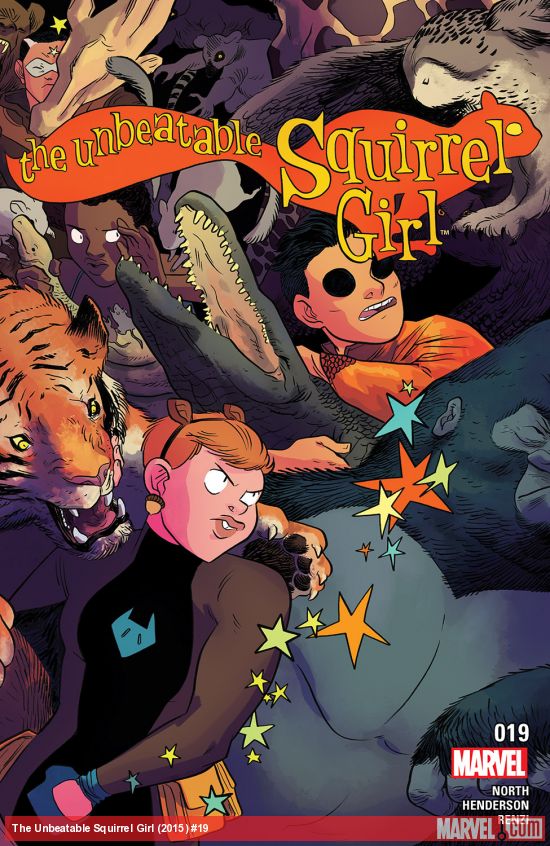
The Unbeatable Squirrel Girl #19 - When we last left the Unbeatable Squirrel Girl, she had just learned her mentor Melissa Morbeck had microchipped an army of animals so she could control them with her thoughts. This issue solidifies why I enjoy this book so much. It includes the hashtag #ChefBear, has multiple species of bears and a variety of professions, is full of bear puns, and is setting up what is likely to be a hilariously epic finale to this story. Packed with whimsy and fun, I still cannot recommend this one enough. If you aren't interested in bear butlers or how Doctor Bear helps implant microchips for Ms. Morbeck, then I am not sure what is wrong with you.
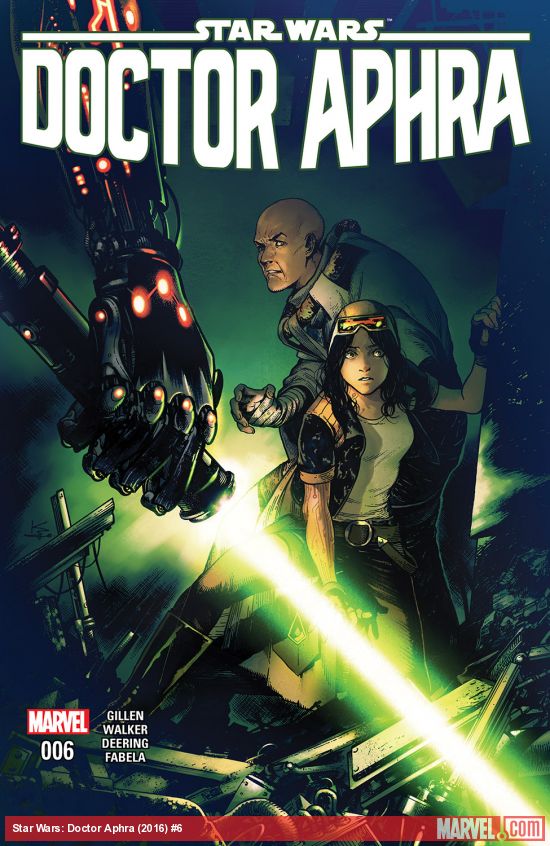
Doctor Aphra #6 - The first arc of this series reached a satisfying end as Aphra and her father were able to make peace with themselves and their understanding of the Lost Citadel of Ordu Aspectu. It may have come at the expense of the preserved memories of Rur, but the pair made off with an incredibly powerful artifact that made the trip worthwhile. It was nice to explore a different side of Aprha and good to see her make peace with her father. Hopefully she will get her doctorate back and continue questing for rare artifacts in order to profit along with the help of Krrsantan, BT01, and 000.
POSTED BY MIKE N. aka Victor Domashev -- comic guy, proudly raising nerdy kids, and Nerds of a Feather contributor since 2012.
Pick of the Week:
X-Men Blue #1 - This week we were treated to a new X-Men book penned by no other than Cullen Bunn! In this series, the original X-Men (Beast, Jean Grey, Cyclops, Angel, and Iceman) have been brought forward through time to protect them from a war among mutants. The first issue features an epic battle on a yacht and establishes the premise for why the X-Men were patrolling for other mutants. Toss in a Wolverine side story and a preview of what is to come establishes this as the X-Men title to read going forward. This series looks like a lot of fun and it looks like Bunn is going to pay homage to classic X-Men story-lines throughout the years.
The Rest:
Old Man Logan #21 - Logan learned not to trust someone as nefarious as Asmodeus to help set things right. Instead of returning to the wastelands, Logan was sent back in time and quickly learns that he must try to figure out a way to return back to Asmodeus. Jeff Lemire plans on sending Wolverine back to some of the important milestones in his life in the latest arc entitled Past Lives. This issues is effective in setting up the new arc and outlines what Wolverine is going to have to overcome to return home. I won't spoil what Asmodeus has planned for Logan in the current time, but I hope that he is able to make his journey through his past lives quickly!
The Unbeatable Squirrel Girl #19 - When we last left the Unbeatable Squirrel Girl, she had just learned her mentor Melissa Morbeck had microchipped an army of animals so she could control them with her thoughts. This issue solidifies why I enjoy this book so much. It includes the hashtag #ChefBear, has multiple species of bears and a variety of professions, is full of bear puns, and is setting up what is likely to be a hilariously epic finale to this story. Packed with whimsy and fun, I still cannot recommend this one enough. If you aren't interested in bear butlers or how Doctor Bear helps implant microchips for Ms. Morbeck, then I am not sure what is wrong with you.Doctor Aphra #6 - The first arc of this series reached a satisfying end as Aphra and her father were able to make peace with themselves and their understanding of the Lost Citadel of Ordu Aspectu. It may have come at the expense of the preserved memories of Rur, but the pair made off with an incredibly powerful artifact that made the trip worthwhile. It was nice to explore a different side of Aprha and good to see her make peace with her father. Hopefully she will get her doctorate back and continue questing for rare artifacts in order to profit along with the help of Krrsantan, BT01, and 000.
POSTED BY MIKE N. aka Victor Domashev -- comic guy, proudly raising nerdy kids, and Nerds of a Feather contributor since 2012.
Wednesday, April 12, 2017
DYSTOPIAN VISIONS: Brazil
Dossier: Brazil [1985, dir. Terry Gilliam]
Filetype: Film
File Under: Statist Dystopia
Executive Summary: Sam Lowry is a cog in the massive bureaucracy of the retro-future. He daydreams frequently, about rescuing a damsel in distress. Due to a mistake in the endless paperwork, a man is wrongfully arrested as a terrorist, and subsequently dies. Lowry, tasked with fixing the error, meets a woman who looks just like the one he dreams of rescuing. They both come into contact with the real wanted man, Tuttle, and are branded enemies of the state.
***Spoilers for a 31 year old movie*** He and Jill, the dream-girl lookalike, manage to have a romantic weekend before they are apprehended. Lowry is taken to be tortured, but Tuttle and his gang break in and rescue him, which results in a surreal escape that sees him reunited with Jill. We learn, however, that this is all a dream as his mind has divorced itself from reality and he is still in the torture chamber.
Dystopian Visions: Government, information and consumerism are all major themes of Brazil. Whereas most dystopian fiction is marked by a distinct lack for the vast majority of people, Brazil has excess. People are concerned only with what they have, or can have, and are numb to the sufferings and injustices of others. The Government is bogged down by paperwork, a reality unto itself, where only the proper filing and process matters- not the truth, or if a thing is actually accomplished.
Utopian Undercurrents: You can have what you want in Brazil- If you have the paperwork. And the paperwork for the paperwork. Filed with the proper office.
Offices.
Level of Hell: Six(?). I wrestle with how bad it is, exactly, which is part of the problem. This isn't Children of Men or Mad Max, where it is a struggle to get the barest of necessities, but rather a world made so cumbersome and claustrophobic that everything is pointless. As I've said in other pieces, I find that the more distasteful. Objectively, though, this is middle-of-the-road bad.
Legacy: I may have a sort of skewed perspective on this, since I first saw Brazil when I was super young, and it had a major impact on me. It is a film with a powerful message, but it's presently with this sort of Monty Python-ish humor and absurdity, which drives it home even more.
In Retrospect: There is a lot to love about Brazil. As I mentioned earlier, it's powerful and funny all at once. It looks dated now, with the colors and sets that mark it very much as an 80's film, which, depending on your preferences, make it better or worse. I appreciate it's originality, where a lot of dystopia takes itself seriously, Brazil does not.
Analytics
For its time: 4/5
Read today: 4/5.
Oppressometer Readout: 8/10.
Tuesday, April 11, 2017
DYSTOPIAN VISIONS: Dead of Winter by Plaid Hat Games
Dossier: Plaid Hat Games. Dead of Winter. [2014]
Filetype: Board Games
File Under: Stateless Dystopia
Executive Summary: You are a member of a colony that is trying to survive, not only the bitter cold, but also the impending wave of undead. The colony is pretty well protected, but it isn't impenetrable and there may be a traitor in your midst.
Dead of Winter is a cooperative board game of survival with the possibility of a traitor. There isn't always a traitor, but by assigning individual goals you are motivated to act in selfish ways that sow the seeds of mistrust among players.
Dystopian Visions: The colony in Dead of Winter is smack dab in the middle of the zombie apocalypse. You don't know who you can trust, food is scarce, the colony is getting overrun with waste, and there are always new survivors looking to join you. In addition to the zombies, traveling to locations in search of supplies necessary for winning, exposes you to the bitter cold and forces you to roll the dreaded exposure die, resulting in possible frostbite or death.
The art is drab and depressing and attempting to survive the winter will likely take some sort of miracle. Even if you are able to identify the traitor, he or she will still roam around the locations surrounding the colony making your survival even more difficult.
Utopian Undercurrents: Not much, but there is hope of surviving the bitter cold and trying to find a city that isn't infected once things warm up.
Level of Hell: Seventh as there isn't much hope in this post apocalyptic world, but humanity seems to find a way of persisting and there is light at the end of the tunnel. Assuming you aren't bit or freeze to death.
Legacy: While Dead of Winter isn't the first game with a hidden traitor mechanic, it is now the standard for which other games aspire. The simple fact that there are some games without a traitor makes this game one of the best social board gaming experiences on the market. In addition, Dead of Winter introduces players to the crossroad deck, a series of cards that can change the game based on the behavior of the active player. Sometimes the crossroad cards are triggered by who the active player is in control of, but can even be triggered based on what you say, or actions you take at the table. This increases your immersion in this dystopian horror story.
In Retrospect: This remains one of my favorite games of all time. There is an extremely high level of replayability and it provides an experience like no other board game.
Analytics
For its time: 5/5
Played today: 4/5
Oppressometer Readout: 8/10
POSTED BY MIKE N. aka Victor Domashev -- comic guy, proudly raising nerdy kids, and Nerds of a Feather contributor since 2012.
Monday, April 10, 2017
DYSTOPIAN VISIONS: V for Vendetta
Dossier: V for Vendetta
Filetype: Graphic Novel & Film
File Under: Statist Dystopia
Executive Summary: In the near future, Britain is a neo-fascist state. A shadowy freedom fighter called only V emerges and plots to overthrow the government, with the help of a young woman named Evey.
Dystopian Visions: V for Vendetta checks a lot of dystopian boxes- the government is 100% neo-fascist, replete with every -phobia you care to know, state monitoring, control via surveillance as well as deputized 'fingermen', ordinary thugs put in positions of state police.
Utopian Undercurrents: The main theme of V for Vendetta is the power which ideas have. V, as a person, in fact assumes the identity of an *idea* not just that of a person. His death becomes immaterial, as others have adopted his ideal and/or have the courage to stand up for it. For as much as Alan Moore has said he hates the film adaptation, the last few scenes (which I would love to spoil here and ramble about, even though you have probably seen it) are incredibly powerful and moving (as is the conclusion of the graphic novel).
Level of Hell: Seven. Things are bad, to be sure. Really bad, in point of fact. But if you keep your head down, you can be okay. But that's sort of the point.
Legacy: Personally, I hold both the printed and film versions in very high regard. Its legacy seems to have fallen by the wayside, in the shadow of everything else Moore has done and the fact the the Wachowski's haven't made a good movie since... this one. It is, however, quite relevant today and worthy of a re-read and/or watch.
In Retrospect: V for Vendetta ages very well, possibly being even better with age. The art is wonderfully bleak, matching the tone and environment, and the writing plays with the themes of the story in deep and inventive ways (V's initial monologue to Evey being the most well-known example, but far from the best). Moore has a fantastic introduction the graphic novel, which, while outside of the story proper, holds true today.
Analytics
For its time: 5/5
Read today: 5/5.
Oppressometer Readout: 10/10.
Friday, April 7, 2017
Microreview [movie]: Life
Should you bother to get a Life?

When I first saw the previews for Life, I was unimpressed.
Despite it having Jake Gylenhaal (who, honestly, I’ll watch in just about
anything) and taking place in outer space (where, honestly, I’ll watch just
about anything set). Still I noted the title in the back of my mind, as the
trailers got longer, I got more excited. Aliens in space and Jake Gylenhaal in
a spacesuit! Space horror! SPACE! Did it live up to the excitement of the
previous three sentences? Yes and no.
The story follows the crew of the ISS as they make contact
with the first sample of extraterrestrial life (hence the not great title of
the film). As almost always happens in these type of films: the alien turns out
to not just want Reese’s Pieces and love, but rather longs to destroy all
humans nearby. The crew is made up of the afore-mentioned Gylenhaal (doing a
lot with a not-really fleshed out role, he manages to make his character
weighted with a haunting that I’m pretty sure probably wasn’t in the script),
Rebecca Ferguson as a protocol-following CDC scientist (and the ISS’s newest
member), Ryan Reynolds as a mechanic, Hiroyuki Sanada (who was in the much
better—like one of my fave sci-fi films better—space movie Sunshine), Ariyon Bakare (who is quick becoming an actor I look
forward to seeing—seriously check out his performance in Jonathan Strange), and Olga Dihovichnaya. Now you may ask why I’m
referring to the actor’s and not the character’s names? It’s because that’s how
little the characters end up mattering once you’ve left the theatre. The
performances stand out, but the characters are written without depth or
backstory. You could plug in Doomed Spaceperson #s as their character names and
it would suffice. You know whose name I do remember, though?
Calvin. The alien at the center of the film. Calvin is, in
fact, the life of the movie. Not only is his octopus-like appearance pleasing
and scary, but so are his weird floating through air movements (look at the way
his body moves through the gravity-less air in comparison to the humans—it’s as
if he’s gently moving through water). Arguably, the movie is 100% worth seeing
because of Calvin. Is he as instantly classic as the xenomorph of Alien? No, of course not. But he is
enjoyable on screen and a clever addition to the long line of interesting space
monsters in films and literature.
If the film hits all the beats you expect it to, with a couple of small surprises, it does so in a
highly competent way—the opening tracking shot delighted me, as did the way the
camera often seems to be floating along in the same lack of gravity as the
actors. The emotional beats all work within the viewing. I was absorbed and
entertained, jumping at all the spots I’m sure I was expected to, but the day
after leaving the theatre I hardly remembered having seen it. It’s not as empty
seeming as the vacuum of space, but it’s also not as full of all the messy and
layered things that make life, well, life.
The Math
Baseline Assessment: 6/10
Bonuses: +1 for all the actors bringing their A-game to characters who otherwise have nothing; +1 for camerawork; +1 for Calvin *heart eyes emoji*
Penalties: -1 for being somewhat lifeless--in direct contrast to what its title claims; -1 for smart people doing dumb things in space (is there an Aarne-Thompson tale type for this?);
Nerd Coefficient: 7/10 "an enjoyable experience, but not without its flaws"
***
POSTED BY: Chloe, speculative fiction fan in all forms, monster theorist, and Nerds of a Feather blogger since 2016. Find her @PintsNCupcakes.
Subscribe to:
Posts (Atom)